The Founder's Two Minds: Balancing Irrational Fuel and Rational Decisions w/ Oscar Rachmansky (Part 3) - Ep. 41
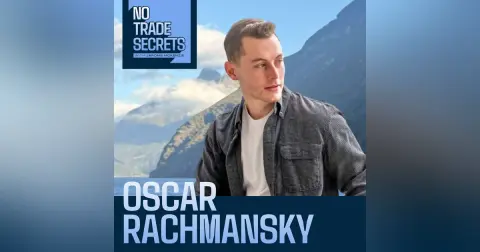

Welcome back to the finale of our series with Oscar Rachmansky, the 24-year-old founder of a $60M wholesale empire. In PART THREE, we pivot from the tactical foundation of building a massive business to the deep, internal work required to lead one. How do you separate your founder’s ego from the operational needs of a scaling company? What’s the difference between a surface-level mentor and one who will truly change your trajectory? And how do you balance the all-consuming fire of early entrepreneurship with the sustainable discipline required to live a full life?
⏮️ Missed the beginning? Go back and catch up on PART ONE and PART TWO!
💡 Unlocking the Playbook
Scale Past Your Ego: As a founder, your identity is tied to your creation, and letting go of control can feel like a personal hit. Oscar explains that true scale only happens when you release your grip and trust your team to execute, even if their methods differ from yours. The initial sting of realizing "I'm not as important as I thought" quickly transforms into the ultimate reward: seeing your team win on their own and drive the business forward without you.
Find Mentors with Skin in the Game: Generic advice like "acquire more customers" is useless. The most valuable mentors are those who invest the time to roll up their sleeves and understand the deep intricacies of your specific business. Seek out the 1-2 people who can act as a rational, experienced sounding board and call you on your nonsense, rather than a dozen surface-level advisors who don't truly grasp your challenges.
Engineer Your Exit from Burnout: In the early days, being 100% heads-down is a superpower, but it's not sustainable. Oscar discusses the critical shift from working 24/7 to intentionally building a life outside the business—not as a distraction, but as a strategic advantage. Hobbies and new interests provide perspective, prevent burnout, and ultimately make you a better, more creative leader who can think bigger than the day-to-day grind.
🤫 The No Trade Secret
A successful founder must operate with two distinct internal systems. The first is the irrational fuel—a silo of pure, relentless positivity, ambition, and vision that drives your actions, attitude, and work ethic every single day. The second is the rational decision-maker—a completely separate, objective mind that relies purely on logic, numbers, and data to make sound strategic choices. Most founders mistakenly blend the two, leading to ego-driven mistakes; separating them allows you to be relentlessly ambitious in your execution while remaining ruthlessly logical in your strategy.
🗣️ Words to Build On
"[If] you can get 1 or 2 people who are willing to invest the time into you to learn exactly how your business operates and what your needs are, that's going to be priceless advice compared to a bunch of guys who, yeah, maybe you should grow your revenue." – Oscar Rachmansky
"If it's monitor-level work, I probably shouldn't be doing it. That's my perspective." – Oscar Rachmansky
"There should be a part of you that is completely, completely just driven all day, 24/7... And then there's a second part of you that ideally should be purely rational, and that's like your real decision maker." – Oscar Rachmansky
👤 About Oscar
Oscar Rachmansky is the founder and CEO of OS Group, a bootstrapped B2B commerce platform transforming how fashion, footwear, and streetwear inventory moves between brands, distributors, and independent retailers. After dropping out of McGill University at 19, he launched the company from his bedroom with $30,000 earned from buying and selling sneakers on Instagram. Today, he has grown OS Group into a nearly $60M business with a 25-person team and two warehouse facilities. Oscar is creating the infrastructure layer for modern wholesale commerce, helping businesses source, distribute, and manage inventory across an increasingly fragmented retail landscape. His long-term vision is to build the operating system for B2B trade, making him one of the few founders at this scale to achieve significant commercial success without raising outside venture capital.
🔗 Links & Resources
- Visit the OS Group Website
- Connect with Oscar on LinkedIn
- Check out Oscar's Business Insider Profile
- Check out OS Group's WWD Profile
🎧 Missed the beginning? Go back and catch up on PART ONE and PART TWO
Yeah. No, it it's you you talk about the ego and uh it's definitely something that is uncomfortable the first times you go through it as a founder. Like you know, it's because you know you built the thing, um, you have the standard and you have the way of doing it, and then um you know, I've even felt that like it's it it's a hit to your ego when you you you finally give something up uh and someone succeeds at it and maybe succeeds it in a different way, like it's the realization initially when it's like, oh, um I'm not as important as I thought I was. Um you know other people can do it just as well or better. Um it hurts a little bit, but then uh very quickly, at least for me, it was like something that was like I love it. I love seeing uh uh people on my team go out and do something, try something new, create a new process that works better than you know the one that I initially put in place, and seeing uh, you know, like now my favorite thing is when I get feedback from our clients um about someone on our team for uh for a client that I am not super involved with or not involved with um you know day to day, and them reaching like actively reaching out and and and saying how great someone on our team is, like that that's like a currency uh for me, and and it's and it's also the thing that allows you to scale because as a founder you're you're only one person and uh the holder you grip on to certain things uh the slower you're gonna be to move and be able to scale. And for you having you know 25 different people, um, did you have to go through a shift or go through a did you go through a moment where you're like, holy shit, 25 lives are now you know, I'm responsible for making sure that they get paid so that they can pay their rent or their mortgage and put food on their table. Like, did you ever go through a moment where you're like, oh my goodness, like I have a lot of responsibility to these people?
SPEAKER_02Yeah, yeah. I mean, um I yeah, totally. I mean, we're we're closer to I think 30 or 35 even now, so um the scale is is is even more immense. And as you as you hire and as you take down leverage, right, um the technically speaking, the risk becomes higher and higher, right? Like if you have two or three employees, it's more manual in the sense that you feel like, okay, I can I can physically control the destiny, right? Like worst case, I can get in the trenches and and be the guy selling everything and then and and and and everybody's getting paid, right? But like as a business becomes more mature, the the the the individual impact that you have on the business, like we just spoke about, is you know, becomes becomes less and less so. Um and so you're kind of uh relying on this this this this operation, this web of everybody's contributions to help make sure everybody gets paid and um you know the operation continues to to to run uh smoothly. And um when you're one of the only people who, you know, obviously my CFO and and and co-founder um sees the PL as well. But when when you're kind of the only person who sees the PL, right? And you're a bootstrap company and you're you're you're just you know you're making sure that you're reinvesting everything you can, but also balancing baseline profitability and and making sure you're not you're not getting into the red because you're not a company with you know 25 years of runway because you raised a billion dollars. Um it was definitely a concern and it's always been a concern from the sense of like when we go out to hire somebody new, you know, we want to make sure that that person's payroll, we want to make sure that that person's at least gonna pay their own payroll, right, in terms of their contributions to the company. Um that's one way that we think about it. And I think that that's that's helped. Like I always it's always worth adding a team member. If they're gonna pay for themselves, add the team member, right? Because now that net enterprise value-wise, like you're gonna build, they're gonna add more value, right, long long term. Um so totally. There's there's been times for sure where I take a step back and like, whoa, it's a lot of people, especially if you have a bad month, right? You have one bad month and then you're concerned about our bad quarter and you're concerned about, whoa, you know, did we overhire? Are we doing too much here? But I don't know, everything kind of works itself out. You just sometimes you just have to let go a little. And if you feel as long as you're again, as long as you're operating rationally and you're not one of these guys who's going, you know, is going out there and saying, yeah, we're gonna hire 25 people this quarter because uh they're we're gonna just figure like you know, as long as it's rooted in rational baseline kind of financial prudence and discipline. Um you just have to trust at some time at some points, right?
SPEAKER_00Yeah, no, absolutely. And especially having that responsibility at what you're 24 now?
SPEAKER_0224, yeah.
SPEAKER_00Yeah. You know, not many 24-year-olds are do uh you know running a $60 million company with 25 lives close to 35 lives that they're responsible for. Most 24-year-olds are doing what exactly.
SPEAKER_02Um I don't know, maybe like a lot of my friends are in like finance analysts, maybe. Finance analysts.
SPEAKER_00Yeah, but you know, you know, don't have that kind of responsibility and are really just coming into like you know, probably their first jobs, their first jobs and uh and having their first real responsibility uh in their lives, really, like in in hindsight. Um did you uh have you had any mentors that have helped you along this way, or like uh like what uh whether it's uh you know a mentor is um an actual person who uh has been there and done different things and been able to share their experience, or uh you know, especially early on for me, a lot of uh you know, my mentors were uh were books and reading uh read reading uh different people's uh experiences and journeys and learning from that as well. What what does that look like for you?
SPEAKER_02Yeah, I mean I would say that um when it comes to like non-direct mentors, like you said, you know, it's funny you said books, like to be honest, I I feel like I I learned a ton about um about business just frankly, like on YouTube, spending time on YouTube watching videos, you know, as corny as it is, if you if you sift through like fluff and the nonsense, you have to have an eye for it, right? Because there's a lot of bad advice out there on on YouTube and you know, podcasts and and things like that. But um if you if you find something that rationally and like logically resonates with you and isn't maybe like emotional fluff or or like ego filler, um I think there's a lot out there today where if you are willing to learn, you can get an MBA um online in, you know, over a couple of years. Uh but with that said, also um it's important to have you know actual real physical mentors who you have relationships with. I mean, for me, I would say, you know, I always like to say like um I never uh I never took like money from my family or never like had like a family investment or someone who like backed me and and and and financially like supported the business, you know, like I put the first $30,000 of this money like on my own. I've been financially independent since I was 15 years old as a result of you know secret reselling and things like that. Um, but you know, my my my dad's been an entrepreneur his whole life. Um he has experience in 25 different businesses probably at this point. And uh, you know, as my business started to take off, you know, he was always kind of in my corner, um, advising me, providing me, advising me, providing me with um, you know, feedback, uh, he was a sounding board, kind of kind of, you know, he was like the he was like my advisory board, so to speak, right? When I was really beginning the business. He he he gave me kind of direction and and the ways to think about things. Um and and to this day, I mean, yeah, he still is extremely supportive. And I'd say he's probably the the the person who I go to first when I don't have an answer when I don't know uh which way to turn. And so yeah, I mean, to to to have a to have a just a just to have a rational observer who doesn't have as much skin in the game, has experience, and can like just call you out on your nonsense because everybody's always full of nonsense included, um and at the same time understands the intricacies of your business, um, it's really important. I think like you can have a lot of mentors who you have like, you know, at length relationships with who give you advice, but maybe don't really roll up their sleeves and like understand the niches of your actual position or your actual business. So if you can get one or two people who are willing to invest the time into you to like learn exactly how your business operates and what your needs are, um, that's gonna be you know priceless advice compared to a bunch of guys who yeah, maybe you should grow your revenue and do it like, okay, yeah, thanks. Oh, maybe you should acquire more customers. Yeah, oh, I didn't think of that.
SPEAKER_00Yeah, never thought about that. Thank you.
SPEAKER_02Yeah, yeah, right. Right, right, right. So and listen, it's not their fault, like it's just it's that's just how it is, right? You can have a lot of service level conversations with people, and everybody's busy, especially if they're a mentor, it probably means they're successful, they got a million things going on, but you can get one or two people who like who who things really click for. Um, yeah, I would say it's super important.
SPEAKER_00Yeah, no, and uh, you know, it's um and those different people, um, and there's been you know different people at different stages uh in my journey. Uh it's a lot of them they're well all of them are of this mindset too of uh especially because they're all people who have had uh you know some level of success uh themselves. And um there's a a big emphasis on once you know you know, especially when you're at you know the the not at the you know the beginning of your journey and you've had that success and uh being someone who is willing to and wants to give back uh is is super uh super important and very amicable because because anyone who is you know really is they're self-made. Uh I've never met someone who truly is truly self-made. Right. Um, even if you know there's you know there's founders like yourself and and myself, you know, never taking any funding. It's grown from uh from rolling your sleeves up and just getting it done and doing it and having grit and never wavering uh from um you know what you believed in what you were gonna build. But I'm in no way self-made because I've had some amazing mentors help me along the way that helped me get through those different uh you know, those hard times where I uh even just the ability to to talk through some um things with someone and have a sounding board, someone who just listen. Like some of the best mentors just listen um and help me get to the answer just by listening and asking questions about what I'm saying. Um because um the that founder journey can be super lonely sometimes, uh and you can feel like you're isolated, and so like the having a a couple of people that you can call uh when you go through those things is is super valuable, and it makes me want to uh want to be you know be also giving back whenever I can uh during my journey because I know that the it's I received that uh and still receive that from different people uh as I go along my journey. And I think that's like the that kind of cycle of this uh is um is how important it is to also give back to people who are where you were at at some point. Um and I think that can like helps continue the cycle uh going forward as well. And um, like you know, I said that I talked uh you know, I talked to um a kid from Cornell last year because someone asked me to uh just to talk to him. Uh you said you talked to someone uh recently um who's where you were at uh when you were just getting started. And like it feels good to do that too. Um totally. Yeah, so you know, but mentors are are are huge and uh you know they come in, you know, I think I think a lot of founders think that you can uh you know get attracted to the you know and kind of confuse a mentor and you know someone you know that you might pay for mentorship, which you know, to you know, like a a consultant in that kind of way. Um it's like it's it's not something you can really outsource, right? It's like I think most of the best mentors for a lot of or at least any successful founder or entrepreneur I've talked to, like these people that were mentors were not consultants that they paid. Um, no. And um, and there's a place for these consultants in different areas, but uh I think it's uh it's important not to get the two mixed up and think you can outsource mentorship um in this journey because those people are are not gonna have the same uh level of investment in in you. Like it's all these people for me are people that are like genuinely do care about me. And I'm sure it's you know it's the same for you, obviously with your dad. Uh that's huge. Yeah.
SPEAKER_02Um totally, totally.
SPEAKER_00So for you, I mean who is who's Oscar outside of who is Oscar outside of uh of the business?
SPEAKER_02Like Yeah, it's it's you know it's it's it's a good question because I think that for the first for the first few years of of of running a business, uh I was just in the business. That makes sense. And um yeah, I was getting uh advice from family. Oh, you have to always make sure to take time off and do this and do that and and and and um and and and people around it. Not sure that I have even look, I I think that there's a point in your business where you're so resolute and you have so much conviction and you have so much motivation and energy. And that's not something to waste because eventually it it does dissipate. That there are times where you should be 100% heads down focused on running your business and growing your company if you can afford to, if you can manage to, right? Like I was in a position where I was 19, 20 years old. I just dropped out of college, I didn't have a family to support, I didn't have you know too many relationships that were um uh that needed to be invested into from a time perspective, right? And uh I made kind of a a a concerted decision to really focus on running my company and give up going out and partying or or doing these things uh um at least on a consistent basis. Um today, obviously, you know, as you kind of as your business matures, you also mature as a person um and you realize like, yeah, I'm gonna burn out and kill myself if I just keep running my company 28-7 um and don't do anything else. So yeah, I mean, look, today I, you know, I I'm I I have a ton of hobbies and interests. Um, I love playing sports, I play softball, still play, try to play baseball when I can, a little harder in New York City. Softball is easier. Um tennis, uh, I'm trying to get more into golfing. I love fishing, um, love the outdoors, like all that type of stuff. Um, that's a huge interest of mine. Also super interested in um like spiritual learning. Um, I'm Jewish, grew up Jewish, so been kind of delving more into that world and learning about um just like various religions and faiths and and and belief systems. Um, I think like I just think there's so many unanswered questions about like consciousness and who we are, where we came from and all these things. Um, I don't know. That's like, I don't know, maybe in maybe in a in uh in in my next uh in my next act, that'll be like what I'm doing, like researching those kinds of things. Um I think that stuff is like you know at the frontier, especially with AI now, it's like at the frontier of of those questions are are I think gonna become only more relevant for my generation. So I'm super into that. So yeah, so yeah, man. You know, I like to like to do a little bit of everything now. Like that's what I tell myself, like you only have one life, like I want to try to do everything, like literally, well, yeah, as long as it's legal, but you know.
SPEAKER_00Yeah. No, I I love that, and it's um I feel like yeah, I went through the same kind of thing first, you know, first for years it's like head down, and it's you know, same thing, people saying you need to you know have some balance, and I'm like, well, uh reality is I don't want to do anything else. Like I'm enjoying this so much. Right, precisely, yeah. I think it's important, yeah, and I think it's important uh what you said about when you have that fire under you, especially in that initial kind of phase, yeah, to take advantage of it because it will dissipate a little bit. And it's not that you care less, it's just that what you you know you you said you mature as a person, and then you what you look at in life changes and how you perceive what's important in life, you know, and it's um and um and so I went through the same thing as well, and and then but I and then I felt myself probably in August of last year. I was like, okay, if I keep operating on four or five hours of sleep and sitting and working every waking hour of the day except for when uh stop, you know, go um you know, have dinner, you know, like I was uh for about six months, uh I I missed uh breakfast and lunch probably 90% of of of each day. And it's like because it's like, well, no, because time wasted to go get lunch is uh like I can do something in that amount of time and I'm so locked in, and you get you get in that flow. But I just I also knew I started in August kind of knowing like okay, I'm not invincible and I'm going to burn out if I keep doing this, and it's I realized that it's it was a lot harder to make those kind of changes uh to kind of take a step back and like let off the gas uh a little bit at different periods, and it wasn't until a mentor and really good friend of mine um I went and visited in in Tampa uh in February of this year, and I'm like, look, the burnout is uh it's gonna come. I know I need to make a change, but I'm struggling to make a change. Um and he he I got to see firsthand how he operates uh five different companies all at the same time, all successful, all growing. And he showed me a a day in the life. Um, yeah, I got off the plane, he picked me up, we went to a coffee shop. That's where he likes to work out of. He loves working not at home. Um, and then two hours later we went to a different coffee shop, and I couldn't even like I felt out of My element just working at a coffee shop just with my laptop when at the comfort of my my office, I have you know multiple monitors, I have my setup, everything is like ready for me to lock in. And that was uncomfortable in itself. And then you go ahead and throw the curveboy, said, All right, put your stuff away. I'm like, What? He's like, We're gonna go play tennis. And I'm like, but it's two o'clock. It's two o'clock on a Thursday. What do you mean? Like, we've got to be working. And he goes, Shut up, put your put your laptop away. We're we're gonna play tennis. And he's laughing. Because he knew I needed to go through this. Uh, and so we went and we played tennis, and I'm not a tennis player, but uh I was determined to try and win just one set against him, and he's good at tennis and been playing tennis for years, and uh so we I uh it ended up I got so locked in in that it was one more set, one more set for two and a half hours. Uh, didn't win a single uh single game, but I got close a couple of times uh and then we uh we went and did something else and and then it was just like constantly just doing other things, like and he was showing me how uh kind of the whole reason I bring that up is he was showing me how he feeds the different areas of his life. Um and he talked about how he went through it and he did burn out. And once you if you when you do reach that per period of burnout, if you do let it get that far, it is extremely hard to bounce back from when you actually do burn out fully. Um and so when he came back and was able to bounce back, and it took him you know over a year to really fully bounce back and enjoy doing working and growing companies, um he decided that he was going to never let that happen again. And so he always every day does different things that fill up different cups for him uh that don't relate to you know to work, and he he talked about how putting time into his other hobbies and interests and things he loves make the businesses actually work better, and I didn't really understand that until I started doing it, and so like for me, I got uh the last year, but especially this year, I've got uh I really committed to like making getting like uh you know my official hobby outside of work and growing the business, which uh with being golf. And that is uh you know, that's a bug you can really catch, and and I've been enjoying that a lot, and I've been shocked at how much golf that golf journey has taught me about business, um, and then how much the business things that I've learned have helped me with my golf game. Um and I'm and now I make sure that I I I don't get back on that track of going to burnout because uh you know as a founder, if you burn out, then you're you're really no good to anyone. Um it's the that realization of what's really important in life is uh is you know is a really great breakthrough to have and uh and be able to think about bigger things than just business and money, because at the end of the day, like you can grow a huge business and make a shit ton of money. But if you've if that's all you've done and that's what you've spent the entirety of your time on earth doing, then you miss out on making memories with people and learning about things, uh, like you know, with you and all the different things you're learning about, especially when it comes to spirituality and consciousness and things that uh you are important for you to and you are genuinely love learning about. Um but then it means that you are gonna have less memories with people that you care about and love. And at the end of the day, like I see um for me, I I see it now. I'm like, this is if really the business is you know is uh a vessel to make an impact, you know, to our clients and to the lives of the people who uh help achieve that. But for you know, per personally, it's it's to help me live a life that I love living every day. And uh the way to do that is not to strap yourself to your chair or to out in the field if you're you know it's out in the field doing your work. Um because it's it's uh it's gonna be like a you know a a life with without real fulfillment if you do it that way.
SPEAKER_02Yeah, totally man. I I I totally hear that. And um and I think that uh yeah, it's it's it's something that is really hard to balance. Um but I think one thing that you start to realize is that you can let go of more sooner, and uh yeah, if you have the right people in place, like things will work themselves out. I mean, I it's funny you say that like I only work off a laptop now, like I don't do the monitors, I don't do like if it's like monitor level work, I probably shouldn't be doing it. Like that's my perspective.
SPEAKER_00Oh, that's a good one.
SPEAKER_02Or um yeah, I mean, I've also just used this here as well to take more time off, work from different kind of places. Um lets you get perspective, lets you think bigger. Um getting out of the getting kind of out of the rat race is just as important as being heads down and and super focused at times. And you're you're never gonna perfect it, right? Like it's gonna be times where yeah, you could look back and like Monday morning quarterback result and say, okay, I should have for two years been completely heads down and then I should have flipped the switch this day and out, then I should have become you know super like high level and just focused on business development and strategy. Or you know, given my personal life more space. Like it's never gonna work out that way, but you just try your best and do what you can. Um yeah, yeah, man. I have a by the way, I had I I have a 145 call that I kind of have to jump on here, but yeah, yeah, man.
SPEAKER_00Well um, well, our closing question that I ask every guest is um is when it comes to business and life, like uh, you know, with the name of the podcast, No Trade Secrets, what is your you know, your secret, your trade secret uh in business or life that you think shouldn't be a secret and more people should know about.
SPEAKER_02Um I think that I think that I think that the secret there shouldn't be a secret is that every founder I think a good founder needs to kind of have two um two running um almost like internal uh systems, right? And the first is the irrational motivation kind of the fuel, the fuel piece, which if you can silo it and just be completely positive and focused on motivation and the future and growth and vision, um you know, that part of you, like there's almost no need for any doubt, any concern. Like there should be a part of you that is completely, completely um jest driven all day 24-7. And I think that the output there um is seen by your work, your your your devotion, your dedication, um, and your attitude. And I call that, yeah, I mean, kind of like the fuel. Um and then there's a second part of you that ideally should be purely rational, and that's like your real decision maker, right? Because I think that a lot of people kind of mix the two of those things together and like it creates a world where there's a lot of fluff and a lot of boisterousness and like ego and all these tips and tricks and hacks um when it comes to like how to run a business. But truthfully speaking, at least to me, I think that it's actually not look, it's it's it's difficult to be successful, but but once you once you kind of have once you've figured out a trajectory or you found a niche or you found an opportunity, if you just act rationally and don't make any crazy decisions to the upside or to the downside, um there's a high probability that you're gonna be a successful company, at least from what I've seen. And so I think that to me, the perspective is if you know, as a as a founder, and obviously it's an impossible line to straddle, but like my goal every day is is like have one hat, wear one hat, which is like the rational decision maker hat that's just purely rooted in logic and numbers and um opportunity and and and an objective perspective of the playing field that you're in, and try to like make decisions as a result of that. And then the motivation and the fuel hat, which is maybe not what's driving decisions, but it's driving your actions, it's driving how you show up every day. And that part has to be the irrational part that doesn't take into account all the concerns and all the pain points and all the problems and all the fires that are going on, because um when you're thinking about it from that perspective, that that doesn't help. Um, so yeah, to me it's like a fusion um of rationale or objectivity and um and kind of uh uh you know pure ambition and and fire. So I think like a lot of people mend them together if you can keep them separate to an extent. Um yeah, it's it can work. I try. I love that.
SPEAKER_00No, I I love that more than you know, man. Uh well, thank you so much, uh Oscar. It's been great talking to you. Um I have all your links in the show notes, but uh if a uh a brand or a seller or anyone wants to get in touch with you uh to work with you guys or to talk to you or see what you're up to, what is the single best place uh for them to go?
SPEAKER_02Yeah, um best place would be our website, uh join-os.com. Uh when you go there, you'll see big big buttons. You know, are you a buyer, are you a supplier? Um yeah, just reach out to us or apply for an account um and we'll take care of you right away. So yeah.
SPEAKER_00Amazing. Um no, thank you. What you're doing is amazing, and I know I will be reaching out to you separately as well for uh our e-commerce clients and uh for the you know pleth plethora of people I know that need you uh and what you guys do. So thank you, Oscar. Uh really have enjoyed having you having you on, man.
SPEAKER_02Thank you. Thank you so much. I appreciate the uh the time. And uh it was awesome. Had a great experience.
SPEAKER_00Awesome, man.