Scaling a New Education Model & Mastering Communication w/ Malekai Mischke (Part 2) - Ep. 50
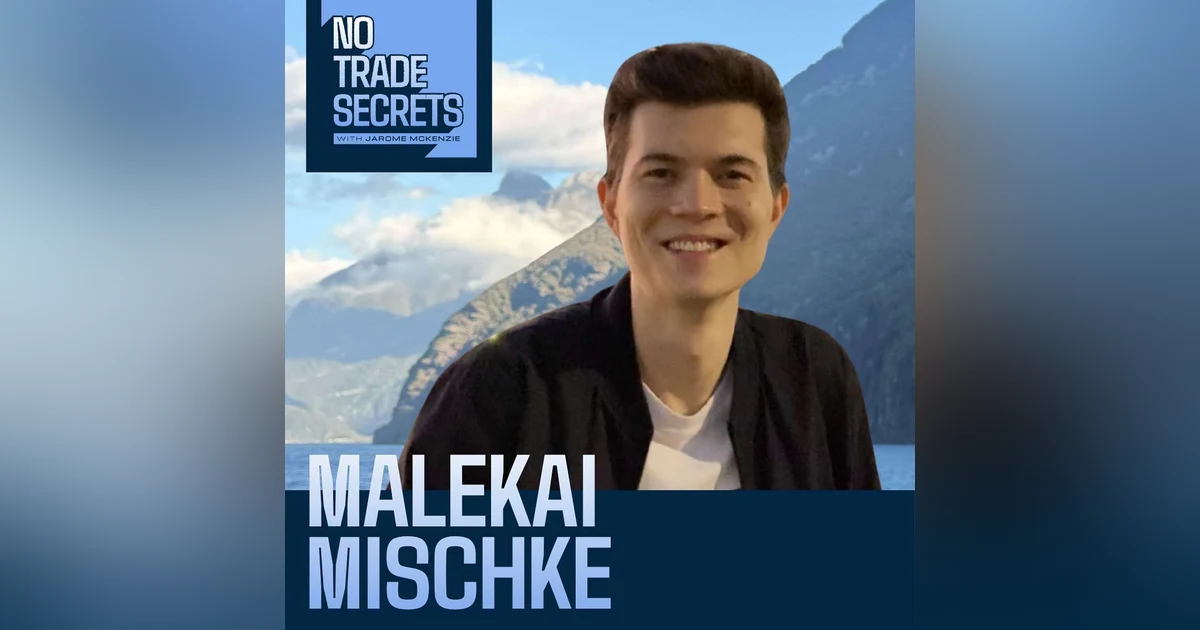

Welcome back to the playbook! We’re diving back in with Malekai Mischke, founder of Texas Sports Academy. In PART ONE, Malekai broke down the mission to fuse elite athletics with AI-powered academics. In PART TWO, we shift from the ‘why’ to the ‘how.’ How do you convince parents to abandon traditional education for a radical new model? What does it take to scale from a single micro-school to the 'Four Seasons of sports academies'? And what communication secrets are essential for getting buy-in on any big idea?
⏮️ Catch Up on PART ONE
💡 Unlocking the Playbook
Selling a Revolutionary Concept: The biggest hurdle in launching a novel idea isn't the product, but effectively communicating its full value. To get parental buy-in for his AI-powered sports academy, Malekai’s team focused on providing complete transparency. By using videos, presentations, and events to ensure parents understood everything about the revolutionary model, the innovative concept began to sell itself.
The Micro-School Scaling Model: Malekai’s vision for scaling is to become the “Four Seasons of sports schools.” The strategy involves launching a network of single-sport, hyper-focused micro-schools (capped at 50 students) for every Division 1 sport. This creates a scalable, specialized hub-and-spoke model that can be replicated in new cities while maintaining elite quality control.
Decode the 93% of Communication: True influence comes from understanding what isn't being said. Malekai lives by the “55-38-7” rule: 55% of communication is body language, 38% is tone, and only 7% is the actual words. The best communicators read non-verbal cues to grasp the true meaning behind a conversation, a skill best developed by getting as many real-world reps as possible.
🤫 The No Trade Secret
To be relentless and get as many reps as you can. Whenever you start a new thing, whether it's building a company, leading a team, creating a new product, it's not gonna be great at the very beginning, but you just gotta get more reps, gotta iterate. The speed at which you do that by being relentless is how you get there... The more times you try, the more likely you are to make it work.
🗣️ Words to Build On
"We're looking to be a little bit like Four Seasons, but for sports schools." – Malekai Mischke
"I think it's a tendency to always go for it and not be afraid to burn the ships in a sense." – Malekai Mischke
"55% of communication is body language, 38% is tone, only 7% is actually what's being said... the actual words don't matter as much as the body language and the tone." – Malekai Mischke
👤 About Malekai
Malekai Mischke is a co-founder of Texas Sports Academy, a network of elite academic sports schools, combining AI-powered personalized academics with pro sports training. With 12 campuses and over 1500 6th - 12th grade students, Texas Sports Academy students learn twice as much as the national norm in just 2 hours a day and excel in sports, creating a new generation of AI-powered scholar-athletes. Before Texas Sports Academy, Malekai completed the first cohort of GauntletAI, an intensive AI-engineering program where he spent 1000 hours mastering AI. Before Gauntlet, he worked with the NBA to build a "LinkedIn for Basketball" as well as a stint contracting with longevity entrepreneur Bryan Johnson. An aspiring athlete, he is a former college basketball captain, sprint triathlon winner, 2:42 marathoner, and as of today has done 100 pull-ups a day for 300 straight days.
🔗 Links & Resources
- Connect with Malekai on X
- Check out Texas Sports Academy's Instagram
- Visit the Texas Sports Academy Website
🎧 Missed the beginning? Go back and listen to Part 1
SPEAKER_01
Today's guest is Carlos Lopez, co-founder and COO of Tropical Juice Bar. He came from the Dominican Republic, landed in Passaic at the age of 12, and in 2010, he and his brothers opened Tropical Juice Bar. They now have 10, almost next week will be 11 locations across New Jersey, five more on the way, and he's trying to build managers faster than he's opening stores. Carlos, nice to meet you, man, and thanks for being on the show.
SPEAKER_00
Likewise, it's my pleasure, man. Thanks for having me.
SPEAKER_01
So I myself being uh a first-generation immigrant uh in America, I love talking to other uh immigrants who uh in in this country who have, especially those who have gone out and uh you know taken the opportunities uh and you know really done what you know, at least when I came over here, uh what I envisioned was the the American dream and what you're sold and what you think about this country uh growing up, uh especially before I'd ever been. So I'm curious for you, coming over here from the Dominican with your family uh to New Jersey um at age 12, what was your first impression of the United States? And what did you uh like what was the feeling coming over here? Were you excited to be here? Or is it uh uh did you what did you uh what did you have like kind of in mind for what you're about to experience?
SPEAKER_00
Well, coming over here, honestly, I I was a little bit afraid, you know, afraid of the unknown. And I think a lot of people can relate. You're in your bubble over there. I was I was a kid growing up with my mom, my dad, and making this big change. But when I got here, my first impression is wow, right? There was uh a lot more lights than I was used to, especially at that time. It was uh the year 2000. And in the Dominican Republic, we have some days there's no electricity at all because electricity goes out and it could be days before it comes back. Over here, everything was just so bright, it's so much going on uh that I was amazed with everything.
SPEAKER_01
Yeah, no, I mean that's one of the first things that I um definitely noticed uh when I came over to the US for the first time. And mind you, I was older than uh what you know you were when you came over. Um I was 18. Uh, but I was shocked. I'm like, man, yeah, a a lot more, a lot more lights, but also like everything's so much bigger, whether it's the roads, the buildings, the personalities, uh, the serving sizes. That was a big one for me. You know, coming from New Zealand, uh and seeing what a you know what a small at McDonald's was here. I'm like, man, that's our large uh back in New Zealand. That's crazy. Um but no, that's awesome. And so it's uh you know, when you talk about the unknown, uh, I feel like you know, you and your family making that jump and coming over here to that unknown, and you is you know, like that's obviously something that you you all went through, and then you know that that was something that I had to go through. And I feel like that whether you know you're doing that with your family or by yourself or whatever the circumstances is, is when you're around people and grow up with that mentality of being able to just look, we might not know what the path forward looks like and what it entails, but going after it and just seeing where life takes you is uh uh at least for me, is has been something that has shaped my entire personality and entire life and how I approach anything. Um did that have the same effect on you and your brothers growing up.
SPEAKER_00
I think growing up, one of the reasons why right now we we have our own business is because of that that drive, you know, to not be scared to go into the unknown. Um because we had that experience coming into the US, not knowing everything, um starting from zero, you know, over there. Our parents at home, they have everything over here. We were in a small two-barrow apartment. And it's three three brothers, my mom and my dad. Um we were kind of cramped up three of us. I'm not sure if that's legal, but that's how we we came in. And uh we worked ourselves up uh through different jobs. I remember it's my first job was at 14 in a restaurant, and I was just excited to be there, excited to learn, excited to be doing something new. Um and I did a couple other different jobs in restaurants, and every time I had like a year, two years in the same row, I'm like, okay, what's new? I need I need something different to um to motivate me. Um I want something to change, even if it's just a small change. Uh, like when I started working, I was a dishwasher, and then I went to uh dishwashing and helping the prep, helping make salads, helping make uh peel potatoes. And just that was to me exciting that I was learning how to use the knives, how to how to cut, how to use different machines. So I think yes, definitely it shaped us. It made every experience, I think every experience that you have kind of like chips in into your personality and who you're becoming every day. Like life is happening for you all every day. Even the things that happen that you're like, oh wow, that's that wasn't a great experience. But you learn from that, right? You you evolve from that and you get better. And when that comes again, now you have something to relate, something to come back to and say, Oh, wait, last time that I had that situation, uh, I learned that this and this don't work. So let me try something different.
SPEAKER_01
No, I love that, man. Um, especially the part uh about you what you said about life happening for you, because uh that's actually something uh that uh a few years ago changing my outlook on you know things that may have may have had negative connotations uh you know, attributed or assigned to the thing that was happening. And seeing it's like, man, going and being able to shift from that mindset of like, man, why is this happening to me? And it's like to be able to look at it through that this is happening for me and it completely changed my perspective on anything negative uh in that moment that ever happened and continues to happen, um, because that's just the reality of life. It's shit's gonna happen, and but it's really ultimately the choice that each of us have individually of okay, are you gonna are you gonna be a victim of that circumstance or are you gonna let that serve you in a bigger and better way? And what are you gonna learn from it? How will you get better from this? Uh, and I feel like that's uh, you know, like it's it's it sounds really simple and obvious when you say it, but I f still feel like that's something that uh um you know a mindset that a lot of people um um struggle to overcome, being able to see the good in the things that might look in the moment as not so good.
SPEAKER_00
Yeah, definitely. I mean, uh and I'm learning every day, I'm getting better every day. Every day I'm asked trying to ask myself that question, you know, it's how is this helping me? How is whatever situation we're going through? Because uh I'm going through a couple situations right now that I can't mention. But uh, you know, I have to believe there's something good coming out of this. Because if you don't, I mean you're just it's not gonna serve you. And if you do believe that something good is coming out of that, even if it's just to live through it and be able to tell the story to someone that you can help, it's is serving you. So that that's how I see it really.
SPEAKER_01
Man, I love that more than you know, and it's uh yeah, that's incredible, and it's uh you know, it's it's a very like it's a very admirable uh way of being able to look at life. Um and it makes it uh makes it a whole lot more fun and and easier to go, you know, not maybe not easier, uh, but it makes it just it makes the journey more fulfilling that way, right? And um, so then fast forward to starting Tropical Juice Bar, how did you get from working all these different roles in different restaurants uh to you and your brothers saying, hey, let's let's start this thing? Where did that where did that inspiration come from for that? And what dictated the timing of just saying, let's do it?
SPEAKER_00
Well, um I we we got a lot from from my my parents. My father had since the Dominican Republic, he was uh uh an entrepreneur in his own way. You know, he would cultivate, he would uh sell what he grew, uh, he would make whatever he needed to make in the house. Um and we learned from that from a young age that you can make it on your own. Like you don't need to work for somebody. Like I know that if something happens and I lose everything, I could easily start again doing something else, and especially with everything that I've learned on the road. Um, so it comes from there. Um we it was 2010. Uh we were right, my brother had finished college, so he was already looking for for a career. Uh I was finishing college and we were still working at the restaurant. I was like, hey, um, what if we start our own thing? What if we start something small, and we started very, very small. We started uh with an investment that was maybe $15,000, $20,000. I forgot what it was, but it was very small. And the way that we made that happen was that we started with a blender, uh Foreman Mill toaster, and a shop that we converted from uh an old barber shop into a restaurant. And we did that through my father's help, my uncle's help, uh, cousins, everybody pitching in, everybody putting in their two cents, whatever their expertise was. I remember I had an uncle that he knew how to how to lay down floors, and he helped us uh put the floor on the our first restaurant. So that's how we were able to get started. It was something uh that very admirable. I I really admire my family and the support that they provide to us from the first day. Um that's really why we're here today, and that's why we always say we're a family business, because uh it's not just about me and my brother, like us, the other my brothers, the owner, and my father. No, it's the whole family helped us. So the whole family pitched in, and the whole family it helped us get to where we are today, either through physically being there or just you know, listening to us. Some of our family still work with us. Um, some of them took part-time with us, now they don't work with us. They helped us through a transition, or we helped them to transition their life. Um, so that's where really where we came from.
SPEAKER_01
Yeah, no, that's amazing. And um I mean, true definition of a family business. Um, and that, you know, they say you know, it takes a village, right? And it's uh, you know, having you know your village, your tribe, your people, um, is so important. Um I I can't place a big enough emphasis on how important having a good support system and good people around you is to achieving what you want to in life. And you know, um there's especially on social media, you see a lot about like, you know, these all these self-made people, and it's like that's what it may appear to look like, but no one is self-made. Everyone has help from different people along the way, whether it's a mentor, uh someone advising them, someone uh giving them their first break, someone, you know, or a family member is helping lay the floor down for your first location. Like all that th all that stuff matters, and uh and having that, you know, a family like that is is incredible. Um and so then in your day-to-day life uh with where you guys are at now, obviously, so you're in the COO role, and so obviously operations and then uh and then I also know um leadership and development of people uh and inside those operations is is a big piece of what you focus on. How do you develop a good leadership pipeline in in your in your stores?
SPEAKER_00
Yes, and that is you know my biggest focus right now is developing the leadership pipeline, having leaders moving up in the company and taking advantage of the of the roles. And I know there's a lot of people out there that want a better life for themselves, for their family. Uh they want to become a leader, that maybe they they see it as, you know, that's something that I can't do. I don't see myself doing that, I don't think I have the capability to do it. And I really try to make it simple. You know, it's if you enjoy, if you believe in becoming better, a better person, then you can be a leader. And you can be a great leader in in a great role. You just gotta take the steps. Um because myself, I I was I would never like you go back to to my high school, even my college days, and you tell me, Oh, you're gonna lead uh uh a team of over a hundred people. No, I didn't I didn't see that because I was shy, you know, I was uh I was an introvert. But I started working on myself, on what I could be. I started reading the books, listening to the right people, connecting with the right people, uh, so I could learn how to speak uh like they speak, how to portray myself in that way, uh, how to most importantly how to get to know me and and how to lead myself because I always say that we're all leaders, right? We start with leading ourselves. If you lead yourself the right way, then you get promoted and you get to lead someone else. Uh and after that, if you if you do well, then your team is gonna keep expanding as you become a better leader. If you don't become a better leader, your team is gonna shrink because either people are going to leave you or you're gonna be removed from that role because you're not doing an effective job. So right now what we're doing is we're pouring into our team. Uh I have a leadership uh program that I started a couple weeks ago where I have calls with anybody in the company that signs up for this course, no cost to them, where I break down how they can work on themselves, what books they can read, um, how they can link up with other leaders in the company to develop themselves to become uh a manager, uh an operations manager, uh regional manager, all these roles that we have open for leaders, uh, and even a franchise C. Like we offer the team the growth path from team member all the way to franchise C. Uh, and we go through all that in a five-week program that I'm doing with my team right now. It's the first time I do it. I used to do something a little more inconsistent, um, like quarterly calls. Then somebody brought it up to me like, hey, what giving us is really good. We we want more of it. How can we do something to where we can sign up and you could spend a couple hours with us? Um, we could ask questions about what we're learning, and really I'm just going with their guidance. If the team tells me, look, let's try this, I I go with their guidance, we try different things, and we continue to do what works. So that's what we're doing now. Um, yeah, thank you.
SPEAKER_01
Yeah, no, and like that's you know, a lot of things to unpack from that, but I mean, one is that you have clearly created a culture uh where you have inspired the people that are on the team, no matter what role they are currently in, you've inspired them to take their own action and more importantly the desire within themselves to want to grow into bigger and better things and be promoted and grow into being a leader, which that is, I mean, I don't want to like just brush over how like how difficult of a thing that is in reality for for uh for any business owner to be able to do. You know, it's being able to have that kind of environment where your people not only are willing to, but they are the ones asking you for more leadership development, and they want more things to to help them grow as people, as leaders, as husbands, wives, as kids, as friends, as employees. That's a that's no small task right there. And I think that you know that all comes down to the culture and what you know what you've been able to the value you've been able to uh to give them with uh you know but even before this new uh leadership development program that you've launched, you were still doing it and they wanted more. And so it's which is incredible because that is the you know that's often the hardest part, is is you can see the potential in someone, but they don't have the drive or desire to grow themselves. And that's something that neither you nor I or anyone can overcome for them. It has to come internally, and you've cracked that code uh already. And so like that's it's just amazing that uh that you've been able to build that uh that type of culture. Um but then also just the fact that you are you're giving like you're like this is not then just a job for people. This is a career path where they can but you know, it sounds like they can take this they can start in the you know, whatever role that they start at in the company, that there is a pathway if they take it and do the work and do the developing. There's a pathway for them to go from that role to being the owner of a franchise in their future. Like that is that's a huge opportunity that most people don't get. And so that uh yeah, I can't say enough about that. That's that's incredible. And I mean that that's something that that's something that a lot, you know, a lot of founders and businesses would really benefit from looking at what is their leadership development internally uh in their companies and looking at what they can do to emulate what you do.