Building a Dog Paradise and Why Humans Need Training Too w/ Aaron Wurth - Ep. 55
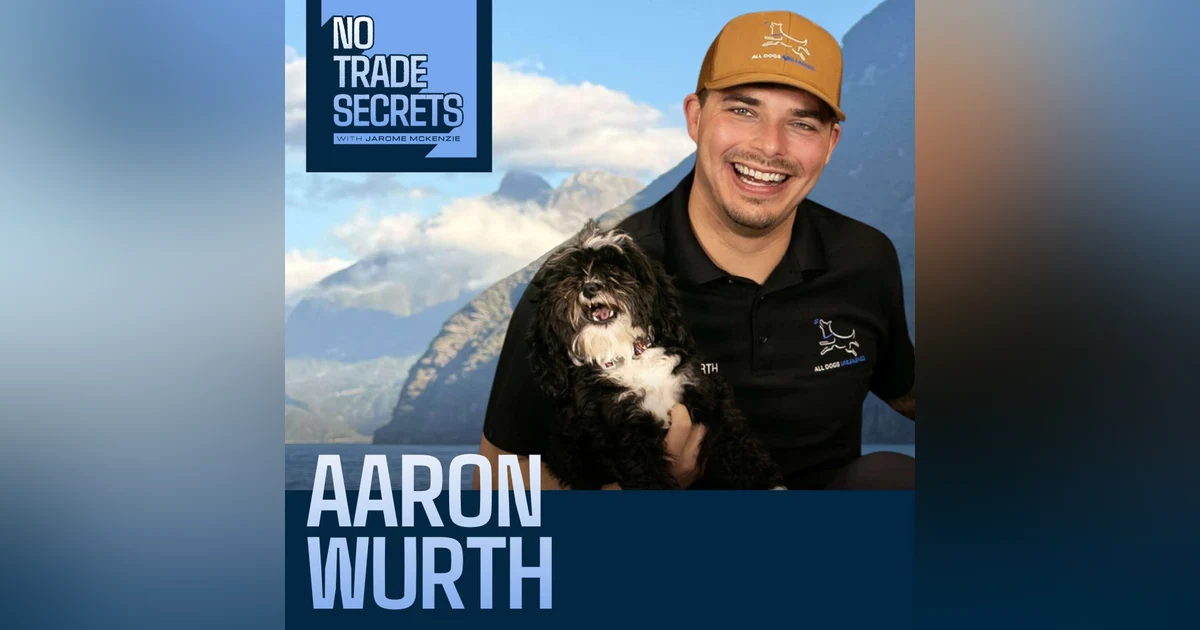

What can dog training teach you about leadership? Aaron Wurth, founder of All Dogs Unleashed KC, turned his passion into a "dog paradise" by rejecting cold commercial properties and building a business on trust and intention. He reveals how a dog’s “4-second window” is a masterclass in living presently, why most aggression is just a failure of leadership, and how shifting from a reactive to a proactive mindset is the ultimate key to success—for your pet and your business.
💡 Unlocking the Playbook
Engineer the First Impression: Aaron spent two years searching for the perfect property, intentionally creating a warm, welcoming "dog paradise" instead of a cold, sterile facility. This focus on the initial client experience builds immediate trust, especially when dealing with something as personal as a family pet.
Operate Proactively, Not Reactively: Their training philosophy is built on preventing issues before they happen, not just reacting to them. This proactive mindset—like teaching a dog not to bolt through an open door in the first place—is a powerful model for building robust systems in any business to prevent fires instead of constantly putting them out.
Establish Clear Leadership: Dogs are pack animals that need a leader; without one, they will step into that stressful role themselves, often leading to unwanted behavior. This is a direct parallel to business, where a lack of clear guidance from leadership results in chaos, forcing team members to make decisions without direction.
Live in the 4-Second Window: Dogs live completely in the moment, unburdened by past mistakes or future anxieties. This is a profound lesson for entrepreneurs to stay present and focused on the task at hand, rather than being paralyzed by what’s already happened or what might come.
Train the Owner, Not Just the Dog: The dog's training is only half the battle; the real, lasting success comes from educating the owner on how to maintain it. This highlights the critical importance of client education and support in any service-based business to ensure the solution you provide actually sticks.
🤫 The No Trade Secret
My trade secret would be, again, try every day to be better than you were yesterday. I kind of would go back to that Mamba mentality. And the thing is, is you can't change the past. You can only change the future. So, don't dwell on the past. Just try to move forward every day and try to be a better version of yourself.
🗣️ Words to Build On
"Dogs, they live in what I call a 4-second window. So whatever's in front of them within 4 seconds, that's what they're thinking about. But they're not thinking, oh my gosh, that was really stupid what I did 4 months ago." – Aaron Wurth
"When dogs don't feel like someone's in charge, they, by nature, they take over. Because if they don't look up to someone, then they go, well, shit, I have to fill that spot because no one else is." – Aaron Wurth
"Our training approach is what we call proactive, which is not letting the issue happen. Reactive is what do I do when a fight breaks out? Well, that's what I tell people is if you're reacting to it, that's an issue." – Aaron Wurth
👤 About Aaron
Born and raised in Le Mars, Iowa—the Ice Cream Capital of the World—I grew up as the youngest of five kids, raised by a hardworking single mother who inspired my entrepreneurial drive from an early age. I spent nearly 10 years with Hy-Vee, working my way from grocery sacker to management before ultimately deciding to leave the corporate path and pursue my passion for dog training. After training with All Dogs Unleashed in Dallas, I moved to Kansas City to open the company’s third location. Today, All Dogs Unleashed has grown to 20+ locations nationwide, and I’m proud to call Kansas City home. Outside of work, my partner Devon and I share life with our five dogs—Lunah, Kratos, Theo, Scrappy, and Louie. I enjoy spending time outdoors, disc golfing, biking, hiking, exploring new restaurants, and spending time with friends and family.
🔗 Links & Resources
- Website: alldogsunleashed.com/kansas-city/
Today we're joined by Aaron Wirth. Aaron owns and operates All Dogs Unleashed Kansas City, a professional dog training business with about 15 staff and housing 25 to 50 dogs at a time. He was born and raised in Lamar, Iowa, the ice cream capital of the world, is the youngest of five, and was raised by a hardworking single mother. He spent nearly 10 years at High V, from a grocery sacker to management, and then he left that life for a passion in dog training. He trained with all dogs unleashed in Dallas, and then moved to Kansas City to open the company's third location. The brand now has more than 20 locations nationwide, and Kansas City is Aaron's home. He and his partner Devin share a life with five dogs Luna, Kratos, Theo, Scrappy, and Louie. Outside of work, he loves the outdoors, disc golf, biking, hiking, restaurants, and spending time with his friends and family. Aaron, welcome to No Trade Secrets. Thanks for being on, man.
SPEAKER_01Absolutely, Joe. I'm happy to chat with you.
SPEAKER_00Yeah, and so we have a we have an interesting story on how, you know, how we now know each other and how you're here is that when my wife Sherley and I went to New Zealand, where I'm from, uh in March of this year, the hardest thing to coordinate and figure out was where we were going to send our baby Marley, our little micro mini golden doodle, for the 10 days that we were gone. And I'd and I'd talk to you a little bit about this, how she had had a an experience being bitten by another dog, and I had some unresolved PTSD, and whenever we would go out of town and leave her dog boarding or dog sitters, or um, because of that experience, and and then now we've found somewhere not only where I feel uh and Shaley feels super comfortable uh with her going uh and staying, but also the way that you guys run your training programs is uh, you know, and I've done a lot of research in the past about different ways of dog training because we have uh we've had other dogs as well. And there's a lot of different methods I you know you see out there, but one thing I can say about the way that you guys do things is it is extremely effective. And it when we showed up to pick her up as a all dogs unleash graduate, you know, I mean she was doing things that she'd never done. She'd listen and she was like a real truly was a a changed dog. And so that you know, I've been excited to have this conversation with you because after we when we were when we were driving away out of your property after picking her up, I had a lot of thoughts and I was like, I have to ask Aaron about some of these things. And so we're finally doing it, and uh, I'm excited to ask some of those questions and uh hear about some of the ways that you you think about things. Um one of the the first thing is gonna be on the property. That was something that I feel like a lot of intention went into or had to. For anyone who doesn't know or uh or so you can paint a picture, when you enter their business property, which is where you live as well, right, Aaron?
SPEAKER_01Yeah, so it's a dual business home headquarters. So I I live on the top of the half of the building, and then the bottom half is all business, so it just really gives a really personal touch to it. Um but yeah, go ahead and yeah.
SPEAKER_00Well, you drive up this long driveway, and it's like it's like an oasis, a resort for for dogs, and it just has you know down from just the landscaping and the way that things are laid out, like it's not like some of the other dog boardings, you know. When you when I think about dog boarding or dog board and train, I think of like you know, wire fence, dog runs, cages, not anything like that. Um, how much uh thought went into the property when you started this of like having you know picking the right property for doing this?
SPEAKER_01Yeah, yeah, you're absolutely right. It's a really big the first impressions are huge coming into the into uh any sort of business, but especially when you're dealing with someone's dog, someone's pet, um, you know, the the first experience is uh really huge for us. But it took me about two years of uh going through different commercial real estate agents. I went through three different commercial real estate agents and they all were trying to show me these these commercial buildings, and they were exactly what you said, Jerome. They they were all kind of cold-filling, they were strip malls, they were concrete walls, and I just didn't like the vibe. I didn't really like the feel of it. So I actually found this property online myself. I didn't even use a realtor, didn't need a realtor to find it. Um, the main thing I was looking for is being able to be zoned to take dogs with your business. And then I found this, and I found it uh in December, November, December of 2019. So, you know, that's right before COVID, before everything started getting weird with COVID. And then my closing date on it was March 27th of 2020. So the the two weeks prior to me closing on this property, um, you know, I had half my clients lost jobs. Um, they were they were getting you know told they can't come into work. And then the other end of it is all these people who um lost their jobs, they rushed to the shelters because they had free time. Um so our business really took off after I bought this property and COVID happened. But uh, but you're exactly right. When I when I first bought this property, it's on 13 acres of land. And I saw the vision for this and I said, this is it. This is literally a dog paradise to come out here and and to have the dogs run free, um, to be able to, you know, have the land, have the space. It's really just incredible. And I'm actually in the process of adding on to my property now and expanding on property rather than trying to find a second location and do a commercial building. I'm adding on to this building. So I'm really excited for the growth and the expansion.
SPEAKER_00No, that's that's awesome. Um, and I can't wait to see that. And but you know, you talk about that initial, you know, that first impression, and that's you know, it's uh driving up the driveway, and then uh just even just how you enter, and then what you see is like that first impression is like it happens, uh, right. You you drive up and then it's and then it's it's there and you see it all. And it like having gone through that my uh myself, like it gives you a good feeling when uh the first thing you see is warm and welcoming, especially the car ride to drop her off, you know. And that's you know, that's my wife's baby, right? And so she's you know, she's crying, and it's like, okay, we're leaving for 10 days. And it's and and something I want to go into as well, kind of a certain way about like you know, about you know the actual dogs themselves, but um she's like, well, what if you know, what if she thinks we're leaving her forever? And so like how people can really get into like the psyche and like that side of uh their relationship with their pits, like it's they're not just an animal that's around the house, like they're really a part of the family, and so like how important it is to be able to you know feel comfortable with where you uh where you take them is is uh I know for a lot of people extremely important.
SPEAKER_01Yeah, yeah, exactly. Like you said, it's your babies, it's a living creature, and as you know, being across the world, you know they're you're kind of at the mercy of the people in your who's who are watching your dog, so you've got to really trust them. Otherwise, I mean I've I've heard this from time and time again, people who never traveled before because they didn't trust anybody with their dog. Um, I've had people who've haven't traveled in 10 or 20 years without traveling in a car with their pet. They've never flown anywhere because they don't trust someone to watch their dog for them because they've had bad experiences at other boarding facilities, they've heard horror stories from other boarding places. Um living creatures, you know, animals are they are they can be a lot. So if you don't really have the great a great system, it can be a problem, right?
SPEAKER_00So yeah, no, absolutely. And I'm curious, so how did you go and have you always been uh you know a dog lover and and and you know, close to this world of dog training? Uh like how did you go from what you were doing before at high V to then taking this this kind of leap of faith and and investing in yourself and starting this? Where what can you tell me about that decision?
SPEAKER_01Yeah, so I've always loved animals, I've always loved dogs. Uh my family, we've grown up with multiple different dogs, small dogs, big dogs. Um, a lot of our family members would kind of trade trade pets if it didn't work out. We're we're farmers, farming community from Iowa. So if we had one dog that needed, you know, to burn steam off, they'd go to my aunt and uncle's, we'd take their small dog. So I've always loved the animal world. Um, as far as having a having a career with animals, I would have never seen myself as a kid. Just because I I think if you think about dog training 20 years ago, this wasn't really a thing. The every the everyday house house pet trainer wasn't a thing. Um, you know, there was a sport world where you're either a hunter, your dog's doing sport world um protection training, but you know, dog training really wasn't as popular as it is nowadays. And I think the need for dog training is just it's crucial because we live in a world where unfortunately people can be too happy. You know, as well as 20 years ago, we just talk it up to, oh, a dog bit someone, oh, it just, it just is what it is. Nowadays, it can result in lawsuits, it can result in um, you know, horrible financial burdens with people's dogs who are running out the street and getting hit by a car, they're ending up going to the vet bill and spending five or $10,000, and maybe their dog makes it. Um, you know, again, kind of an experience with yours with, you know, having a dog attack your attack Marley. Um, you know, those are really scary, stressful, um, and really big deal breakers for people. So to be able to provide an outlet where people have these issues and we can come in, help them with their pet, and then give them that lifetime support. I mean, it's really incredible. Um, you know, our lifetime support shows that we're not only in it for the money, but um we're here for the dog, which is really the most important thing. Because we don't charge five years later, 10 years later, if someone has issues, we're here for them at no extra cost. It's really cool.
SPEAKER_00Yeah. No, and I mean, that's something I mean, we've experienced too. Like we had uh you guys are when we're away, you guys are training the you know, you're training the dog. But then when we come to pick it up, we as the owners are the ones that need the training then. And it is like you know, the lifetime support is like also when w we need help on how to best serve the dog. Um and uh because it can be it's I mean, I can speak from experience, it is a learning curve, and it's like yeah, you know, Marley had to change some habits uh that she's had all her life, but then we also have to change a lot of habits that we have as well, and uh learn a new vocabulary and uh and you know be more disciplined ourselves, uh, which is a learning curve too. And it's so like the the fact that it goes you guys go beyond that, and you you know you're training the dogs and the the the humans as well. And I think honestly, like the humans probably need just as much training as the dogs uh to be able to sit you know sit up a successful situation.
SPEAKER_01Yeah. Yeah, and one thing, Jerome, I think since you guys have even gone through, which you know, we're talking six months. I've just recently uh basically mandated that every every person who trains with us they do a pre-board and train private lesson. So we invite them to come out here and then do a lesson before the board and train. Um, and there's multiple reasons for it. Uh it's a little meet and greet. We're getting you know to know the person, the dog. And then the owners feel a lot better even just coming back around. We hear it all the time when they leave after that lesson. They're like, Well, I feel so much better because I spent an hour with you guys. I've I've got a good feel, you guys are good people here. Um, but yeah, you're exactly right. Um, I really think it's more about even training the owners than it is the dog. Because if all we did was train the dogs, they would listen great for us. But the second the dog goes home, you know, the owner, if they don't hold him accountable, then they're gonna try to get away with all those old behaviors like they used to, right? So um the owner education is extremely crucial, but of course we want to train the dog as well, you know?
SPEAKER_00Yeah, no, and I mean we even felt that, and I I've made jokes. Uh uh, I think most dog owners talk to their dogs uh and ask them questions like jokingly, uh as if they're going to answer. Um, and I know I've made jokes about you oh, you only want to listen to your your new dad, Brett, because obviously Brett is who's worked with Marley and uh she listens extremely well to him, but then then there's a gap like between how well she listens to us, uh especially initially, and then there's a gap between she l you know she would listen more to me than to Shaley, and then so like like there's it's super interesting seeing like this hierarchy that the dogs have formed in their own head, and breaking that can be kind of difficult, as you as you know, and so that yeah, that aspect is has been super interesting, and um being able to shift the you know the hierarchy of who's who's who's in charge and uh is more difficult than you know uh at least I thought. Um but what what when it comes to the dogs, like there's gotta be, you know, like I feel like there's a lot uh I talked to someone yesterday who uh she said uh she she's like I I don't like people, I like I like dogs. Uh and I feel like that's you know there's a lot of people like that and um you know I I'm one of the those people that I'm like yeah dogs are better than people. Like dogs are awesome. But one thing that I wanted to ask you about is like what like what kind of life or business lessons have you learned like through the lens of the eyes of a dog?
SPEAKER_01Yeah, I mean honestly, I I think I think uh dogs really are God's gift to us because there's multiple things about dogs that I truly think are incredible is that they do live in the moment. So we as humans, um, you know, I've kind of learned this through you know studies and all this stuff is you know, humans with depressions, generally speaking, a lot of times we're depressed because of our past failures. We're we're depressed because of what we did back in the day. So, and then anxiety is worrying about the future. So anxiety is well, if I when I go do this, I have concerns about what's going to happen when I when I go do that, you know. Um, you know, a lot of people don't like the dentists, a lot of people don't like the doctors because of the end results. So people fear, fear making appointments for things that aren't even, you know, they're months out, years out. We worry about Christmas time coming up in December. Right now it's you know September. Why are we thinking about Christmas? Um, dogs, they live in what I call as a four-second window. So whatever's in front of them within four seconds, that's what they're thinking about. But they're not thinking, oh my gosh, that was really stupid what I did four months ago. Oh my gosh, my dad's probably mad that I got into the trash can two months ago. And they don't worry about the future. So they really are incredible creatures that live in the moment. Um, and again, it's there, there's like those the five things that dogs do. You know, they eat, they play, they sleep, they get affection, they go to bed and they repeat all over again. Um, I think dogs really are the best creatures out there, and they've got probably the best life, you know, just get spoiled and stay at home and be a good dog, you know?
SPEAKER_00Yeah, no, it and that's super interesting. And I think it's like yeah, being in the moment is uh I feel like that's something that's it becomes more fleeting uh as time goes on. Like it's so easy to have your focus, your consciousness be at a different point of time than right now. But how important it is, you know, as a person, as a business owner, is uh you know, in life to be present and in the moment with what's in front of you now is like is something that can be very hard to to do and to have that mindset shift. And so like that's I think that's why you know, like it's it is kind of beautiful, like where like right now I'm looking down and I've got both of my dogs just laying at my feet. And it's like, man, what a great thing to be able to have in your life if is these little you know, or big uh animals that all they want from you as an owner is your love and affection and like the other things that you said, you know, to be to be fed and taken care of. Like and like the type of loyalty that you can get uh the dogs give is like I mean I think it's unrivaled loyalty to any person because there is no agenda or ulterior motives uh that a dog has. They're just and by being in the moment, you know, like there was uh uh an experience that I had with a dog I used to have um back in college where um uh the neighbor would walk there uh would walk their dog without a leash in this apartment complex, and it was a dog that was untrained, it was uh you know, it was uh uh it was a a breed that could do damage, right? And I like I got I hate the stigma, you know, for certain breeds, like it's it's not but it's like this you know, this was a dog uh a dog breed that could really mess you up, like if it wanted to.
SPEAKER_01Right.
SPEAKER_00And I was leaving my apartment at the same uh at the same time they were coming down the stairs, and the dog turned and like tried to barrel its way like inside my apartment, and my dog was on the other side of the house and just bolted straight to the front door and was ready to like ready to like ready to die for me, and it was like close the door, uh managed to get the dog out and close the door, and then was like just looking at this dog, and all all he all he cared about was like was protecting, and I'm like where where can you get loyalty like that anywhere in life? Like I don't know, it's it was uh yeah, it's you know that's just one of those moments and that uh you know never never forget. And uh like what what else about dogs, like especially when it comes to teaching, how how did how do dogs differ to people in in trying to train and teach?
SPEAKER_01Yeah, so and uh you know, like you like you kind of brought up, there's no alternative motives. You know, it's one thing in life as we go through phases, we go through friendships, people that we meet, there's there's there's a lot of uh fakeness in the world, there's a lot of um alternative motives, there's a lot of jealousy, there's a lot of um just humans are are unfortunately flawed in the sense of you know, people get jealous. It's kind of a general nature of of humans. They they see something about something nice, they want it, they so but dogs, they don't have any of those type of um malicious emotions, if you will. There's no hidden agendas. And in in my 10 years of doing this, uh there's there's probably been one or two dogs that I really thought were just intentionally rude or intentionally not wanting to listen, you know. So when you're talking about a handful of dogs out of the thousands I've trained, the the most aggressive dog was just a product of bad environment. They were a product of neglect, they were a product of not getting properly trained. Um, there's been, again, you know, very few dogs that I think have been malicious for no reason. So when I have dogs that, you know, they've bitten three or four people, they've they've, you know, I've had dogs who are supposed to be court ordered to be put down, but only because of my testimony or because of my ability to train the dog as a judge granted the dog life. And it's because I know these dogs are not truly aggressive, um, which is hard to say that a dog's not aggressive after it's bitten two or three dogs. But when I say that, the dogs, I I always say this is that they have justified aggression. Which when I say justified means I understand why they did it. I don't like that they did it, but I know why they did it. So if we can stop the why and we can prevent that from happening, then we're gonna be we're gonna be all healthy, healthy, and safe. Um so understanding how dogs think, how dogs behave, and knowing the science behind that is really important because if you don't understand the why, then you're not gonna be able to fix the byproduct. Um, so just trying to band-aid an issue isn't gonna fix the issue as just band-aiding the the the you know the band-aid or the the issue. We want to be able to prevent that from happening, which is what our training approach is, um, which is what we call proactive, which is not letting the issue happen. Reactive is what do I do when a fight breaks out? Well, that's what I tell people is if you're reacting to the problem, that's an issue, you know. So our technique and training approach is about getting ahead of the game. Um, you know, so for example, opening up a door, we train our dogs that just because the door is open is not an open invite for you to bolt out. So we don't let the dogs bolt. That's how we've never, you know, in my 10 years of doing this, I think I can think of two times that I've had to call an owner and say, hey, this happened today. We have to go to the vet because of a uh preventable issue, you know? Um, so that's that's a learning opportunity for us. What did we do wrong in that situation? But for training hundreds of, you know, if not thousands of dogs over 10 years, it's a very small number because of our proactive training.
SPEAKER_00So Yeah, no, I and I feel like there's something really big to that. Uh I don't know. The way I think about it is like, is especially when it c you know, I feel like when if I think about aggressive dogs, it's like I never understand why the dogs that are you know aggressive or have had incidents before like are continuously then put in situations to fail again. Um for things that are pr you know, like you're saying, preventable. Um and you know, like and like one of the things that like uh is you know a uh was a fear of mine uh in a way, but something I I've thought about uh multiple times before because I've seen the stories of this happen is it's like okay, you know, say your dog shows you know some aggression to another dog, but like what you know we've we've heard the stories, we've seen it in the news when the family dog kills the baby on the floor like at the house, and like but and then you d you see child you know you see how children are around dogs, they don't know. Toddlers pull dogs' tails, stand on them, try and you know, grab their ears and their like do things that if a grown man did to you on the street, y you'd it you'd hit him, right? Like uh someone just does that like that, like the personal space and especially when you have young kids involved, like like and that's where like it's it is like I do th like I I think it's kinda unfair sometimes, like where like a dog bites someone, but it's like well the human provoked them. Uh and like you know, like yeah, like like you're saying, no, don't love that it happened, but kinda deserved it. Like I've heard of stories where someone's got bit, but like I'm like, well you d you kinda deserved it, like in in a way, like just if Yeah and but then it's unfair, you know, and then the dogs can be, you know, like you're saying, put down, there can be charges pr uh people can press charges and sue, and it's like it's so much more extreme than if someone you know if someone assaults someone on the street, yeah. You might get arrested and go to jail or whatever, but like you don't get the death penalty for assault.
SPEAKER_01Right.
SPEAKER_00And what are some of those situations?
SPEAKER_01Well, especially when it's like where it's like a bully, you know, it's like you know, you always you see the classics tale, bully gets, you know, someone gets bullied, bullied, bullied, bullied, bullied. And then when they react, it's like, yeah, we don't love that you did that, but how long are you gonna get put up with bullying before um you know something something's gotta stop, right? So um, yeah, I mean, I tell people probably 97% of any of these stories that, you know, we hear about, um, I'm on the dog side 97% of the time. Um, there's like probably about 3% of times where I really scratch my head and I and I can't figure out why. And when I say that, that's probably because I'm not getting told the full story. Um, you know, I've heard a lot of stories where I'm like, you know, kind of like you said, it's like, yeah, well, that person, that other dog kind of deserved it. We don't like, like you said, we don't like that it happened, but you know, I understand why they did it and, you know, we understand why they did it. And it's like, well, there was not a whole lot of other options for them. They tried avoiding, they tried doing this, and then the other dog kept pushing them or whatever, right? So, but yeah, that's why owner education is so important for me. Um, you know, we spend three hours in total with the family, which um, you know, sounds like a long time, but I I've spent five or six hours with people um because there's just so much that goes into it. How do you handle someone reaching for your dog who didn't ask? How do you handle the person walking up to your dog on leash and wanting them to jump over and say hi, you know? So the owner education, and it's really about advocating for the dogs too. Um, you know, it's kind of funny when we think about dogs, they don't need to touch face and lick each other when we're in public. They don't have to, not everyone has to go up to a dog and get in their face, right? So um there's ways of politely saying, hey, you know, give us space. We're working on training right now, um, which is a very nice way of me telling someone, kind of leave us alone. We don't need you to come up to us, right? So um we have dogs who are introverts, and you can't make an introvert a dog an extrovert. They're not gonna like some kid getting all in their face and rough and house with them. And um, some dogs love that, and that's totally fine, you know, no worries. Um, but just understanding how dogs think and knowing that we all have bubbles um and we all have got you know personal boundaries, and we all, you know, not everyone wants some if you're if you're at a mall and someone you don't know comes up to you and starts wrapping up and wants to hug you, it's kind of weird, right?
SPEAKER_00Yeah, if you're not a hugger, you're gonna uh not enjoying that at all, right? So no, and I totally get that. And it's um I feel like a lot of I feel like dog owners they might forget that the dog's personality is the dog's personality. You can't change that. Like as much like you get this dog, you don't get to like pick and choose exactly, you know, you might have this vision of the dog that sits on your lap and cuddles. Like that's what Shaley thought Marley was gonna uh was like, you know, oh little little dog that will cuddle, and she's become more cuddly as she's gotten older. But first year, yeah, you'd you know, you'd you'd you if you picked her up and put her on the couch next to you or on your lap or whatever, uh, and as soon as you stop pitting her or rubbing her belly, she'd stand up and she'd walk and should get on the top of the couch and lay in a spot that was like away from us. And it's like and it's like and it's like and it's like, come on, but that's you know, that was her personality. Like one thing I appreciate about you guys too is like there's some things that like going in, I I knew that we're not gonna change. It's like Marley's gonna continue sleeping on the bed, like she's a little dog, and yeah, um, and you guys didn't try and change that, which was awesome. Like, um so but like Marley will if she's laying on the couch, she'll lay in this little spot that's kind of like by herself, but then at night she'll lay on your hip to sleep or on your head, like on your pillow, like no personal space, and it's like that's the dog's personality, and it's like you can't change that about them. Uh just like you can't change a person's you you know, you have kids, you can't change their personality, right? You can uh you just have to accept them for kind of who they are, and I feel like that's trying to shape the dog to be exactly how you envisioned the family dog is like probably not gonna work.
SPEAKER_01Yeah. Well, and like you said, it's just not really fair. You're trying to put him, it's like you know, trying to put a triangle into a square, it's just not gonna work. You can't do that. So what we do, and I'm and I'm glad you kind of brought that up, is every dog's different and every owner's different. And it's it's kind of funny when you think about dog training, it gets kind of this strict um military mindset of no, no, no, you can't do this, you can't do that. So we call them, we call them absolutes, right? So um it's like the the I always joke, I'm like, my dog sleep in my bed with me, you know. It's like it's okay. Okay. Um, so people are like, oh my goodness, thank God, you know, because that would have been a deal breaker if you told me my dog can't sleep on my couch. Because they've had two or three trainers who tell them that, you know, your dog's not allowed on the bed, not allowed on the couch, not allowed. I'm like, it's your dog. You can your dog can do whatever you want them to do. If you now, some people who want to fix that and they don't, and that's another cool thing that we do, and I call it permission-based, but there's a middle ground. There's it's it can be you're not allowed to jump on the bed. It can be you're allowed to jump all over the bed. A middle ground is if I invite you on the bed, then you're allowed on it, but you don't make the decision. So it just tailored to whatever the family wants, right? So um, and every family's different, every person's different, every dog's different. So we do, we strictly do one-on-one training because of that reason. Um, the group classes is, you know, you get one trainer telling 10 people uh the same thing. And well, if you have 10 people and 10 dogs, that's 20 different variables, and and one person can't can't go and you know tailor 20 different situations. So we only do private one-on-one so we can talk with the families, find out what their goals are, and then figure out a way to make it happen.
SPEAKER_00Yeah, no, and it's one of the you're talking about uh the invitation, that middle ground. That's been one thing that's been a game changer. What not only the invite, but then the uninvite. Uh it used to be the biggest pain in the ass to make the frickin' bed. Because you've got this little shit. Saw that, oh, we're making the bed, time to play. And it was it was running around the bed and you know, trying to get her off. She's running around thinking it's playtime, you know, and just would not get off. You'd put her off, jump straight back on, and it's like it was impossible. Now go to make the bed. If she's not on the bed, she doesn't try and jump up and play anymore, uh, because she understands not to, but then she uh you uh tell her off and she jumps off straight away, and it's like, oh my goodness. Yeah, like just things like that is a game changer, and uh you know, and I think the dogs I think it's we like as dog owners, you you owe it to the dogs to to uh to train, like they deserve to be training, because I think that I feel like she's happier being trained and like working, and like you know, like I I think the evolution of dogs, dogs were working animals to begin with, so like there's that's deeply embedded in their DNA is to work. And when you know, in 2026 you have dogs that are just to be, you know, a lot, you know, there's some dogs that are just like people get to be like little accessories. Like I feel like you have to like the dog having having some work and purpose like in that way makes them happier. I don't know if you agree with that, but at least that's that's kind of my observation.
SPEAKER_01Yeah, one 1000%. Um one thing I truly love, and probably the best uh dog cases that I deal with are the nervous, timid, um, and really the unsure dogs. And and 90% of the uh nervous and timidness is they're they're unsure of what to do. They don't know what they're supposed to do, where is their role. So um, and it's just like kids. I mean, imagine telling uh uh telling someone, hey, my, you know, I'm gonna have a kid, but we're just not gonna send him to school. Um that's kind of how I feel about having a dog and not training it, is you know, it goes hand in hand, having a dog and training it. Um, and if you do it yourself and you're doing great, that's awesome. Um, but a lot of people struggle from home. You know, you're not a dog trainer, it's not your profession. You know, it's like imagine, you know, people who didn't go to school for teaching trying to teach a kindergartner the alphabet. It's not the easiest thing in the world. You know, you didn't you weren't educated on how to do that, right? So letting the professionals help is really important. But one thing I learned as I've gotten into dog training is that dogs are pack uh pack animals and and and our nature humans are too. And when I tell people this, it really makes sense. I tell people humans are our pack animals. Um, that's why we have a mayor of every city. That's why we've always had a president of the United States. Um, if we didn't have somebody guiding us, if we didn't have somebody leading the country, if we didn't have someone leading the city, um, it would be absolute chaos and mayhem, you know? Um, so when dogs, when they don't feel like someone's in charge, they by man by nature, they take over. Because if they don't look up to someone, then they go, well, shit, I have to fill that spot because no one else is. And I always tell people, um, you know, I don't know many people that would want to be the president of the United States, you know, that's a pretty stressful job out there. Um, so for a dog to feel like they have to step into that role is it's not really fair to them, you know, um, because they're not getting good leadership, they're not getting good guidance at home. So then they look around the room and they go, no one's telling me what I have to do, so I'm gonna make a decision. And we know when dogs are making the decision, it's not always the best decision, you know. Um, do you need to bark at every person that's walking past the house? No, you don't need to do that, you know.
SPEAKER_00Yeah. Yeah. No, that's no, that's that's such a good point. And I mean, it's I feel like that's like you can apply that lesson to your just into so many different areas in life of like especially when you're in like that leadership role, whether it's in your business, in your family, and whatever it is, being able to like step up into that role and be the leader that the rest of the pack, the team needs you to be, um is is so important. Like, you know, just like you know, you're saying there's a mayor and a president, there's also there's always captains on sports teams, there's there's always leaders of organizations. Um exactly and you know the like every societal uh institution needs to have some kind of hierarchy and a leader and and uh or and so like it's yeah, it's I think that's like a s a super important lesson uh and to serve the dogs the right way.
SPEAKER_01Yeah, and I'm sure you've heard the saying before or the the quote, but um I think if it's right around between 70 and 80 percent of people when they leave institutions, whether it be work or um you know whatever, uh you know, 80% of the times they're leaving because of the the hierarchy, because of their leaders, because they don't feel they don't rationate uh with the the leadership in that. I'm sure you've heard that saying before, right? They kind of leave, they don't leave the company necessarily. A lot of times they leave the leadership, right? So um, you know, the best thing we can do in any situation is be the best version of ourselves because someone is looking up to you, generally speaking, you know, even if you have co-workers, they're still looking up to you. So trying to be the best version of yourself as we can is is our goal. Um one thing I have behind me in my wall here is uh Kobe Bryant's mamba mentality, his constant quest to try to be better today than you were yesterday, better tomorrow than you were the day before, you know. So um I try to live that myself and try to provide that for our pets and everything like that.
SPEAKER_00So yeah, and I mean it's clear that that's how you live your life, and it's uh clear in the results of what you're building and what you uh what you're what you've built, and uh and having experienced that, you know, from the you know, the consumer side of things and seeing that and seeing the how intentional you are and seeing the way that you do things, where you how much emphasis you place on the whole process and uh you know, like something I talk about all the time is like the customer experience, the client experience, the consumer experience uh and as a whole. And you guys do that, you know, whether it's from the moment you first drive up to being halfway across the world and getting updates and pictures and and a report card every day. Uh that like that alone, like don't ever stop doing that because like you have no idea how big that was, how little of a thing it might seem, but how how big you can't put a price on on that, like that peace of mind. Uh and it like it truly did allow us to fully enjoy that trip, you know. And it was that was the first time I had been back home in uh over eight years, and it was Shaley's first time in New Zealand. And I the trip would have been completely different if we were worrying about uh Marley and uh the whole time. And so um, like it the impact is is is real and huge. And so like I I see that and how uh how you've built uh you know your guys' culture and how you do things. And and I I finish every interview with the same question. So I'm gonna ask you, what is your trade secret, whether it be in business or in life? Uh what what is that for you?
SPEAKER_01I mean, honestly, I I think my trade secret would be um again, you know, try try every day to be better than you were yesterday. I kind of would go back to that Mamba mentality. Um and the thing is you can't change the past, you can only change the future. So, you know, don't dwell on the don't dwell on the past, just move try to move forward every day and try to be a better version of yourself. Um that's kind of one thing I would I've taken away in my life is just trying to be better every day, you know.
SPEAKER_00So Yeah, I love that. Yeah. So being better every day and then try being more more like a dog, stay in the moment.
SPEAKER_01Yeah, exactly, exactly. Yep. Yeah, living in the moment, especially like you said nowadays is is really hard to do. So great ambitions.
SPEAKER_00So uh if people want to find out about uh more about you, uh more about Old Dogs Unleash KC, uh want to get in touch with you, want to see if uh you can help them, uh, what's the best way for people to to find you and to reach out?
SPEAKER_01Yeah, I would definitely say our social media. Um social media it's just shows the day-to-day dogs that are in our facility, send us a DM. And then yeah, like we mentioned in the beginning, we are in 20 different locations. So um we're in we're in Texas, we're in Colorado, Florida. Um, there's quite a few different locations. So just go to All Dogs Unleash and then check out the locations and see if we're in a city near you. So yeah, we're in Nashville. So we're really expanding too. We just opened up a California location.
SPEAKER_00Oh, cool. That's awesome. Um, and I'll put all the links in uh in the show notes so people can can find the uh find you guys easier. And uh and you might you know if you if you bring your dog to old dogs unleash, casey, you might just have your dog hang out with uh uh with uh some you know a a legends uh own pit. I don't know. I don't know, uh I don't want I don't know if I'm allowed to name names or anything, but I I can say that Marley hung out for uh most of the trip we were in New Zealand with a Kansas City uh Royals Legend, Well World Series Legends dog, uh and became best friends. And so like that was kind of cool.
SPEAKER_01Uh yeah, you are right. We do train a lot of uh Royals players, Chiefs players, um Kansas City current players, so we do have quite a few followings.
SPEAKER_00So yeah, so no, so that's awesome. But uh thank you, Aaron. This has been great. Um uh can't wait to see uh where you take this next and how you keep growing this. And uh obviously we uh we are uh an an our house uh you know life life partners with you guys now because uh you guys uh have been nothing but amazing for us and Marley.
SPEAKER_01Uh we're excited to see Marley again soon. Okay, thanks, Jerome. Appreciate you.