Forging Mental Calluses, Exposing Industry Lies, and Winning the Long Game w/ Joe Wagner - Ep. 57
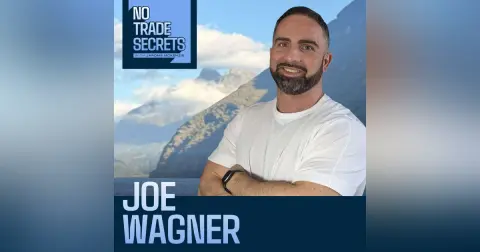

What does finishing a 30-mile Spartan Ultra race have in common with building a multi-million-dollar business? According to Joe Wagner, everything. Joe unpacks the raw, "excuseless" mindset required to push past the "inner bitch" that tells you to quit, whether you're at mile 28 or facing a devastating business setback. He shares his journey into the world of passive income through merchant services, exposing the industry's dark side and revealing how to build a truly sustainable, ethical business that puts you in the driver's seat of your own financial freedom.
💡 Unlocking the Playbook
Strengthen Your "Anti-Quit" Muscle: Everyone has an "inner bitch" telling them to take the easy route. By repeatedly putting yourself in hard situations—physically or in business—you build a mental callus, strengthening your ability to tell that voice to shut up and keep going.
Own Your Setbacks as Blessings: Instead of blaming external factors when things go wrong, take 100% ownership. Frame setbacks not as failures, but as events happening for you, forcing you to find a new, better path and keeping your energy focused on opportunity.
Build an Income You Directly Control: True passive income isn't about relying on a downline. Joe chose merchant services because it put him in the driver's seat, allowing his direct actions to build a recurring revenue stream without depending on the performance of others.
Vet Your Partners to Protect Your Future: Joe learned the hard way that not all partnerships are created equal after losing his entire book of business. Avoid companies with hidden "activity clauses" or unethical practices by partnering with transparent, ethical organizations that guarantee lifetime residuals.
Success is Guaranteed if You Don't Quit: You can never guarantee a specific outcome, but you are 100% guaranteed to fail if you quit. The single most important factor for success is to continue moving forward, because your odds of winning become infinitely higher than the zero-percent chance you have if you stop.
🤫 The No Trade Secret
The trade secret's pretty simple: keep showing up. You just have to keep showing up in everything in life. When you stop showing up is where you are 100% guaranteed to fail, and it's a choice to quit showing up. Keep doing the work, block out the noise, and fuck the haters.
🗣️ Words to Build On
"If you're not reaching a point where your brain is questioning you... then you're not pushing. You're not pushing hard enough." – Joe Wagner
"Every bit of what happens—good, bad, controllable, uncontrollable—you are 100% in a better position if you just own it." – Joe Wagner
"Life's gonna smack you in the face, and you're the only one that's gonna be able to do something about it. It's just gonna come down to, are you gonna keep showing up or not?" – Joe Wagner
👤 About Joe
Joe Wagner is an entrepreneur, author, and merchant services leader with 16+ years building recurring income. Founder of Merchant Service University and a Spartan Ultra finisher, Joe shares no-BS strategies for discipline, growth, and true freedom.
🔗 Links & Resources
- Website: merchantserviceuniversity.com
- Link.me: link.me/iamjoewagner
- Instagram: instagram.com/iamjoewagner/
- YouTube: youtube.com/channel/UCHRJkfZ2Oo8s1m13d6q74Sg
Today, we're joined by Joe Wagner. Joe is an entrepreneur, an author, sales trainer, and business strategist with more than 16 years of experience building businesses, developing sales organizations, and helping entrepreneurs create long-term wealth through recurring income. As the founder of Merchant Service University and a leader in the merchant services industry, Joe has trained and mentored sales professionals across the country while operating one of the industry's most successful merchant industry organizations. He's also the author of two books focused on merchant sales and entrepreneurship, providing practical strategies that have helped thousands of professionals build sustainable businesses. Outside of business, Joe is a multiple-time Spartan ultra-finisher who believes the mindset required to finish an ultra-endurance race is the same mindset required to build an exceptional life. Discipline, consistency, accountability, and refusing to make excuses when things get hard. Known for his straightforward no BS approach to business and life, Joe speaks on entrepreneurship, sales, leadership, passive income, personal development, and creating true freedom through ownership. His philosophy is simple. Joe, welcome to the show, man.
SPEAKER_01Yeah, thank you, man. Thanks for having me. Appreciate it.
SPEAKER_00So there's a lot of places that I wanna uh wanna go with this, but first I gotta go to the the Spartan Ultras. How how do you how does one get into something like that? I mean that's those are you know we all have people who you know who like to run and who like to do uh you know endurance sports or endurance exercise, but this is like the peak of the extreme of how you can where you can take endurance. How how did you get into that?
SPEAKER_01Yeah, it takes it takes someone a little sick in the head to to punish yourself. These people that do you hear about these people doing the hundred milers, and I've caught myself plenty of times, like what the heck am I doing? So to answer your question, how did I get into that? Like a lot of people, I just I was at a point in life where I was ready for some change. Uh I wasn't where I wanted to be physically. Things were going okay financially because I've got a nice, you know, passive income business built up, but I was just at a point in my life where I was ready for some change. What happened? I got back from um a Christmas vacation or a Christmas family trip up to Seattle, and when I was up there, my brothers had given me some crap like, you're putting on some pounds, buddy, like you're putting on some weight, you're getting a little big, and stuff like that. And I got back to Florida, and I remember I saw an ad for a Spartan race, and the mixture of those comments that I got from my brothers basically telling me you're getting fat, and then that ad popping up, and I was just at a point where it was like, let's do something about it, let's let's make a change. So I went to the ad and there was a there was a Spartan race in South Florida, and I think it was 12 or 13 days, and there was two options. One of them was three miles, one of them was 12 plus miles. I was like, well, three miles isn't that tough. I could probably go knock that down right now. I'm looking for some change in my life. So let's just sign up for the 12 miler and actually change my diet, change what I'm doing, and get ready now. And so I just jumped right into it and I just I just kept doing Spartan races, kept going, kept going. And I was in Montana finishing up my first trifecta, which was recently close by after that first one that I did, and I saw someone walking around with a purple, right? So I'm I'm there, I'm there to finish my trifecta, which I thought was like the biggest thing you could do in Spartan. And I see a lady, she was probably like 60 years old with purple on. I'm like, purple? What is purple? She's like, oh, that's ultra. I'm like, what's an ultra? It's like, well, that's the 30 plus miles and 65 obstacles. So as soon as I wrapped up my trifecta, I immediately immediately learned that there was something bigger than that. And once you get that, once you get the ball rolling, you kind of get addicted. And as soon as I heard about an ultra, I, you know, got home, looked at the calendar, and got Tahoe on on the schedule, and just signed up for an ultra. And that's where that's how I got into it, man. Kind of a long story, but just just signed up and went for it and was ready to make changes in my life. And that was the beginning of really, really diving into fitness and and making it part of the lifestyle. And that was probably eight years, eight years ago from now.
SPEAKER_00Well, that's no, that's awesome. And for for anyone listening that doesn't know what a uh a Spartan race is or a Spartan Ultra, can uh can you tell, uh, walk us through exactly what that entails?
SPEAKER_01Yeah, it's called OCR. Uh you might have heard of that, so it's obstacle course racing. So they'll integrate basically trail running, and then they'll have obstacles on the trail. So it could be anything from rotating monkey bars, you could be carrying a bucket full of rocks, you know, a certain distance, you're bear crawling under barbed wire, um, they have dunk walls, you go under the water, under a wall, you can jump up and over. They have walls as as high as eight feet. So as you're trail running, you'll come across obstacles that you have to overcome. And if you can't overcome the obstacles, then you do 20 burpees. So it's it can be pretty physical. It can be a physical day.
SPEAKER_00And how long does one of these, how long does an ultra take?
SPEAKER_01My first ultra was in the Sierra Nevadas. Uh, that's a whole nother story of lack of preparation or underestimating and the terrain that I was dealing with. But I think that first one took me 13 hours up and down that mountain. And then I've had other ultras. Um, I think my last one in North Carolina was maybe seven and a half, maybe eight hours, something like that. But the terrain's different, right? So an ultra in the Sierra Nevada is up and down mountains like ski slopes versus North Carolina, where it's not necessarily flat, but it's not crazy steep, obviously it's going to make a big difference on your time.
SPEAKER_00Gotcha. And when you're going through these races with how long they are, how many times does it occur during a race that it comes into your mind? I call it in my mind, uh, whenever uh I've given it a name uh like my my inner bitch, where that comes in and tells you, hey, you should this is hard, you quit. Like when you when things are really getting tough. Because I know that that for in a lot of areas of in life, but especially when it's just you and your thoughts for hours on end, that's that's that's gotta it has to come into uh your mind throughout, right?
SPEAKER_01Oh yeah, that that inner bitch. So when you're first getting into business or your first ultra race, or you first start, you know, taking on this lifestyle where you do really hard stuff, that inner bitch is it's a bitch. It's really tough. So, like my first ultra race, I wanted to quit that a couple of times really freaking bad, right? Like my knees are hurting. I went through a snowstorm. I have a picture where my hair is literally ice, my hair like it looks like it's spiked like this, but it was actually ice, not hair gel, freezing cold, legs hurt. I don't think I can do this, kicking a couple of rocks. The inner bitch on that race almost got me, right? But I I had a strong reason to finish, which we can get into later. But I think as you do these hard things in life, and as you reach that point where the inner bitch is constantly telling you to stop, I think that you strengthen that muscle where you start to you start to actually get addicted to that point where the inner bitch wants you to quit so that you can beat it. Right? So, like when you when you look at these people that continue doing these hard things and taking on really hard tasks and beating the crap out of their self and you know, building big businesses and the things that they had to go through to build it or the physical challenges of life. At first, when you take that lifestyle on, like you really have to fight the inner bitch and remember who's in control and remember that it's it's not real and that you have a choice. Like, you don't actually have to stop running. Like, if I don't stop running right now, I'm not gonna die. I I just don't want to. It would be convenient to stop running, it would feel better on my legs to stop running. But if I keep going, it's not actually gonna kill me. And obviously, knowing what your goals are and refusing to quit short of the deadline is what will keep you going. But my first ultra was seven or eight years ago, and the ultras that I do now, that inner bitch will still come out, but now it's a lot easier to be like, yeah, shut up. Yeah, like like, yeah, shut up. This is it, this is just part of it. This is the part where I signed up for it. This is the beginning of why I do these. Bring it on, inner bitch, right? Where when you first take on the hard ass life, it is hard to to really push through that. But I think your muscle gets tougher. We build calluses, as someone like David Goggins would talk about, right? Like you just build a mental callus and you get tougher, and you just learn that's part of it, shut up and and keep going. But yeah, it comes, it comes up, and it's part of the part of the skill of of being a winner. You know, people people want to quit. You can look at any successful person online and they're getting haters, you know, leaving bad comments about them. They're they got challenges. Who knows what's going on going on in their personal life, and that inner bitch is is fighting every winner in life. They just know how to tell it to shut up and keep going.
SPEAKER_00Yeah, and I think that's like it I think that's a really important part to uh be able to kind of distinguish it. Is that from the outside looking in, you know, someone uh who's never done a Spartan Ultra or never done gone and taken the jump to to start the business or to do the thing, to do anything really hard. You know, outside looking in, it can look like oh, those people like like it's easy for them. And in reality, you have finished multiple Spartan ultras. David Goggins has done how many of those races and you might think, well, David Goggins can do it easy, but it just like the point of that that is like it's not it's not that those people don't have that voice telling them to quit, and that this is not just as hard, they just have that mental attitude of keeping going, pushing through. And I think that's that's a super important thing for uh people to realize is that it's just because someone does it and does it multiple times and does continues to do hard things doesn't mean it's not hard for them.
SPEAKER_01It's very it's very hard. I I want to quit at things, to be honest with you, almost every day. Something I'm not getting the response that I want, I'm not getting enough opt-ins that I want. Maybe there's not enough signups that I want. I'm putting in all this time and the results aren't quite what I want. Is this worth it? And that inner bitch will come back in business and be like, why are you spending so much time on this? Like, look at this result that you got. Look at this. But the truth is, if you want to be a high achiever, if you're not reaching a point where your brain is what questioning you, if your brain isn't saying, hey, you could just quit, hey, there's the easier route, it's this direction, that's just let's just go that way, then you're not pushing, you're not pushing hard enough. Like you you're not actually gonna be a high achiever if you're not putting yourself in those positions, right? A Spartan race is an easy example because it's very physical, but it's true with everything in life. If you want a great marriage, if you want a great business, if you want to be a great parent, if you want to be a great contributor at your church and community, right? Like it'd be easier to sit on the couch, or maybe you're tired and you didn't get enough rest, and there's some event that you volunteered that you can go that you're gonna go help out with, and you don't want it. You're you'd rather take a nap, right? That that inner bitch could jump in right there. It doesn't have to be an ultra race, it could be something as simple as that, and your brain's saying, Why are you doing so much? We're tired. Take a nap. They got somebody else that can show up. No one's gonna care. Like, no one will notice if you if you take one day off. That's the inner bitch, right? So whether it's at mile 28 or whether it's getting off the couch and going and taking care of that thing you said you were going to, or making that next sales call when you already closed the deal today and it's three o'clock and you could clock out early, right? Those are all the inner bits that you're talking about, telling you it's okay to quit early, it's okay to cut cut short of the finish line, and it's okay to take it easy. And there is a time and a place to take it easy. I I call that Sunday. Sunday's the day to take it easy. Every other day, go take care of business.
SPEAKER_00Yeah, no, and I love that, and because I I think a lot of people with a lot of potential give up on whatever it is, whether it's a business or a a new a new diet or a new workout uh habit they want to change, or whatever it is, they people quit right before they get to the point of breakthrough that they can actually see the outcomes physically, or however that like that actually shows up for them in their life. And because once you reach that point as well, and you actually see the harvest of all of the work you've done to that point, then uh you know, in a in a way it gets easier to do hard things and to like it helps with the conviction, it doesn't make it any easier to do, but it makes it easier to to push through doing it because you have seen the what you know the outcomes were. But the there's that first phase where there whatever you're doing that you're not gonna see you're gonna have delayed outcomes because there's a time lag that nothing happens overnight that is uh you know that is anything that's truly sustainable. And that first period is that's the part I think that is just um is you know stopping too you know short of sh r I think it's like just right before the breakthrough uh happens a lot of the time. It's like don't give up yet. But how agreed how do you coach people on that first phase? The first phase of just pushing through. I mean Yeah, before any outcomes or results have been seen.
SPEAKER_01What one, you can never guarantee the the outcome, right? Like I never make guarantees if you do this that you're gonna get X result, right? Like some things you can do that, like calorie deficit, calories is an exact mathematic equation, X amount of calories equals this amount of fat and like lit weight loss, like things like that. Yes. Building a business, there's no guarantee on on something like that, or a lot of things that I coach on, but you're a hundred percent guaranteed to fail if you quit. That's that's the difference. Like, I can't guarantee what your outcome is gonna be gonna be. I can guarantee what my actions are gonna be, but I can't guarantee somebody that I work with what their actions are gonna be, and I can't guarantee them if they take the actions, even what the outcome is gonna be. But I can guarantee you that your odds of success are infinitely higher if we continue moving forward, and that you have a hundred percent chance of failure if you quit. Right? Like that's the only real guarantee. And it also depends on you know the age of the person and how much life experience they have. Now I'm 41 years old, so if I went back to when I was you know in my 20s, I didn't have the successes and the wins and the amount of cycles that you go through of what we're talking about, where you want to quit but you don't, and then you end up getting the end result that you want, right? Like that's a cycle of many different stories in your life. And as you get older, if you live that lifestyle, more often than not, it usually ends up paying off. Not always, right? But you just learn as you get experience that you know, if I just keep going and stick to what I know you know the right actions are and adjust my actions along the way and stay focused on the goal, if I stay, you know, committed to that, odds are that if I stick to it, I can get what I want. And when you're dealing with somebody that's had some success in life and can understand that cycle, but when you deal with someone who's looking for instant gratification, it's it's not it's not really my style as much as we all just want to you know come in day one and have success. And like I do sales, you can be a successful salesperson from day one, but you're not gonna build a successful empire in a month. So two two different things, if that answers.
SPEAKER_00No, yeah, and I think that's a good uh kind of segue into like into the your merchant service university. Uh so you're training people on merchant sales, and you specifically talk about the lifestyle around that work. Can you tell me a bit about Merchant Service University and what you guys do and about that lifestyle?
SPEAKER_01Yeah, so before I get into Merchant Service University, I've just ever since I was younger in my early 20s, uh, I was introduced to multi-level marketing, just like a lot of us have been, and that's how I learned about passive income, right? And I'll tell you right now, I remember the first time I ever saw passive income, I went to somebody's house meeting where they, you know, multi-level marketing, and they showed the diagram of, you know, you tell two people and they tell two people, and then boom, here, you start making residual income. And the second I saw that and learned what passive income was, the light bulb just like I had that light bulb aha moment, and it just made sense. For me, residual income was like people know about this, like grown adults know about this kind of income and are out working traditional jobs by choice. Like, why would everyone not pursue passive income? Right? It wasn't about the company or the product, but the concept of passive income. So I've been obsessed with passive income literally since the moment I saw that. So multi-level marketing didn't work with a lot of time invested into it. But then I was introduced to merchant services, which is the credit card machines and point of sale systems, and that became more about I can go get the result. Like it wasn't about recruiting people that had to recruit people and recruit people and like downline. It was like, no, I can go directly to a business, I can offer a solution, and if they sign up, I start making residual income and I help that business owner at the same time. And I can go do that one time a week, I can go do that one time a day, I can go do that three times a day. Like, how good are you at sales? So that's kind of my passion around merchant services is one, the passive income, and two, you as the individual are the business. Like you can go get the result, you're not relying on a downline and other people. So it was a really realistic vehicle to create that financial freedom of what I wanted from that first presentation that I saw on the screen. It just made it a reality and then it put me in the driver's seat to make it happen. So, fast forward years later, what Merchant Service University is, is now we live in this world where everyone's selling access to knowledge and information and courses and gurus and all of that stuff that you see online. And merchant services, I've always recruited people in for free. It's a free industry. There's literally hundreds of companies that you can go find online that you can go sign up with, become an agent, and do what I'm talking about. Now, they may not actually honor lifetime residuals, and you you need to do your homework on who you're partnering with, but the concept of this is a free industry is true. Right? So for the last couple of years, I've been seeing tons of ads, and people are charging a ton of money to get into merchant services. So I actually created Merchant Service University with my own time and my own dime for me to just offer people for free that are interested in getting in the industry. So, what merchant service university is, is it's a full-blown online course to learn what is merchant services, like how do you make money doing it, what do business owners need, the right partnerships that are already you know vetted and honest, ethical companies, and the resources to start a merchant service business. And I provide that for free. Like somebody could literally just go online and go get access. I don't ask for a credit card or anything, and then get right into the industry. And I built it to help people that want to get into the industry that don't have the five, 10, 20 grand that some of these people are charging. Because I would have never been able to get in the industry. If I had to pay 10, 15 grand to get in, I wouldn't have been able to build a business. And that's basically how MSU started, what it is, and why why I built it. It's to help more people get into the industry that changed my life without having to pay an entrance fee to do it.
SPEAKER_00So tell me for you know for anyone who doesn't understand, like when it comes to merchant services, like there's obviously there's the major credit card uh companies uh you know and the credit card and the transaction side of this goes uh you know is the core foundation around kind of this industry. Um and then you have companies like Clover and Square and those other uh point of sale companies uh and where do say if I wanted to get into this industry today uh and I went to MSU and got all those resources and okay, and then start a merchant services company. Where do I fit in in that equation? And how how am I able to help a business?
SPEAKER_01Yeah, so Visa, MasterCard, Amex, all of them, and even down to the big software companies, they build all the hardware, they build the software, obviously. American Express and all the net um credit card companies own all the networks and stuff. But where we come in as merchant service uh sales partners is we're the ones that actually connect the solutions with the business owner, right? Like American Express isn't coming into a business and saying, hey, what problems do you have in your business? Uh let's talk about lowering your rates, let's talk about installing some new technology that can help automate and simplify your business, make it more efficient. They don't do that, right? Like they have the networks that run it, and then the technology companies build the hardwares and softwares, but it takes people like us to actually be the boots on the ground, and we're the connector between what they have and own and the networks and stuff, and the actual individual individual business owner, right? So we're the connector and the boots on the ground that connect those two together, right? So it's good for the independent businesses or large businesses, right? Um, especially in today's day and age, they need there's so much new technology, new systems that can make their life easier, right? So they need things like that, and then the companies, the point of sale companies, want more accounts. So we're the we're the one in the middle that connects those two together and we're compensated for it.
SPEAKER_00Gotcha. Um, and when it comes to you know merchant service fees, uh, I I talked to a guy once uh a couple of years ago who used uh he previously worked for one of the biggest uh merchant service companies in the world, and then he started his own uh company uh and has run that for uh a number of years. And um he was telling me about kind of the dark side of that industry, uh, you know, especially when it comes to fees. Like so for our clients, like being on the uh you know, for us being a uh an accounting and finance uh service company, we we get to see how much all these businesses pay in their merchant card fees, credit card fees. And it it can vary a lot from client to client, but it there like the that's not a small chunk of money going to this uh account uh e i each month uh just to to collect their revenue. And what this what he told me was that the moment he quit was they were in a in a board meeting before uh their believe it was a quarterly shareholder meeting where they would have to uh give their report to all their shareholders, and it's a public traded company, and they were gonna miss earnings, the earnings target. Um and then by the end of the call, they were like, Well, if we just add some junk fees here, raise this here, raise this lever here. Oh, look, we've exceeded, we've beat our earnings projection for the quarter.
SPEAKER_01And yeah, just like that.
SPEAKER_00And he said he that was his moment where he saw that and was like, This is not ethical, this is disgusting, and he wants to do it a different way. And he s he also he said that the the actual cost to process these credit card fees has not changed in the however many years since that's been a thing. Um, but the fees have gone up some stupid amount uh in that time. And his question was like, for what? If the actual cost has not changed, why have the fees and and why do they continuously increase? And and then he touched on like regulation, like he said there was there was a time where Congress was going to was going to intervene in this because it was getting out of hand, and then they would then there was uh there was pushback from um to the some of those Congress members from some of the big credit card uh companies, and then all of a sudden Congress is not looking at this anymore. And so it's like that that opened my eyes to like the inner workings of this industry uh that I'd never thought of before. What what experience have you had uh surrounding uh you know the dark side of this industry?
SPEAKER_01There's there's two dark sides to the industry. One of one of them is like what are the merchants pain, which we'll dive into because that's what you're asking about. The other dark side of it is the actual you know sales partners, the sales agents side of it of getting burned as well. So we'll start with the with the first one, which is the the business owners. So merchant services is a really unique industry because it really is like the wild, wild west. Right? There's not a whole lot of regulation, you don't need some college degree to get into it. You don't need to go through, although like with merchant services, I do have like a certification, but there's no like certification required. Like if you sell like life insurance and certain products out there, you have to go and get qualified and paid and go through a process. Merchant services, you don't have to do that. You could sign up right now by the end of this podcast, get on some training, be out in the field today, tomorrow, and sign in some accounts. And you may not know what you're doing. And if you're not working with the right company, there's a lot of unethical stuff that's going on, right? So, one of the reasons why merchant services is tough for sales agents is because merchants have been abused over the years, right? They've been leased equipment. So imagine I've got plenty of credit card and point of sales right here next to me here. So imagine a credit card terminal that costs, you know, $150, and a business owner having to lease this for $50 a month for 48 months, and they can't cancel. Once they're in it, it's a non-cancelable, like you can't get out of this situation, right? This thing costs $150, but you can lease somebody, put them in a non-cancelable deal. That's pretty crappy, right? That's a that's a pretty crappy situation for the merchant. On top of that, that's just what they're paying for the terminal. Now that company can also take the fees and be pretty abusive with them because now they've got them in a non-cancelable lease, right? So now they can't get out of the lease, they're trapped. So now if the customer service isn't good, if they jack up the rates, if they feel like making an extra $20 million and add a little fee like you were talking about earlier, they can do all of that stuff and their merchants are trapped, right? Because they're in a lease. And I'm just painting one scenario here of what the dark side could look like and like the things that have happened and why merchants don't love merchant services. They don't love the merchant service salesperson that comes in because the majority of companies, and this is what I talk about in MSU, don't just go sign up with any, don't just go on Google and sign up with any company. Technically, you can, but the majority of companies aren't companies that you're gonna want to represent that are gonna be really ethical, right? So if you're gonna get in the industry, there are a handful of really ethical companies. So, for example, one of my partners, they have caps on what an agent can sign somebody up at. Like they've they've capped the profits on their own company so that they don't get accused of these things or you know, uh profit just only chasing profits. So if I walk into a merchant and they're absolutely getting abused right now, I could save them some money but still keep their fees pretty high because they're being so abused. With this partner of mine, it doesn't matter how much they're being abused now, there's a cap on what I can put their fee at. And that's in the merchant's best interest. Even though we could charge more and still help this business, there's a cap to it just because it's just the most reasonable, it's a reasonable uh fee and it's a reasonable amount of profit for the company, and it forces the sales reps to look after the merchant first. And when you do things like that, your business kind of takes care of itself. Um, another example, same partner. Um, actually, all my partners, they don't do leasing, like they won't allow you to lease a terminal. So I just painted a scenario of some examples of the dark side from the business owner's perspective, and there is a bright side to that, especially in today's day and age. A lot of companies, like it sounds like your your uh you said your buddy started his own. Um, there's a lot of people that have done that because they didn't like those tactics and the ethics of a lot of the companies. So they went off and they said, hey, I'm gonna go start my own. And hey, here's a concept. Let's do this the right way. Let's do this honestly, let's do this ethically, let's put the business owner first, let's not be abusive with the rates, let's put some safety, uh, some safety nets in place so that our sales reps have to stay within the ethics and the culture that we want to build, and it's actually open up some good companies in the industry. So you but you do you do have to be careful because there's still some dark ones. Now, the other dark side of the industry is people that join up with a company, uh plan on getting lifetime residuals, and then as soon as they stop producing, they get their money taken from them. Right? So there could be activity clauses, minimum requirements, exclusivity clauses. There's all sorts of little one-liners that could be in a sales rep agreement that jeopardize the sales rep's business. When I say business, I mean they're lifetime residuals. Like if I stop producing, I want to get my residual income forever as long as those accounts process. Right? So the other dark side of the industry is if you partner with the wrong company, that sort of protection, it's really common for people to lose their book of business for no reason other than maybe they stop producing and then they stop getting paid. So two dark sides.
SPEAKER_00Yeah, no, and that second one, I mean, that's I mean, that's that's that's not even they're selling a false passive income to uh uh you know, and you see that in a lot of different industries, um, where uh it can be extremely misleading what you're actually buying, and then it's and it's in this in the small the small words on deep into a contract and terms and conditions that you sign that most people don't read in entirety. Uh and then if they do read it, it's in legal jargon that is also confusing and hard to understand. So like it can be very easy to take advantage of people in that way.
SPEAKER_01And that's and that's that's the other part of MSU. The first part is obviously the education, and then the second part, there's no obligation that somebody has to partner with with the people I recommend, but I recommend there's three companies that I've built businesses with over the years that I know that I know are ethical, that I know pay the residuals when you stop producing, that I actually work with. So I don't get paid, I I don't have paid advertisers. I don't recommend companies because somebody pays me to recommend them. I recommend the companies that I've actually built my business on. Um, so that one, they can get educated through MSU, but two, they can avoid the risk of just signing up with some random company and finding out years later, oh crap, I signed up with the wrong one. I just got my residuals taken, now I have to start over again. So I try to help people avoid that whole process. Because that happened to me. That happened to me. My first almost four years in the business, I built up a book and I had my residuals taken. So, you know, that hits home for me. I've been through that just like most experienced people in the industry have. So MSU is also designed to help people avoid that happening.
SPEAKER_00Yeah, well, well, and I mean I think that's I mean, it's the education piece on this is I mean, is so important. Uh, it sounds like just with how obviously knowing how it how easy it is to fall into the wrong, you know, make the wrong decision on who you partner with or which company you go with. Um, and you can build your whole you can make you know huge life decisions based on what you think to be true that ends up not being true and having that taken away from you and and the fact that it happened to you personally, like you know, you've been through that, and so building this to help people not go through the same mistake uh is awesome.
SPEAKER_01When I when I had my residuals taken, my my wife had just moved up from Mexico. I met my wife in Mexico. We had our first kid on the way, and we had just moved from Daytona to LA. And we had a lot on the line. We had just moved, spent all my money on the move. I didn't have a lot going on back then. And literally one month it was just gone. And I'm a couple months out from a baby coming into the world and poof, gone. And don't worry, don't worry, baby. I got this, I'm gonna go back and do it again. And I just went and did it again, right? You want to talk about that inner bitch in you? There's that inner bitch, it'd be a lot easier to just go get a job, be a lot easier than taking the risk of doing this again, right? There's that inner bitch coming back, telling you all the easier routes after you just lost your money to go get a salary job or go get a paid guaranteed position, and you got a baby on the way, and you can't risk it. And anyways, not to go back to the inner bitch, but that was another point of life where that inner bitch comes up and you've gotta believe in what you're doing, be like, I got this, and go take the actions and keep plowing forward.
SPEAKER_00Yeah, no, I mean it's you you're wearing a t-shirt, this is excuseless, and like that's an o that's a moment that you could have made an excuse of because of your circumstance of what happened to you, and adopted that victim mentality and being like, Poor me. And obviously, wearing that t-shirt, and it's what you talk about a lot of uh helping people to stop making excuses and take responsibility for your own life. Like, how important, like, can you emphasize how important that is uh for someone to be able to do it?
SPEAKER_01It's a hundred it's a hundred per it's a hundred percent of your success. You you no one's gonna make you successful, no one's gonna give you that awesome marriage, no one's gonna put the money in your bank account for you for the rest of your life and just take care of you. Like, all the things you want to do, like you want to see the world, like every bit of what happens good, bad, controllable, uncontrollable, you are a hundred percent in a better position if you just own it. You you you have to. It's it's a hundred percent of the recipe. Uh, it it's it's hard to put into words. It's it's just it's it's a non-negotiable of being elite, of being successful, of being on track, of getting the things that you want in life. Over your whole lifespan, you just you just absolutely have to take ownership, um, especially when things don't go your way. Especially. Like, find find a way to blame yourself. Don't blame somebody else that you couldn't take control of. Don't blame the market, don't blame who who the who's in the presidency and sitting in the White House. Like, there's so many factors that you don't have control of. The one thing, the only thing that you have control of is how you perceive how things happen. Like, I've had so many things recently that that have that have happened that could be setbacks, and this skill of just saying, no, no, this setback is a blessing. And I'm gonna look at this as just believe that even even a setback, something that's not part of the plan, is designed to help you get ahead later. But you have to look at it that way. Or it will be a setback. It can be the beginning of a downward spiral if you if you look at it as something that's negative. But if you look at it as, hey, maybe this just saved me from something. Like you run out of gas, driving, this is just coming to mind, but you run out of gas driving, you're late to some meeting, you know, maybe God just saved you from some big accident down the road. Like you'll never know if that's true or not. But if you just believe that things happen for your benefit, that is the one thing that you do have control of. So when something doesn't go your way, or when you are getting the results you want, like give yourself kudos when it's going your way, and take the credit when it's not, and then adjust and pivot, but always believe that you're in control. Like you you it's a hundred percent of the equation. All the rest of it is just built into that hundred percent equation.
SPEAKER_00Yeah, no, I mean I agree with that uh one hundred percent, and um something that I uh especially when I when I write, and there's things that you know one could perceive as uh a bad thing. Right. And being able to think about it, talk about it, write about it as far and instead of why is this happening to me, asking myself, why is this happening for me? And just that shift from to me to for me. I mean, just when you say it out loud to something that you thought was happening to you, and then ask yourself, why is this happening for me? I I feel like it's impossible not to like feel better about it and to think about it through a different lens and uh for you know, and that's I think you know you have you have wins and you have successes, but you're uh you have lessons. Um I don't view anything as a failure.
SPEAKER_01Your whole energy, your whole it actually is something you can become excited about when you're looking for the lesson in it, right? You that like body like Tony Robbins talks about body language, right? You want to change your your your mood, you want to change your energy? It start with starts with your physique, right? When you're a victim, you know, you're you're down. You're like, poor me. Like, I didn't control that. It's not my fault. What can I do about it? Right? Like your physique sucks, but you're like, man, this just saved me. Like, this just helped me. I don't know how yet, but what's what are the what are the other three options that this just put in front of me? Now my head's up, now I'm looking for the open door, now I'm looking for the next opportunity. My my vibe is excited that this has happened to me now. So obviously, different circumstances, it might be harder to do that than others, but the skill and belief and the mental strength to do that, it will keep your head up, it'll keep your physique high, and it'll keep your energy more excited about what's to come rather than dwelling on you know what did or didn't work out or you know what whatever you're crying about. And there's a time and a place to grieve, obviously. You just don't live in it. Like, all right, man, you you you you need an hour to to grieve on it, cool, man. If something else might be a couple days, it might actually be a loss of life, right? Like there's a time to grieve, and then there's a point to saddle up and get back on and say, alright, giddy up, let's fucking go. And you need to you need to know when it's time to go. And you need to give yourself that time to also go process it, right? Like, don't just ignore things that they don't happen. If something hurtful happens or a setback that you didn't see coming, it's it's okay to like, damn, you know, like chew on it for a second. Alright, cool. Spit it out, let's roll. And and and to have that skill and to know how to do that's gonna it's gonna take people much farther than living in it for way longer than they have to.
SPEAKER_00No, absolutely. Yeah. Learning how to not get stuck in that moment, um, and just making it a moment. But um we end every episode with the same question. So if you had to just put one, and uh we've covered uh uh multiple that could uh could apply here, but if you could just pick one. What is your trade secret, whether it be in business and life, your secret to uh creating uh a life or a business, you know, that's worth living and that is fulfilling? What what would that one thing be?
SPEAKER_01It's similar to what we were talking about with the excuses, but in in different words, it's you just keep showing up. You you just gotta you just gotta keep showing up, man. You're you're not making as many sales as you want, hit more doors. Things aren't going your way, keep showing up. You don't feel like hitting the gym, you got on the scale this week and you went up three pounds, but you've been working hard and eating good, keep showing up. Like you just have to keep showing up in everything in life. When you stop showing up, is where you're 100% guaranteed to fail. And it's a choice to quit showing up. So the trade secrets, pretty simple. Keep showing up, keep doing the work, block out the noise, fuck the haters, who cares what they say, they're not gonna be there for you anyways that they wouldn't, whether you win or whether you lose, it doesn't fucking matter. Just keep showing up for the people that matter in your life. And if you don't have a family or anything like that, then that means you. You gotta you gotta do it for you. Let me finish with this. Since I said that, where you gotta finish for you. When I did my first ultra before the race, I was telling my wife and everybody, like, yeah, I'll be thinking of you, I'm gonna do this for you. I even told Father John at church, you know, say, prayer for me. I promise God, like, I'm gonna finish this race no matter what comes up. Dude, I hit that inner bitch so hard on that race, none of that mattered. None of who I promised mattered at a certain point. And I literally, I don't want to keep drawing this on and on and on, but it's it's actually so powerful. It was emotional that that was when I realized like it doesn't matter what you told other people. Like, at some point, life's gonna smack you in the face, and you're the only one that's gonna be able to do something about it. And it's not gonna be like I told this person I would, or I you know made this guarantee or this and that. It's just gonna come down to are you gonna keep showing up or not? Am I gonna keep taking the next step forward? Because my legs hurt really freaking bad right now, and I still have like 12 miles to go. I don't know how I'm gonna do another quarter mile. How am I gonna do this? You're gonna take the next step, man. And then you'll worry about the next step when you get to that one, and then the next one, and before you know it, man, you're crossing the finish line, and my kids are sitting there yelling, yeah, dad! But dude, at one point, I had to fucking do it for myself and just say, take the next step, aka keep showing up.
SPEAKER_00Oh, Joe, you got me fired up over here. Um, and that's but no, this is that's awesome. And uh how can people get in touch with you if they want to find you, if they want to uh see what you're doing with MSU? Um, what's the best place for people to find you?
SPEAKER_01Yeah, so I'm pretty active on Instagram. My thread on Instagram is I am Joe Wagner, the whole Merchant Service University. Again, that's completely free. You can go to Merchant ServiceUniversity.com. You can literally sign up and you'll get instant access. You can start the course. Once within the course, once you hit a certain benchmark, it'll start triggering um some automations where we can schedule a call where I actually do one-on-one calls with people, and then we start talking about like what are your goals, what do you want to do with this business. If you want to talk with my partners, that's where I make the introduction. But yeah, I do that with people once they've actually hit certain benchmarks within MSU. Yeah, Instagram. Um, I'm on YouTube as well. Just go Google Joe Wagner Merchant Services, things will pop up. But if you want to directly communicate with me, the best way would be on message with Instagram or get into MSU, start going through it, and then it'll prompt us to schedule a call and we can talk.
SPEAKER_00Awesome. Um, and we'll put all the links to uh to all that in the in the show notes. But uh Joe, thank you so much. This was this was awesome uh again to know you and your mindset and your mentality on life. I think it's uh a mindset that every single person on earth would benefit greatly from if they could adopt. And yeah, I appreciate uh appreciate you being on and talking to me, and um can't wait to see your journey as it continues to unfold.
SPEAKER_01Thank you, man. I appreciate the time, it's been an honor, and we'll we'll see you guys at the top.