Fixing Toxic Culture, Hiring for Keeps, and Leading the 95% w/ Kyle Patrick Smith - Ep. 58
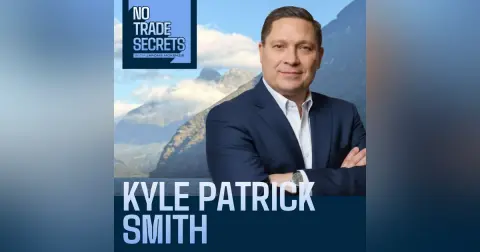

Is HR just the principal's office for adults? Kyle Patrick Smith, a 25-year HR veteran, is here to dismantle that myth. He reveals why culture isn't about mission statements on a wall but a direct reflection of leadership’s true attitude towards its people. Kyle unpacks his tactical playbook for smarter hiring, starting with the one document most founders get wrong, and shares his powerful "95% Rule" for retaining top talent by focusing on the majority who want to do great work, not the few w...
Is HR just the principal's office for adults? Kyle Patrick Smith, a 25-year HR veteran, is here to dismantle that myth. He reveals why culture isn't about mission statements on a wall but a direct reflection of leadership’s true attitude towards its people. Kyle unpacks his tactical playbook for smarter hiring, starting with the one document most founders get wrong, and shares his powerful "95% Rule" for retaining top talent by focusing on the majority who want to do great work, not the few who don't.
💡 Unlocking the Playbook
Culture is a Mirror of Leadership: Your company culture isn't defined by mission statements, but by the daily attitudes and behaviors your leadership team exhibits towards employees. True culture is a direct reflection of how leaders genuinely view and treat their people, for better or worse.
Your Job Description is Your Hiring Blueprint: Stop treating job descriptions as a necessary evil. Invest significant time upfront to create a detailed blueprint of the technical skills, soft skills, and environmental factors for success—this makes the entire hiring and interview process exponentially easier and more effective.
Lead for the 95%, Not the 5%: Stop building your company's rules and management style around the 5% of employees who might abuse the system. Instead, create an environment of trust and recognition designed for the 95% who genuinely want to do a great job every day.
The Two Critical "Whys": As a leader, you must ensure every single employee can clearly and succinctly answer two questions: "Why does this company exist?" and "Why am I here?" If they can't, it's a sign of a critical disconnect in vision and alignment.
Confirm, Don't Just Correct: It’s easy to only point out mistakes, but employees crave confirmation when they're doing things right. Actively catch people succeeding and use "confirming feedback" to reinforce positive actions, rather than only correcting negative ones.
🤫 The No Trade Secret
Assume the best. You know, we live in a society so often where we automatically assume the worst. Somebody does something, they must have had bad intentions... Take a day and assume the best. No matter what happens, assume the best.
🗣️ Words to Build On
"The biggest influence over company cultures is leadership... It's that leadership's view and their attitude towards their employee base." – Kyle Patrick Smith
"Every person in your organization should know the why. And there's 2 whys. Why do we exist as a company? And 2, why am I here?" – Kyle Patrick Smith
"The best you're going to be treated is an interview. You're either going to be treated the same or worse once you start working there." – Kyle Patrick Smith
👤 About Kyle
Kyle Patrick Smith is the Founder & CEO of HRKyle Services. With 25+ years of executive HR experience across multiple industries, he helps organizations hire better talent, develop stronger leaders, and solve workforce challenges. He provides practical HR consulting, recruiting, leadership training, and career coaching. Kyle is also an author, speaker, podcast host, and educator.
🔗 Links & Resources
- Website: HRKyle.com
- Email: kyle@hrkyle.com
- LinkedIn: linkedin.com/in/thehrkyle
- YouTube: youtube.com/@hrkyle
Today we're joined by Kyle Patrick Smith. Kyle is founder and CEO of HR Kyle Services, an HR consulting, recruiting, and workforce strategy firm. He has more than 25 years of executive HR experience across healthcare, manufacturing, tech, financial services, transportation, and construction. He's known for practical advice without the corporate jargon. Kyle also writes, speaks, and hosts podcasts on leadership and the future of work. His mission is simple is to build workplaces that people actually want to work in. Smarter hiring and str how to build stronger leaders. Kyle, thank you for being on here. Welcome to the show. It's absolutely my pleasure. It's great to be here. So I think the best place to start, and honestly, a question that I still have, uh uh uh even though uh I work, you know, we work with uh sometimes professionals um that are in your space, uh, is like what what is HR? Like uh it's like I feel like it can be one of those things that encompasses so many things, and some you know, some do it this part, some don't, but like in a nutshell, like what is HR to you?
SPEAKER_01Yeah, to me, it's the one and only link in the company that is directly responsible for linking the company and everything that it does and has to offer with the employee. And it's that one role that really balances right in the middle between employee loyalty and company loyalty. And it really is the only role that has those two components.
SPEAKER_00Okay, and so how big a part then is uh I would imagine then like the culture is really kind of the center point of because you know, when at least how I used to look at HR uh was like it was like going to the principal's office. Like if you had to talk to HR, it was because you're in in trouble, or there was you know, or if there is something that you needed help with on like uh with your like related to your payroll or something like that.
SPEAKER_01Um it it sounds like when when I hear you or anyone else describe that, that tells me immediately that you had mediocre to poor HR support.
SPEAKER_00Gotcha. Okay. And so when it comes to the you know the culture part of it and you know workplaces, you know, that people enjoy being in and want to work in, uh, and you know, uh I feel like culture that uh that that's a good kind of first place uh to start. Like what determines a great culture? You know, you've you've worked with I can't imagine how many organizations in 20 over 25 years. What are the trends you see in the good cultures?
SPEAKER_01And and the one thing that stands out is a culture that's well aligned with its employee base. And I define it as that because it really depends then on the organization, because different organizations have a different makeup or a different look. And what we as HR professionals need to do is try to make sure that we've got a really good alignment, really at the end of the day, with what employees are expecting from that work environment and what they're what they're actually experiencing. And honestly, you know, this is this is a concept that's as old as time. And the biggest influence over company cultures is leadership. And when I say that, I don't mean the pictures on the wall and the statements that are made and the mission statement, all those wonderful things. It's that leadership's view and their attitude towards their employee base. Because we find that that, you know, the behaviors, the attitudes, the feelings, the thoughts that those leaders exhibit towards the employee base, that sets the example for everybody else to follow, and that ultimately determines the culture.
SPEAKER_00You're making me think of different places that I've I've worked in the past and um uh that have some have had really good cultures and some uh you know, I not not so great. And um and even the shift in a culture after uh the company was acquired and had new CEO, new management, new leadership, and how the culture a great culture went to shit, really, to you know, uh put it bluntly, quickly. And I think you know what you're saying here like is really kind of the crux of what happened, because one, the alignment on uh with the people was just not there, and there uh there was seemingly no being on the team, you know, being an employee there it wasn't even clear like what direction are we heading, like who are we now that we are joined and merged together. But then just this uh how the leadership saw the people that worked for them, that was probably the biggest change. It was like you you became just a number on a spreadsheet, uh at least that was the feeling, versus before it it had like you know, people talk about like that kind of family culture, and like that's you know, uh I feel like it's hard to put a price on how much that's worth when you do have it.
SPEAKER_01Absolutely, yeah. What's interesting is you when you talk about that, and I and I love it when I hear people describe it as that, because you know, if you've been in the work world long enough, you've had those experiences that that you describe, unfortunately. You know, and I talk to so many candidates, and this is still true because I work with with clients every single day with companies. And too often you you have good employees, good companies, you have okay, decent companies, and you have poor companies. And too often it's a crapshoot. And you as the individual really need to do your due diligence and understand what that culture is. And and I and I tell candidates is one of the best ways to figure that out is be inside their facilities, interact with people in that organization and ask yourself, what what kind of a feel am I getting here? What kind of a vibe? Do I feel welcome? Do I not? You know, what am I seeing around me? What sort of interactions am I seeing? And that tells you so much about that culture. It's not about looking at the wall and saying, oh wow, they have a really well-written mission statement and vision statement and how they view these things and so on. That's irrelevant. I've seen some of the best mission and vision statements written in the whole world at some of the worst companies that I would never consider working for. So you've got to really understand what interaction looks like there? And what kind of vibe are you getting from the leadership in that organization? Because again, the best you're going to be treated is an interview. You're either going to be treated the same or worse once you start working there. And again, my 30 years almost of experience being in corporate HR now and in consulting tells me that that all of this is true.
SPEAKER_00Yeah, no, and that's you know, when you talk about like uh you know the mission statement, and you know, it's I feel like a lot of companies uh can think that they can hide behind just once one well-written statement that they put everywhere. Uh, but then it's you know, it's that is not that's not your culture if you don't live by that way every day.
SPEAKER_01Exactly. And exactly. And and you mentioned earlier about being in organizations and and you know not having a clear direction. I tell every person, and I especially speak to leaders about this, every person in your organization should know the why. And there's two whys. Why do we exist as a company? And two, why am I here? And every employee in the organization should be able to answer those two what would seemingly be simple questions. And to me, that's a true leadership test. If I walk around the building, I should be able to stop any person in that organization, and they should be clearly and succinctly be able to tell me why does this company exist and why am I here?
SPEAKER_00Yeah, no, I I'm I'm imagining that you're saying how simple of those questions are, but I'm imagining how how many answers you've been able to get over your career have not been the you know hundred percent success rate with a rounding error that you would expect.
SPEAKER_01Exactly. And and again, this is what I do every day, right? And and this is exactly how I approach it. I'll have those conversations with the leadership team. And it's fascinating. I'll say, do you describe to me your organization? What's this organization like? What's it like to work here? You know, we we delve into that and we have those conversations. But then it's an important part of my work, then, is to meet with random employees. And the key is it's got to be random. It can't be, okay, now that you've met with us, I want you to meet with this person, and we've handpicked these people to meet with. No. I get to select who I meet with, what they do, and so on. And it's uncanny, I'll have the same questions for the leadership and the employees, and how different those answers will be. Because one of them is you know what they want to think it's like, what they hope it's like, what it what it might be, what it could be, and whatever. But what I get from employees is that raw, here's what it is.
SPEAKER_00Mm-hmm. No, that's super interesting because I I I would imagine that uh your leaders' answers are more geared towards uh a future state they would or a vision that they that they would like to uh it to be at, which is not necessarily going to line up with your reality today.
SPEAKER_01And uh well, I see part of it as where they would like it to be. And I think part of it is just this idea that if I say it enough, it'll be true. You know, if I really believe this, this is truly what our what our culture would be. Because what we find is there's this cognitive disconnect between here's what I want it to be, but all of my actions point it in this direction. And that's so often what we'll look at them from a leadership standpoint. We'll say, okay, you've listed these 10 things as being critically important to the organization and so on. How do what how do your actions support that? And again, there's where we begin to see a significant disconnect. And it's amazing to watch the light bulb go off because, again, as you as you gave in your introduction, and it's absolutely true, I don't deal in jargon, I don't deal in fancy terms, you know, I'm not sitting in an ivory tower somewhere and writing my next, you know, uh dissertation on this. I've been doing this for a very long time. I've seen the reality of what exists out there, and that's what I talk to organizations about to say, let's not overcomplicate this. Leaders, what would you like? What would you like in your leader? What how do you want your supervisor to interact with you? And again, we start having those real conversations, and they start listing off those things, and then I I turn it around and I say, okay, how many of those things do you do for your team?
SPEAKER_00Yeah, no, and that's interesting. It's one thing that I I think I've seen before, uh, but also I imagine you also run into is that sometimes uh when you're talking to you know people that are not leadership or senior leadership, and you're trying to get the real picture and real answers and the like the real truth of like of to get your actual picture of what this looks like for a company. Right. There's gotta be in some organizations like reluctance or this fear of speaking out about su certain things because of the fear of the repercussions, and I've seen that in real life uh that people were not they didn't want to speak out about things, and as a result, look, people were quit just quitting because they didn't want to speak out, and then they would just quit.
SPEAKER_01And so and you see those, and and when you've done this long enough, you recognize when the person you're speaking with clearly is hesitant, clearly is nervous or anxious to share anything. Um, because those examples you give are real because I I've seen it firsthand. Uh, we we've got a competitor, so to speak. I I use that term lightly in this example, that was working with a firm and they had these employee meetings, they got feedback, and you know what they did? They went to leadership and told them what the employees said. They gave out some specific names, which I can't even fathom doing that. You know, I can I can see the interaction and them saying, Well, who's who said that about us? And then they they disclosed the name. Well, those individuals were called into meetings then by leadership and said, What are you doing? Why are why would you say those things? So they were literally attacked for being honest with a consultant about what they were saying. So, to your point about being nervous or anxious about giving feedback, yes, it happens. A good consultant can see that, but even worse, yes, it definitely does happen, and I and I've seen it happen. And that's precisely, you know, those are situations that ultimately we can't help. So if you're working with a firm as a consultant and they're asking, well, who said that? Why did it? As soon as they take that tone, that tells me they're not interested in improving. They're simply looking for confirmation. They're looking for confirmation and affirmation that what they're doing, even though it's terrible, is is correct. And again, those are the type of situations I'll be real frank with you, I walk away from. We've walked away from engaging, had that tone because I can't, there's nothing I can do there. Yeah. When someone brings me and this team in, we're brought in because there's a reason, there's a situation or a circumstance that needs help, it needs correction. We want to make it better. Like you you introduced me at the beginning. We want to create workplaces that people want to work in. So if we see that that that's just not there, that's not the attitude of leadership, then we're happy to walk away from that because that's not going to be a successful situation.
SPEAKER_00Yeah, no, I mean it's it's you can't if uh if leadership is just trying to find that out so that they can suppress that, it means they're not they don't want to change those things. Uh and uh which unfortunately gives, you know, for like the you know, the example you gave where the consultants giving names, like uh that's you know, unfortunately, like examples like that is what stick in people's minds, uh, and have them, you know, some people develop like that fear of and stigma of like the HR, you know, HR is you know working for the bosses against me, and it's like I think I think it's a good HR consultant serves the is paid by the owner, but serves the people in the organization first, not 100% leadership. Yeah, which it's uh you know, which in my experience is is it's harder to find uh consultants like you that do it that way than than it is to find the opposite.
SPEAKER_01Well, you know, when we started this whole thing, I'm so glad you brought that up. We we made sure that we had a guiding light here. And what you find with a lot of consulting firms, their guiding light is revenue and it's profits. That's not the guiding light here. I I don't need it to be, I don't want it to be. I think that's shallow thinking. I don't I think that's very shallow intellectually. We are guided by the fact that, again, like you introduced us, we want to foster and create workplaces that people want to work. Because I've been there and I've done that, and I've been at places that I didn't want to go into and I didn't want to work. So I don't want to be this person now in this role of perpetuating that. Because, you know, we talk about these poor examples, but the the wonderful thing is there's a lot of companies out there and a lot of leaders that want to do the right thing. They want to create companies and organizations and cultures that people want to work in. And again, those are the ones I want to align myself with. I don't want to think, you know, I don't want to get too hung up on the fact that there's these companies that really kind of like to be not good to work for for one reason or another. Who knows what their motivation is? I I don't give them very much thought unless they try to bring me in and we and I see there's not a good match. I really prefer to focus my attention on the leaders and the organizations out there that say, gosh, I know we're not that good at this, but I know we can get better. And I love working with them because there's plenty of those stories out there. There's plenty of success stories out there in clients that we've worked with and that we we continue to work with that that have that attitude and they're willing to make the investment to make that change. Because the other thing that, again, I think we all know and your listeners know, these changes don't happen overnight. Uh you gave the example of the overnight change going bad. I've seen those where it feels like this was a great place to work just two weeks ago and now it's terrible. I've seen those, but I've never seen improvement that quickly.
SPEAKER_00Yeah.
SPEAKER_01But I have seen improvement in six months, eight months, a year with the right leadership mentality. So it's it's possible. I've seen it and lived it.
SPEAKER_00Yeah, no, it's um, yeah, I I think anything anything really valuable and worth you know, sustainable that's good is is not something that is quick to do it. And that's you know, and that's why it's you know a lot of those things are like not many, it's why it's not everyone has it, because if it was easy and quick, then everyone would have amazing cultures, but it's not easy and quick. We all take yeah, we we can wish for it, but then when it comes to hiring, hiring is something I know a lot of a lot of people struggle with, myself included. And I've been more inclined to approach hiring to really focus on the the soft skills, the intangible things, not the technical skills. And you know, for a company like mine, is if uh fractional accounting and finance is very technical. But my thought, my thinking was okay, if you have experience in this industry somewhere, you you have you know you have two years of experience at KPMG. Okay. You didn't do that by not knowing a thing about accounting or five.
SPEAKER_01Yeah, you're you're technology you're technically sound.
SPEAKER_00Yeah, so it's like now is it are you gonna be are you the smartest technically or the best technically? No, but like that that can be like that is that can be something that you can learn and you can learn you know pretty quickly, uh, with the right systems to teach to train you. And tangibles though, that's where I real I really put a lot of my focus on. And I'm I'm curious how you approach hiring and what you think is the most important thing. Like, is there a single most important trait to look for when hiring someone?
SPEAKER_01There isn't. Thankfully, thankfully, because then we'd have to only be that one kind of person to ever get jobs. But here's how we approach it and how I've approached it when I'm on the hiring side, which again been there plenty of times. Uh, here's how I approach it when we work with organizations, hiring managers, whatever they are. We make sure that we understand what specifically are you looking for that is considered a successful candidate, and we really make the investment from a job description standpoint. Now keep mind, I'm talking job description, not job posting, two different things. We make sure that we define what represents a successful candidate, and it gets back to the things you're talking about. So we get into right, we get into the technical skills. Well, they they need to understand, you know, I'll just make it simple. They need to understand Excel, they need to understand it probably at an intermediate level. They can't be entry, they don't necessarily need to be advanced. We need them in an and and that's how we break it down. And then we just continue to go through that. And for some, uh, you know, some roles it requires a certification because again, that tells us that they've met certain criteria. So, you know, we don't have to do it. So we make the investment on the front end to get a really solid job description that says, here's what would incorporate, or here's what an ideal candidate, the best candidate, would look like. So we define that out, right? We talk about the work environment and all those things because those are important too. You know, we we we have things in that work environment that may knock some people out. For example, um, you know, they may meet me all the skills, but part of this job requires traveling 25% of the time. Well, guess what? You know, we we've got to have candidates that can travel. If it we we don't want to put it put a job out there and and have that be a requirement, and then we're getting people that can't travel. So we make sure we look at all of those things too, and just even some of the simple things the work environment, what that looks like, you know, who's where are they going to be working? So again, that allows us to measure the candidates that apply against that. And you mentioned soft skills earlier. Absolutely important. What we work with our clients on is to make sure they define what those soft skills look like. Because initially, soft skills, that's such a nebulous term. It could mean any number of different things, right? Soft skills can look very different from role to role. So we make sure there again that we define what those soft skills are and what they need to look like and where that person is successful. And then as soon as we do that, we use that to create a job ad that's then going to appeal to those people who we're actually looking for, right? So we take the job description, and I kind of think is the legal document. And then we create this job posting that's that appealing to the people. And how does it become appealing? Well, it has a pay rate that's when it arranged that's going to attract the people that we want. We make sure we list the benefits of the role and the things that people that are the most successful in those positions, what they're going to be looking for, because that's who we want to apply. So that front end, that's a lot of investment, right? There's a lot of time and effort, and but you know what it does? It makes the rest of the process so easy. Because then we're not flying blind to say, well, shoot, I just interviewed him. He might be good. I don't know. There's none of that happening anymore. Because we've interviewed her or him against these criteria that we've set. We've had an opportunity to ask them questions and you know, a lot of this we want to have behavioral-based questions, right? Why do we do behavioral-based? Here's a simple reason: the best indicator of future performance is past performance in the same or similar situation. Because as humans, we're we're pretty predictable. You know, we like to think that we're not, but but by and large, we're pretty predictable. You uh, you know, you think about any of the jobs you've ever held. When you go to work, you typically leave at the same time, you typically get there at the same time, you typically park in the same spot. Your routine is very similar throughout your day, right? Right down to again picking the parking spot. That's how predictable we are. So we know that same predictability happens in situations as well. So when we're asking someone a question, and again, I love to give the simple example. I'll go back to Excel for a moment, and we ask the candidate, do you know Excel? Right? Candidate one says, Yes, I do. Used it for years. Candidate two says, Yes, I do. And let me tell you, I'm actually using Excel as part of my job search, and I keep a record of where I've applied, when I applied there. I keep a link to the job posting. I have a page on there that tells me an update and my status and so on and who my contact is there, and I'm able to track how many jobs I'm applying to on a regular basis and how that translates to interviews and offers and so on. Then I ask, you know, and then as a result of this, you know, I found that I'm getting a lot more interviews and a lot more follow-up interviews because I'm of the process editor. And then I come back to the the interviewer for training and I say, okay, who do you hire in that situation? Well, it's the second person. Why? Because they have demonstrated that they truly do know how to use the tool. But there again, remember we were asking for intermediate Excel skills, right? Well, in their example, they've demonstrated that they they use Excel at an intermediate level. That's how this works. And again, I'm not trying to oversimplify it because as you saw in the beginning of this, there's a lot of conversation that happens, and we really look to say who's been successful in this role, what characteristics they had, and so on, to get to that point. But as you can see, it becomes very easy after that. We know the questions we're going to ask, we know the kind of answers we're looking for, the kind of depth and so on, and it gets to that point. So, because I agree with you completely, we can never look at candidates and say, hey, yep, they check all the technical boxes, that's hiring. Because you and I both know there's there are those soft skills, there are those other things that aren't necessarily technical, and it could be a travel requirement, it could be a work environment, it could be who they're working with or working for, it could be that they really need to work from home a few days. Uh, it could be the temperament of the people that they're working with, right? I've hired, and again, thank goodness I got better at this over time, but I'd hired people before that technically, oh my god, this is a slam dunk. And they get in the role and there's just not quite the it just doesn't quite work. They're they're more reserved, this team is very outgoing, they're more, you know, they they're hesitant to approach people, this team isn't that way, there's a lot of interaction, they're not used to that. They're more buttoned down. You know, that's been always been a common one. You know, you get someone who's very who likes a very formal environment, everything's spelled out, and so on, and we put them in an environment where it's a little bit looser, people walk up to your office, they ask you questions and so on. So, again, I'm supporting your point to say that's where that's those soft skills come in and where we've got to consider those. So, not to oversimplify it, but making that investment on the front end for your job description and then translating that into a job posting that draws in who you're looking for does wonders for the rest of your process.
SPEAKER_00Interesting, yeah. And I think uh I know for myself at least I can speak to um did not and have not ever put that level of thought into the job description. It was kind of honestly something I viewed as like I kind of you have to have one uh and necessary evil. Yeah, and it was, and to use your own words, like kind of like flying blind for some of this, because uh didn't start with the good foundation.
SPEAKER_01And I get that because again, you know, that's where a strong HR team comes into play. Because when I have you, and and I'm just gonna use an example. If you're my head of marketing, you know what I want you really good at? Marketing. When I'm working with my head of accounting, you know what I want them really good at? Accounting. And when you've got an HR team, you know what I want them good at? HR. And to me, job descriptions, job postings, interviewing skills, all of these other things, that falls under my purview. My team and I should be very good at that. Just like you should be if you're head of marketing, very good at social media, understanding search engine optimization, and all those things. And that's what I tell my leaders when I when I come into an organization and I meet with them. I make it clear that here's what I'm really good at, I know what you're really good at, and here's how we're gonna work together to get through this. And again, it's always been worth my while to have those conversations to make it clear, okay, here's our lanes, here's where we are. And if you and I are working together, nothing more, you know I I've loved saying this over the years. I'll tell you after meet, hey, here's what I need from you, and I'll list off four or five things, and I'll tell you, don't worry about how it looks, don't worry about the language, I don't need you to worry about any of that. I just need you to give me the details that I don't know about this marketing role that you're looking to fill. I'll make it work under our job description. That's awesome. And then the other thing that I do is I make the case for you because I want you to know here's why I'm asking you to make this effort. I'm asking you to do this because it's going to make our likely to attract the kind of people you're looking for, it's gonna make it easier for you to interview. And then the other good thing about a job description, once you do a good job on it, it tells you who's promotable, it tells you what kind of training people need, it tells you how you can rate their performance. So, what I've done with this investment is is over time try to save you a ton of time. Because why? Because you're our marketing guy, and I want you spending as much of that time in marketing as possible. I don't want you spending time in HR.
SPEAKER_00Yeah, no, I think it's yeah, that's I mean, and that's the long-term approach. It is to be able to do this uh and hire, you know, smart sustainably, and then you know, when it comes so there's hiring, hiring the right people, and then there's retaining those good people. What have you uh, and this is probably the thing I'm the most curious about. Uh what are the main things that you have experienced that truly incentivize people to want to stay? Obviously, and I my personal opinion is most jobs are not saving lives or rescuing kittens and puppies. So if you're not doing that, my personal opinion is one number one or number two should be the financial incentive. Like, and I think anyone who if you you know if you asked someone, uh a candidate to rank, you know, a number of different things and they put compensate financial compensation last, I think they're they're they're telling you the answer that they think you want to hear. But I think it should be one or two. And then after that, it's is like that's something I've been I I I think about quite frequently. Um, but I'm curious, what have you found? Like what are what actually incentivizes people?
SPEAKER_01I mean, I gotta tell you, I love your questions. Uh I mentioned at the beginning that I was looking forward to being on here with you, and you and I talked a little bit offline and and just about going through this, and and I love your your questions because I I admire and I appreciate your direct approach because these are absolutely the kind of things that that your listeners should be thinking about. So here's what I'll say about that. You're right to a point. Research tells us, and it's fascinating to look at this research, that as a people generally in different groups and so on, we have a certain threshold that we're looking for compensation-wise. So compensation is always a factor. And this is also, by the way, why I'm such an advocate for compensation ranges being in job postings. I think there's no question I should be in job postings. Because I, again, to your point, I want a candidate to look at that and not only, you know, go through and say, God, is this a job I really want to do? How's the location? But I also want them to have the ability and and the pleasure of being able to look at it and say, gosh, you know, I could do that job, but they're just not paying enough. Guess what they've just done? They've saved themselves time and they've saved me time. So, first and foremost, I agree with you to a point, but I also know that at a certain pay level, compensation is a non-factor, believe it or not. People start looking at other things. So here has been the one of the concepts that I've really advanced over the last few years, again, based upon all this experience. And what I call it is the 95% rule. And here's what this basically says. And you can question the numbers, but here's what it says: 95% of the people at any company want to come in every day, they want to do their best job, they want to be paid fairly, they want to be treated respectfully, they want to know what they're supposed to do, they want to be recognized for their the good work that they offer, they want to have an opportunity to correct things that maybe they're not doing right and be given a fair chance to correct that, and so on. But ultimately they're coming in there to do a good job. I've met very few people in my time, and I've asked this question in groups since fascinating. I've yet to have someone disagree with me. I'll ask the question: how many of you want to go to a job and do poor? Never get anybody raise their hand. Nobody ever says, Oh, that's me. You know, I just want to get a job and I want to do as poorly at it as I human as humanly possible. So, what I tell leaders is we've got to turn this upside down then, because we're leading organizations basically around the 5%. The underperformers, the slackers, the people that want to abuse the rules, that want to do bad harm or whatever. Why? Because what happens is by doing that, you lump everybody under that category. So you've created this whole environment around these 5% that you're, by God, we're gonna, we're either gonna get them to shape up or they're out. And we've said everybody's that person. So we're working together. I'm leading you, and I'm leading you under the same structure, even though you're my top performer. I'm leading you under the same mindset as if you were the worst performer in the company. And that's what I talk to leaders about all the time. Create environments that people want to work in. That's what that 95%. So think about yourself. Where would you want to work? Well, if I put you through an exhaustive interview process, the first thing I want to say is you're qualified for the job. Don't hire me in after you've exhausted this interview process and then act like I don't know what I'm doing. Work under the assumption I hired you because I thought you were the best candidate. Now I'm going to treat you like that. But too many employers don't do that. They're immediately looking, okay, we're we know we're good at addressing errors, we're we're we're on the lookout here if they miss, if they're late, if they this, if they that. They're very good at having this litany of things that they're looking for for that person to make a mistake on. Well, I say let's turn it upside down. Let's look for the litany of things that you're doing well, and let's recognize that. Because again, I've yet to talk to any employee that said, please just recognize all the mistakes I made. Please do that. Nobody ever says that. You know, please don't trust me. Please don't, please treat me like I really don't know what I'm doing, and you need to do my work for me. Please, you know, micromanage me. I've yet to meet anybody ever said that. And again, you're you're spying, because see how ridiculous it is? Yeah. But yet manage, we manage employees that way. We set up workplaces like that. Pull out any employee handbook and ask yourself how much of it's devoted to recognizing top performance? How many of it's how much of it's devoted to recognize people for doing the right things and doing well and doing all these things and being supportive and and like you said, all those those uh soft skills that we want, you know, supporting each other and being good teammates. Very little of an employee handbook is devoted to that. You know what you're doing?
SPEAKER_00I feel like it's the handbook of uh what not to do.
SPEAKER_01A bingo, exactly. And that's your introduction to the company. Your introduction is we're so glad you're here. Go through this, and if you screw up on any of this stuff, damn it, we're gonna write you up.
SPEAKER_00Even the I remember I remember my uh my first job out of college was with a big global uh public accounting uh firm. And as part of onboarding, there was a series of different work, you know, workplace trainings we had to go through, and they're all videos for the most part that you had you know that you'd go through and then you would answer the questions. And I remember like I'm I think anyone who's worked in a company that has uh at a certain size has probably seen the same video or one very similar. And it it's like about workplace harassment, and it just goes through it. Yeah, it just you know it shows the you know the dude at the water cooler going like What's up, baby? Like, or something like that, and like giving her a slap on the ass or something, and then you're like, Oh, and it's like and then the question says uh you know has multiple choice, and one of the answers of like what not to do is slap her on the ass, and just like you select that one, and it's like, but like you just the reason I I'm saying that is you just made me think of like, well, none of the training videos are like how to treat or interact with people on your team ever. And uh it's like just how to not sexually harass someone in the office.
SPEAKER_01I I'm so glad you bring that up because obviously you know anybody in HR has done those trainings and so on. And I've built my own, and we we we obviously we we provide those to organizations and we deliver those, and and I take the approach exactly what you're saying. You know, we we kind of get past the absurdity. And you know, the thing that that I include in there always is an acronym called Think. And I would encourage your listeners to look that up, but it's to your point exactly. You know, think about what you say before you do it, you know, treat others in a certain way, you know, and and it goes through the T-H-I-N and K. And it it gives you a very simple guide. And I even say to people, hey, this is probably stuff you heard in kindergarten, but guess what? This is what it's all about. And again, I'm not gonna give away the acronym because I want your listeners to look it up, but look up think, T-H-I-N-K. And if you've got a group of employees who are really guided by that, that's what you want. And again, you know, it's like the old, again, we're gonna get into some research on psychology here for a moment, but it's you know, the the one of the least effective drug prevention of all time is the one that said don't do this or no smoking. Because what it does is it plants that seed in your mind of smoking or do drugs, so it actually has the opposite effect.
SPEAKER_00The no is like your subconscious uh removes that. I I I remember someone telling me that about writing and um and uh you know, and you know, like if you're ever writing any affirmations or things like that, like only affirm the things and write the things, say the things that you do want, not what you do not want, because the do not want or don't or stop. And I think an example you gave was like stop eating so much shitty food. It's like no, that should be start eating a well-balanced, healthy diet. And exactly they you know, same thing basically, but one of them is towards the positive, one is to stop doing something, and it was yeah, it was it was interesting, the how the the the do not was like so very true, and you're right.
SPEAKER_01The research tells us that. And here's what's interesting. So I I didn't mean to talk over you there, but there's a concept that I've taken from that that I brought into workplace all the time, and here's what I say you give what's called confirming feedback, and I said you'd be amazed how much that works. And here's what confirming looks like, and I'll just you know, I'll use a fictitious example. Boss is walking around, he sees Cindy doing something that's exactly what Cindy. I just want to take a moment. That's exactly what we're looking for here. You're doing exactly the kind of work that we want you to do here, and you know, a funny thing happens with Cindy, and I know you know what I'm about to say. Guess what Cindy's gonna keep doing? She's gonna keep doing it that way. Exactly. Because we've given her that guidance, and again, to your point, that's the directive. That's where we want her mind to be, not a fear of making a mistake, because that's what she's gonna fixate on, just like the person that you said, you know, don't eat the crappy food. Guess what they're gonna fixate on? Crappy food.
SPEAKER_00Yeah, and I think that's something that a lot of leaders can, I think probably all leaders can do more of, is uh because it's it is easy to fall into a habit of just bringing up the bad habits or things you want people to stop doing on your team when they do it, because when they do those things, it's it's going against what you know, it's going against something you believe they should be doing, but when they do it the right thing, you're like, well, that's expected. But yeah, they're kind of like this they fall kind of completely like on the same level on the opposite side of the spectrum. So it's like you need a like and you know, counterbalancing that, you know, is I mean, uh for someone's psyche is gonna I feel like would do a lot.
SPEAKER_01And well, again, you you ask yourself this question as an employee. You know, I ask any employee, would you rather never receive positive feedback? Again, never had anybody say, No, please, I just I just want to hear the bad things I'm doing. I've never had an employee say that. And again, I think you know, for your listeners, neither one of us is saying, you know, don't have the other kind of feedback. And by the way, we we call it either confirming or correcting. So we're confirming the the things that we want that person to do, and we're recognizing that, and then we're correcting what we don't want them to do. Because to me, those label positive, negative, that means nothing. You know, that's just a random label. Where when we're in the workforce, we either want to confirm that people are doing the right thing or we want to correct them from doing the wrong thing. And here's what's interesting, too, that I want your listeners to remember there's research to support exactly what we're talking about, that people they absolutely want the the confirming feedback. They want that, those messages. But you know what they also want? They want corrective feedback. Employees want to know if they're doing something wrong, that they're doing something wrong, but but they also want the direction to say, hey, here's what you're doing, and here's what's wrong about it. Here's what I really want you to do. So they want that full message. They don't just want you coming down on them and saying, quit doing the wrong thing. They want it to be this whole picture of, hey, what you're doing there is incorrect. We really want you to do it this way. Here's how you do it, and guess what? Here's why we do it this way. So that employee gets that whole picture. And again, it comes back to something we said in the beginning. Employees have to know the whys. They want them, they have to know them, uh, and they deserve them.
SPEAKER_00Yeah. I mean, uh, yeah, especially knowing my personality, it's uh I have never done well when told to do something without giving the reason behind it. Um exactly. Because you know, I I want to know what it is, what's the reason behind what I'm about to spend time doing. Um because it it's my time and I want to spend it well, you know, whether that's in a work setting or not, you know.
SPEAKER_01Um and and I'm gonna add to that as well. Sorry, I didn't mean to talk over you, but I'm gonna add to that as well. I I absolutely that's true of vast majority of people I met. But the other thing too is, and I bet you fall into this category, you're gonna begin to understand the why, and you're gonna look for ways that you can do even better. Like, oh, okay, now that I understand that's what we're trying to do, well shoot, then then maybe I could do this and that and other. So you're actually gonna look to to enhance what it is you're doing because now you understand where it fits in.
SPEAKER_00Yeah, no, that's a good point. I uh that kind of that can introduce people to be less robots doing, you know, things that they're being told to, then having their own initiative. And that I feel like those are the the cultures and companies where then the everyone contributes different ideas and then the compounding, you know, compounding a whole team's worth of ideas and thought power towards a shared direction versus just leadership, how much further you'll go uh is gonna be exponential. Um we finish every episode with the same question, and so I want to ask you what is your one trade secret, whether it be in business or life, uh, that people people should know about and that has been you know the the biggest thing.
SPEAKER_01I push myself on this every day. Yeah, that's an I it's an awesome question. And it fits with some of the things I've talked about today. I push myself on this every day. Assume the best. You know, we live in a society so often where we we automatically assume the worst. Somebody does something, they must have had bad intentions. You know, as this happens take it, take a day and assume the best, no matter what happens. Assume the best. Somebody cuts you off in traffic. Well, they must they must have something that they're dealing with, and it's it's a problem, and they got distracted. You know, so somebody says something inappropriate to you, they didn't mean it. You know, the the words slipped out. They they so that assuming the best, it's amazing how that changes your life, your outlook, your happiness, your your your viewpoint on so many situations. So that would be my my one big thing. And I again, am I perfect at that? And of course not, but I really try to hold myself to that standard every day.
SPEAKER_00No, that's amazing, and I think definitely, yeah, definitely something that would be beneficial to people uh to have that looking at a single thing is you know, with the half full versus half empty mindset is gonna it shapes your whole uh previous guest I talked about, you know, when bad things happen to you. Like instead of instead of looking at it, why is this happening to me, reframing that to why why is this happening for me? And it's still the same thing that happened, but completely changes how you look at it. So I love that one. Uh I love it. Yeah. Well, Kyle, thank you so much. Uh I've this has been a great conversation. Um, I've learned a lot. There's a lot of things that now I'm gonna go and look at uh for my own company and uh and uh you know definitely when it comes to the job description thing, I'm not gonna treat that as a necessary evil from now on. Uh so thank you for that one. Um if people want to get in touch with you or want to work with you or see what you're doing, where's the best place for people to reach you?
SPEAKER_01Yeah, they can certainly reach out to our website. That's hrkyle.com. You know, they can do a funny thing too. They can email me and I'll respond. I I it might you might get to respond at 1 a.m., but I will respond, and that's Kyle at hrkyle.com as well.
SPEAKER_00Okay. Well, uh we will have the uh the links to uh both of those in the show notes as well. But Kyle, this has been great. Thank you so much. Um and the world and your businesses need more of what you uh you are doing uh when it comes to all things HR, people, and culture. Good shit.
SPEAKER_01Well, I certainly appreciate your your kind words. It's been a pleasure being on here, and I I feel like you and I could probably do two or three more episodes the way we've we've connected on these topics. So I really appreciate it, and I I love what you're doing here. I really do. So thank you for having me. I'm humbled to be a part of this.