From Karachi to CEO: The Power of Partnership and AI w/ Umer Khan - Ep. 59
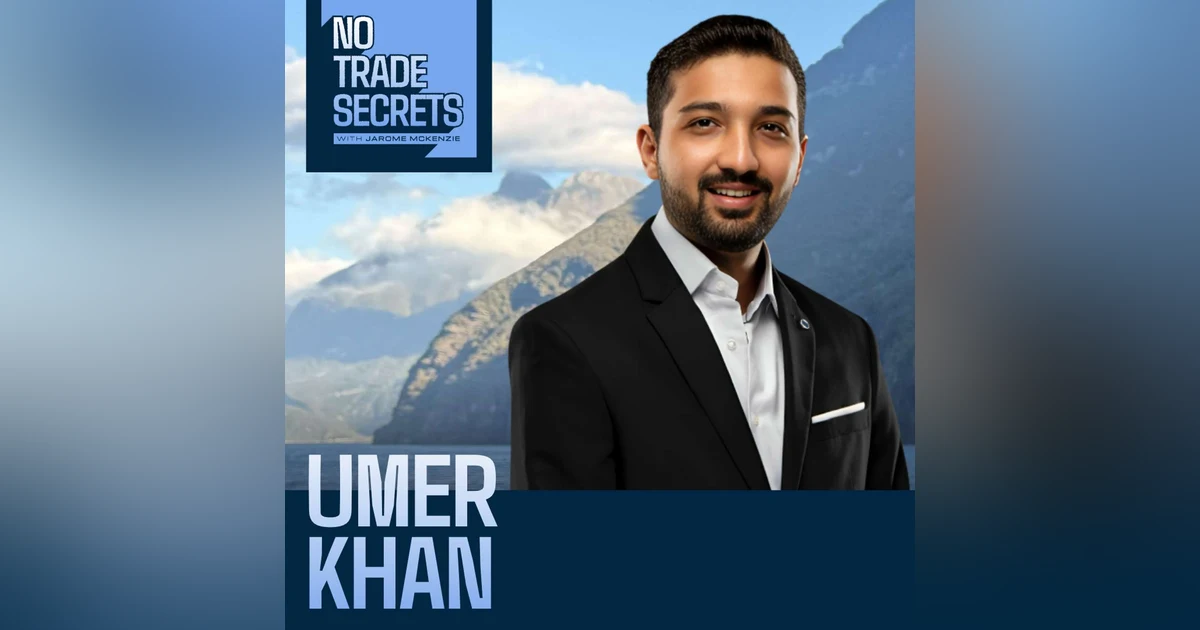

What does it take to leave a cushy job at Uber and build an AI company from the ground up with your childhood friends? For Umer Khan, it started with the “figure it out” mindset forged as an 18-year-old immigrant from Pakistan. He unpacks the real story of entrepreneurship—from the critical support of a great partner to the non-negotiable rules for co-founding with friends. Umer gets real about the unsexy plumbing work required to actually implement AI and why your curiosity, not your fear, is your greatest career asset in this new era.
💡 Unlocking the Playbook
The Partner Superpower: The biggest advantage an entrepreneur can have is a supportive partner who sees the spark in you that you might miss. Having someone in your corner who believes in your vision provides the stability and motivation needed to break free from the "golden handcuffs" of a high-paying job.
Co-Founding with Friends: To succeed, you must be low-ego, aligned on what success actually means (it's not always a billion-dollar valuation), and able to switch seamlessly between being partners and being friends. If you can't challenge an idea without it getting personal, the partnership is doomed.
AI Requires Plumbing First: You can't get the flashy, high-ROI results from AI without first building a robust data foundation. This means doing the unsexy work of connecting your CRM, ERP, and internal tools so they can all speak to each other, creating clean inputs for a powerful output.
Curiosity Makes You Irreplaceable: Don't fear AI will take your job; use it to make yourself more valuable. The employees who are actively tinkering, learning, and implementing AI to improve their workflows are demonstrating a curiosity mindset that every founder wants on their team, making them exponentially harder to replace.
🤫 The No Trade Secret
In life personally or professionally, life is all about making quality decisions. And I think the faster you can make a framework in your own mind on what decision is more important than the other and how much time a specific decision needs, it just makes the quality of your life and quality of your business better.
🗣️ Words to Build On
"I felt I was slowing down. And I'm super young. I shouldn't be slowing down. I shouldn't be getting comfortable. I shouldn't be having this mindset of someone else will figure it out." – Umer Khan
"Between each other, you should be completely low ego... This is not me attacking you. This is me not agreeing with your idea because I don't think it's good for the business." – Umer Khan
"Businesses will continue to value folks who showcase and demonstrate that they are tinkering with it, they are learning, they are curious." – Umer Khan
👤 About Umer
Originally from Karachi, Pakistan, he studied Economics and Entrepreneurship at UCLA before working in fintech and portfolio operations. He earned a Master's in Analytics from Duke and joined Uber in New York in strategy and operations. Today, he is a co-founder of Outpost, helping PE firms and companies build data infrastructure, implement AI workflows, and access top talent.
🔗 Links & Resources
- Website: outpost-us.com
- Substack: talhashaikh889945.substack.com
- Connect with Umer on LinkedIn
Today we're joined by Umar Khan. Umar is the co-founder and COO of Outpost, which helps private equity funds and their portfolio companies and businesses of all sizes build data infrastructure, put custom AI workflows to work, and access high skill talent without the enterprise price tag. He grew up in Karachi, Pakistan, and came to the US for college at UCLA, where he studied economics with a minor in entrepreneurship. Umar then went on to build a B2B fintech offering for banks across the Middle East and Africa and earned a master's in analytics at Duke's Fukua School of Business. And then worked in strategy and operations at Uber Freight in New York City. Thanks for having me. Being a first generation immigrant myself from New Zealand, I love talking to other people who have left their home country, come to the US, and then you know, the icing on the cake is they've done something incredible. They've built a business, they've made a real impact. My question for you know for every immigrant I ever come across in the US is what made you want to come to US and to pursue some kind of some kind of dream? Like what was that driving force?
SPEAKER_01Yeah, I think firstly, uh great to hear from New Zealand. It's top of my list. Um I'm a big golfer and I know New Zealand, New Zealand has some of the best golf courses in the world. So it's uh it's on my list. But yeah, I think coming to the US, uh, I was very lucky. Uh I came from a family of entrepreneurs. Uh my dad went to business school here. And, you know, I just seeing growing up in a household where people are super ambitious, always trying to build something. I always wondered where did that energy come from? And coming to America as a child, I just, you know, I just always saw this contagion of, you know, let's keep moving, let's build something, let's make people's lives better, um, and let's make opportunity for yourself. I think that was always the driving force for me. You know, as immigrants, if you're looking to study abroad, I was considering other countries. The UK was a big option for me. And ultimately, I just wanted to surround myself by this energy. And it's been a fantastic decision. I I did I started undergrad here, still saw that opportunity, came back to do grad school, worked in you know one of the best companies that the US has produced, and and now building my business here. And you know, no, no regrets whatsoever.
SPEAKER_00Yeah, no, that's yeah, that's amazing. And I yeah, I really love those kind of stories because it really un you know, biasedly, I think it uh it says something about uh the person doing it because you're leaving home, you're leaving what you know, and you're taking a huge leap of faith. And um, and I did it in a similar uh kind of stepping stone as you. I came over uh because I wanted to come over here and see what this you know American dream, American culture, what it was all about. So my route was also to come over here to play college and to go to college, and I what my vehicle for doing that was playing college baseball. And then I didn't know New Zealand had baseball. It's grown a lot since I left, but uh prior to me leaving, there was really you know, baseball is not a big uh big sport. Uh New Zealand, um, you know, we're a country of rugby and uh as far as like uh bat and ball sport cricket, but then also the closest equivalent which I played all my life in New Zealand was fast pitch softball, which long story short, I think that's the reason why baseball never really took off, is because during I think World War II, the New Zealand Navy learnt from the US Navy on the aircraft carriers uh sl softball. And so then they brought that back home, and then that developed uh into fast pitch softball, uh, and that became the predominant diamond sport. And so I think that has a uh a big part of why baseball is not like you know, like because like in Australia, baseball is a huge sport, and they have the Australian Baseball League. But yeah, like coming over what age did you move to the US?
SPEAKER_01Yeah, I was 18. 18, uh fresh out of high school, yeah, living by myself for the first time.
SPEAKER_00Yeah, no, yeah, it's it's yeah, it's funny because it's I was 18 as well. Uh and yeah, first time not living at home and having to figure all these things out for myself, uh and new ways of doing things in the US. And so did you when you came over, did you like at what point in time did you know that you wanted to be an entrepreneur and build something of your own?
SPEAKER_01Yeah, so uh I I also had a little bit of the classic immigrant story, not the ones I our parents tell that I came to America with like you know twenty dollars in my pocket. It wasn't like that. I I was lucky to be able to come here. Um, but I did come alone. Uh my parents were like, if you're gonna embark on this mission and you really we want you to be thrown in the deep end. So I I came a few days before orientation just to orient myself by myself. And you know, I think from the get-go at 18, it was like I just have to figure these things out on my own. It's classic American college experience, work a job, figure out your finances, uh, do a bunch of extracurriculars, but you're still an immigrant, so don't ruin your grades. Like grades are still super important. Um so I think that energy of like always figuring things out yourself while keeping you, your mental health, and your family back home pretty happy was always inside me. Um and like I said, came from a family of entrepreneurs. Um I don't think I had the same risk-taking ability. I wanted to take risks, but I think, you know, as maybe other entrepreneurs are, I didn't think I could take it that early. Um and then I you know worked a job. I worked in the early stage startup ecosystem, I went to a much bigger company. Um, and while I was at Uber, uh, I think I realized two things that you know really helped me, you know, make the jump. And this is something that I shared with my friends who are you know doing cool jobs today or doing cool things today and are thinking, like, hey man, I really want to do something on my own. Um, I think one, being at a big company reminded me of the time when I was in a smaller company, I was sitting with customers, I was getting laptops to engineers because this was reading out, but we needed to pull something through for a client. And at a big company, I just didn't get that. I just didn't get that problems, those problems that I needed to solve all by myself. And I think I had a structure around me. Um, and in to some degree, I felt I was, you know, I was slowing down. Um and you know, I'm I'm super young. I need, I shouldn't be slowing down, I shouldn't be getting comfortable, I shouldn't be having this mindset of someone else will figure it out. And I think unfortunately, Uber is a great place to work, but it's still a big company, and you you do fall prey to that. So I think that was one. Um, two, uh, very underset in entrepreneurship. Um, I, you know, you you mentioned you're married too. Uh I have a great partner. Uh, you know, she is not only a great person, she's also a great professional. So her career was going in a really good direction. And I think I just got that motivation, and it's such a big jump that you take in your life. Like, I'm gonna stop making big tech money and I'm gonna basically go broke. Um, and I think a great partner beside you really helps you be like, hey, we'll figure it out together. Like, this is your business, but I'm here with you. And I think you know, that was a great reason, uh, great motivator for me to be like, okay, Omar, you can take the jump. Um, and then finally, this was like a you know, uh icing on the cake. I get to build uh my company with friends who I've known basically since the seventh grade. So since middle school, we grew up playing soccer together, and then we go we went in our own directions. Uh but it was just it's just like just so awesome to come back and say, now we're building a company together.
SPEAKER_00Well, that's awesome. I want to touch on a couple of those points. But first being in what you said about having a great partner, and I say this all the time. The most powerful thing I think an entrepreneur can have is a good partner or spouse in their corner that believes in them and what they're trying to accomplish because you know how those, especially those early days of as an you know, starting your own company, uh you know how that can be. It can be scary at times, it can be there's a lot of uncertainty, and then you know, to be you need someone in your corner to support you to because like the the the golden handcuffs, you know, that what they say when you have uh you know really good jobs that pay well, those are hard to break free of. Um you know, it's because you're not desperate to do something like that. And you can fall into that trap of comfortability, but then you know, you at least for me, it was going into starting this, that was uh when my wife was completely supportive and wanted me to do this. Um she uh like her her showing that belief in me and w pushing me to go and ahead and do it was like all all I needed. And it's uh so I can't speak highly and you know high enough about how important that is and uh how much uh you know of an asset it is to have someone like that in your corner. So that's amazing.
SPEAKER_01Um yeah, and I think I also, you know, sorry, but I also, you know, you choose a life partner, you learn a lot from them. You know, I learned a lot from my spouse, but they learn a lot about you that maybe you don't know yourself. So I'm sure you felt this in your journey. You know, whenever I would talk to my wife, you'd be like, when you talk about doing this, when you talk about building outposts or going on full-time doing this, you know, I see this spark in your eyes, I see this excitement, which I don't see you know, you doing like or you having when you're like going into work every day. And I think that's also a realization that you know you end up trusting their instincts, um, and they see things about you that maybe you're not even internalizing yourself.
SPEAKER_00No, 100%. And I mean, it's sometimes we can be blind to the things that are right in front of us because we're so far zoomed in on the little details, but then someone who has a passenger seat and sees the bigger picture a little more zoomed out and has a different perspective, uh I mean, yeah, can can give you a lot of insight to yourself that you just had no idea and had a blind spot to. So I 100% agree with that. And I mean it's uh I think super important too to uh and I'm sure that you had like you know, having that person also for yourself, like that's the you know the biggest uh motivator that I have to succeed is is my wife and my future family, and wanting to create a life uh for them that we love. And you know, financial, you know, having financial freedom is uh is like a part of that, but also more importantly is is I remember when I worked at a big global corporate accounting and finance consulting firm. Um my first job out of college, I got a front row seat into oh wow, these partners. And the higher you go up, it seeming, you know, it seems the le the less you see your family. Um and um I I refuse to ever subscribe to that because I there's nothing more important than you know time and the memories that you can create with your family and what you know what that allows you to do. And like that's just something I was never I'm I'm not ever willing to to give up. And and so then having that you know force, because being motivated by solely financial reasons is is not a long-term sustainable motivator. Uh, you have to have something deeper that drives you to do uh to do this and to chase like the entrepreneurial life, and and yeah, so that's awesome. And then going into you all you and your you know, some of your best friends, you went separate ways, and then how did it come about where then it all kind of went full circle and you came back together and you're like, hey, let's let's start this. Like, how long was that process? Was this something that you guys thought about and talked about for years, or is this something that you kind of saw the opportunity and said, Let's do it?
SPEAKER_01Yeah, I wish it was this, you know, LinkedIn crystal story where we had been talking about it and then something clicked. And I think you know, that's something another learning that I've had is like things come out of nowhere. Um, and I think the way it worked out for us, you know, we all went in our own directions. Luckily, we were all in the US and um, you know, everybody was working at great companies. One of my co-founders, um, Sash West friends, was at business school. So, you know, he had a little bit of a different mindset because he had left uh a pretty shiny career to go back to education and you know, just reset his life a little bit. And it was something that was, you know, kind of on his mind for a really long time. You know, I, whenever we would meet up, you know, he would talk about all the new things that are happening that he's learning about in business school. And AI was you know coming up at that time. I was honestly talking about like I'm feeling kind of bored in my career, and you know, it's been awesome working at a cool company and I've learned a lot, but I feel like I'm not, like I mentioned earlier, like I'm not building anything, I'm not solving a lot of problems, I'm just kind of cruising. Um, and I think we all were coming from the space of we want to do something more with our life. Like this is the time for us um just just to go at something. And, you know, I give them full credit. They had initially conceived the idea uh and they had been talking about it. And just over a random dinner, I had them over for dinner. Um, and you know, after I started talking, I just that dinner went for like till 2 a.m. at night. And eventually when they left, like again, this is where your partner is so important. I was talking to my wife and I was like, hey, like I really think I want to get involved. Um, this is you know, I'm already getting so excited. I don't think I'll be able to sleep tonight and go to my job tomorrow because all I want to do is kind of work on this. Um, you know, and we talked it out uh the next few days. We spent a lot of time together, road mapping what it would mean for all of us to build this together. And yeah, the rest is the rest is history. Uh so you know, super organic, just having deep conversations, being honest with your friends um about where you are in your life, um, and also recognizing, you know, you can't build a company with every one of your friends. I have really close friends that I love dearly. I would not build a business with them. Uh, but because I've known these guys for a long time, you know, I kind of understood like how they make decisions, what their EQ slash IQ is. And, you know, that also pushed me, like, you know, they can push me in ways I wouldn't be able to do myself. And, you know, we can work together collectively. So very organic, uh, very much kind of out of nowhere, uh, just all driven by this same motivation to do something more with our life and not get comfortable.
SPEAKER_00No, I love that. Um, and it's yeah, it's funny. You said it uh something I think about pretty, you know, fairly often. And you know, something I'm interested in is well, uh, because you know, we've all seen, you know, I've seen firsthand different companies that we've whether they're clients or uh, you know, just people who are companies that I know that they've gone into business with friends or family, and then some of them go amazing, some of them do not. Yeah. Uh it's you know, it's the death of the company, and they're destroyed, and there's you know legal battles and partner breakups and friendships are ruined. And so, like, yeah, I know a lot of people say, you know, don't do don't get into business with your your friends and family, you know, but there's I think equal argument to with the right friends, it's actually it's it can be a superpower, and I've seen it, and you're living it. Um, and so what what do you think is important? Uh, you know, because I think a I think probably most entrepreneurs have some kind of moment where they're thinking about or considering or talking about going into some kind of business with a friend. And it just I know it comes with hesitation because of that worst-case scenario. And it's like, well, this the friendship is worth more than uh to me than you know, than going into business, you know, it's not worth the risk. But I think it's not a apples to apples comparison, you know, one friend versus another friend you might see as a higher risk of that ruining the friendship. And so I think there's a lot more that should go into that equation. But uh, you know, for anyone out there that is thinking about that or considering that, what kind of things do you think are important to look for uh in friends that you might want to go into business with?
SPEAKER_01Yeah, firstly, totally agree. I've also seen, I think, both sides um of the equation and you know, coming again from an immigrant family, it's very common in immigrants to do business together. Um, you've you see some that go out work out really well, and then they become pretty big in their own countries, and others, especially when the generation turns over, it you know, kind of falls apart. Um, so something I something that we really practice and something that I personally was really looking for in a good co-founder, um, you know, which I which is just what something I recommend to any anyone looking to do entrepreneurship with with partners, one is ego. Um, so I think you know you should have an ego about how aggressively you can build your business, and you should have ambition and confidence. But between each other, you should be in completely low ego. So I think people start getting personal uh often if if you know an idea that that you propose was shot down or an idea that I proposed was like, it's not the way to do it. You know, I think if you have low ego, you understand that everybody's equally ambitious. Um and this is not me attacking you, this is me not agreeing with your idea because I don't think it's good for the business. And I think if you have everybody has a low ego about how we how you treat each other, that goes a really long way. Um luckily all three of us kind of have that. We're super ambitious, but we all have low ego with each other. Um I think that's one thing. Um, I think the second thing is you know, aligning on what success means to you. Um, there are people in the AI industry or other industries that are like, you know, I just want to build a multi-billion dollar business. I want to raise hundreds of millions of dollars. Um, you know, I want to be working with all these VCs. Uh, you know, and that's totally fine. It's a great business. There's a lot of successful companies. Um, in our case, we're fully bootstrapped, we've been profitable from day one. We continue to grow, you know, 50% year over year. But we're we our ambitions are very different, right? And like what we want to build and our end goal is very different. So I think being super aligned on what do each of us want out of this, um, I think that works well. Um, and then thirdly, kind of unsaid is like, you know, we're always business is not on all of our minds. I was literally driving back from Boston yesterday with my co-founder, and you know, you know, we could easily tune in and out if we're talking about outposts and what we're doing and you know what problems we're going or what what problems are going on. Then we're also talking about super random things or about concerts we went to last weekend or you know, fun things that we're planning to do, uh, or winter plans. And I think being able to talk to each other as partners, but also as humans and as friends, you know, being able to separate that out, that's super important. That's really helped us. Uh, it's good for your personal health, uh, it's good for the health of your business. Uh, it's also really good for culture, right? So when you bring on new people, you know, we're hiring pretty aggressively, and I think we want this culture of excellence, but also like we're all humans here. Um, so I think those are the three things that I would say have really helped me and something that I would absolutely pass along.
SPEAKER_00Thank you for that. That's no, yeah, there's a lot of great points that you mentioned in there, and and I see that a lot too, especially in uh the space that you're in, uh, with but not just limited to that space. I I mean any really any startup can fit this description uh where the goal is to you know get as big as possible humanly possible, create a billion-dollar company, you know, like you said, get in with VCs, and you know, that's the goal from the beginning. But I think those are things that like you know, I question the reason why for a lot of those things, like and because I I'm more a someone who I want my business to serve my life overall, in regards to maybe the opposite of where growth, but uh you know, you because if I feel like if you commit to that, you can find yourself doing something that makes you just as miserable as the job that you once had. And like what's it all for in the end? Like that why, and you know, you talked about ego. See, I I I look at it the same way. that but I I think when it comes to the ego that you said was a good you know the good ego and I think you said confidence is one of the things and and ambition and you know another one I you know a word that resonates with me a lot is like conviction I like I feel like that's not ego at all because unless I feel like ego is really when when it's the you know the outward the the outward expression of it like I feel like if you have a team of of people that you're in business with and you are all you all are like internally like because I feel because you're you know essentially one unit when you have business partners and being you know cocky internally between yourselves like knowing that the like I feel like the e there is no ego in that that's just confidence and conviction in what you're building but and then to your point when you're saying when there's the ego comes in I feel like that's when it's it's more the ego part is when it's more the individual um and where where that's being pointed uh more externally yeah absolutely absolutely it's also very much like you know in the case of partners or even if you're a solo founder but you have a team underneath you it's you know it may come out as you know I know this better than you or I I want to do this this way or I can do it.
SPEAKER_01And unfortunately like you're not building this by yourself no matter whether you're a solo or you you've got a team and everybody makes a huge difference in what the outcome ends up being. So I think that's where I 100% agree with you. I think conviction on what we're looking to build and what the end goal is, everybody has to be united on that or at least have the same energy in that conviction. But you you have to acknowledge you have to be you have to have low ego in knowing like this is what I'm good at and I'm not going to be a jerk about it. And these are the things I don't know or these are the things I can learn from someone else. And I think that's been that's that's what I was alluding to that's what really helps is like you know this is your strength this is my strength like let's work on this together because we have the same goal.
SPEAKER_00Yeah and because when you can align on the same goal and then you have different people that are good at different things and bring different perspectives and ideas to the table then you just compound the number of ways you can solve the different problems to get you to that goal that you all already agreed on. And you know one like you know four brains is better than one brain. It's just that's you know can't you can't really debate that because it's and being able to yeah like be okay with bringing up all those different ideas and then as a team you assess those and which one makes the most sense and it's not always going to be your idea. But that's you know that's part of the process and how you get to the goal because really you know what you're trying to build is is it doesn't does it really matter whose idea or whose whatever you use to get there. It's just a step along the way, right? And it's exactly so tell me about Outpost a little bit more. Tell me about kind of the kind of work you guys do and what opportunity uh that you guys saw you know in in this you know crazy time that we live in uh where you know it's can be hard to even keep up sometimes with the progressions in AI and technology. Yeah tell me a little bit about that opportunity and kind of what you guys are where your guys' direction is is focused.
SPEAKER_01Yeah so I think you already touched on this which is you know it's very hard to keep up with the technology um it's changing super fast. You know I I've been seeing posts from people saying like hey I'm taking a break from AI because it's I I just can't keep up um and I know you know there's there's a lot of these maybe doomer narratives or there's a lot of challenges and risks that come with AI and fully believe that I think those need to be tackled in the same way that the technology is being developed. But one thing that you know one from a business perspective one thing that we all united on when we're starting outputs is this technology is already and will be moving super fast. And organizations don't move in that way. They're built a certain way they've built their business in a certain way they've built their teams in a certain way. So they're not going to be able to adopt it in a way that generates ROI for them in a way that doesn't distract them from their core business, which is serving their customers and in a way that actually leads to some sort of gains, whether that's productivity, whether that's more revenue, whether that's optimizing time spent on things that shouldn't take that much time. So I think we were really united on how can we help organizations leverage AI in a way that doesn't disrupt the existing processes but still helps them get ROI out of it. So how can we become the experts on this space and leverage the cool things that are being built by all these awesome companies like Anthropic and OpenAI and open source models, etc. So that was really the founding of Outpost uh I think and then the second thing that we you know firmly believe in which again is part of this Doomer narrative about employment and jobs you know at the turn of any technological revolution whether it's the industrial revolution whether it's the dot combo whether it's even before that it's always treated more opportunity. And in our minds when opportunity is created and new problems are looking to get solved new sorts of jobs are created um new pain points are discovered that people need to ultimately solve even if the technology is really good. And so the second thing that we really want people to do and companies to do is to be able to attract and hire the right kind of talent that helps you achieve your goals. So Outpost is really built around helping companies you know implement AI. There's a lot of plumbing work which is why we do a lot of you know the data work underneath which is not sexy. It's super important. And then we also bring the team along that you know becomes a part of their business, you know, helps them improve from the get-go. So I think we really fundamentally believe that this is a game changer for businesses. Unfortunately it's not that easy for them to adopt it a for the reason that it's moving very fast. And two, um companies it's just very hard for them to suddenly put pause on how they've run their business for however long they've had it and and re-engineer it from the ground up. So we can come in and become your partners in doing so and make sure you have the people to run it with you.
SPEAKER_00Yeah no and it's uh I find a lot of business owners are kind of you know they're stuck in uh this reality that they're you know kind of self-imposed reality that they're saying you know they they kind of look at where things are at today and are like I'm already behind I I I hear a lot of people talk you know talk like that and think that they're they're too far behind to catch up and it's like you're not and if you start today you'll be less behind you know than you are tomorrow starting tomorrow and at the end of the day and I know a lot of these business owners like they don't know where to start is a big thing as well. I think everyone probably I think at this point most people know and have m used I won't even say used because I know that there's uh a a stat out there that will uh prove that wrong and blow my mind again uh but most people know of AI or chat GBT uh like I'll put it like in this simple form. And like I know a lot more people are using it you know in lieu of Google which is okay there's a great place to start like my mother uh she sent me a chat GBT conversation uh chat that she had uh the other day and I was like oh wow my mom's using chat GBT yes um but then I have a lot of family members that don't even know wouldn't even know how to use it or where to get it then you you know you have business owners that are are like that and then you know in order like for them to implement it themselves it would take a lot of time and obviously you know with how fast this you know things progress it is hard to keep up with everything that is new and um especially when you're learning something brand new from kind of where we are right now you know you know just I think you know if we look at just the last six seven months what has been progressed with AI is like when you zoom out and actually look it's actually it's crazy and it's just getting faster. But then you know to hire someone like you know I I see a lot of companies too that hire uh you know they're they've hired like an AI expert who's like incredible uh into you know in-house into their team um and it's like I'm pretty sure you can say they're they're not as good as you think they are because if they were they wouldn't be working for you they'd be working at Anthropic or open AI or one of those like you know because it's this is I mean the talent pool of people that would fit in that caliber of uh you know of that job would is you know is it's not super deep with you know a lot of W-2 people just floating around you know wait you know waiting for uh you know just scouring job listings right I'm sure you can find people like that uh but like it's extremely difficult and then extremely expensive you know it's there's a $200,000 you know probably salary you know I've seen some of these some of these people that have gone and got salaries at OpenAI and they're being paid the craziest millions of dollars just because because they they have a skill that not many people on earth you know have and I would go to say like I think the biggest experts to be able to help these business owners are entrepreneurs already themselves so they're not going to come and work for you. And so that's where I do I really do believe in uh the model of like what you guys are building because I see it day in day out with our clients that like that's something that they struggle with a lot. And you know as far as systems and you know you you said you talked about data and I feel like that's a big part too it's it's you can't just implement AI to infrastructure that and because you're gonna have all your different data points whether you have a CRM or a job software the all these different softwares that you've that you've set up your company infrastructure on and AI is not just going to be able to automatically overnight bring all that data and concatenate it in a way that is useful for you uh like it's there's as you know there's a lot more that goes into it uh and if you have messy you know data messy inputs then the output's gonna be crap too how big of a thing is that do you encounter that a lot with kind of the the inflows being not ready for actual implementation when you first get in yeah uh unfortunately this is the biggest problem I think we have tried to tackle it pretty head on I think we're very honest when we go talk to any of our clients or prospective business owners or even in larger cases like private equity funds like you know you have this mandate you want your team or yourself to be using AI you know but like you said these systems are not speaking to each other.
SPEAKER_01So how can you leverage this incredible technology that can consume vast amounts of data and either give you solutions or take actions on your behalf if the inputs that it needs don't speak to each other. So I think pretty much all the work that we do always starts off with building a robust data foundation. That means like you said connecting your ERP system maybe where you have orders and invoices to your CRM where you're talking to your customers maybe some internal tools that you're using you know where a Slack company maybe like Google Drive maybe Notion all of these possible things that you're using if you really want to harness this technology and drive impact for you as a business they do need to speak to each other. So I think like that's always the first piece of any of our work. Unfortunately I think people are you know as this technology is getting more and more adopted people are warming up to the idea. But it's very hard to say like we're gonna first spend time building this foundation because everybody wants the flashy stuff really quickly right like I want to be able to go in and I want to build an agent that you know automatically closes my books every month. But how can your agent close your book every month if where your you know finance tools that you're using are not speaking to where your customer data currently lives. So they don't know what whatever whatever close your books on or where your HR system currently lives because then they don't know anything about payroll. So I think that's is just a reality then we're really focusing on the education and you know I think there's many companies out there that may go like hey we'll implement AI for you on day one. And I think we're very try to be very honest upfront that you know there is a little bit of legwork but then this compounds in the future. So I think that's that's been our approach you know it's been successful. I think it does involve a lot of you know education and and and in helping clients realize what where where where we're coming from we we're not interested in doing this plumbing work ourselves but it's the backbone of leveraging this technology. And I think this one other thing just to touch on is you know I you you talked about talent in this AI world incredibly important and I think Anthropic and OpenAI and Google and Nvidia et cetera are real magnets for talent and it's always going to be very hard to hire from them. But A the technology is very new so there actually are very few AI experts. Even me who runs an AI company can't say I'm an AI expert because I don't understand everything about this technology. So there truly is and I think this will develop or compound over time. But two, you know, we view AI in in in like in like two buckets which these big companies are now as well one is like the creators of this technology you know these are the innovators the researchers the labs that they're truly building and defining what the capability is but this capability needs to be adopted by people like my mom and your mom which is really funny because I got a message from my mom the other day and had a little smiley face at the end and I was like I've never seen that before and it was like you know it was on WhatsApp it was like paragraphs. So they're adopting it and they're using it. And then the same for businesses right like someone needs to help them adopt this so that you get value out of the technology. And we really play in that in that arena and I think both are equally important. The innovation is important super important without that we we can't get any value but also making sure that businesses and individuals are able to use it I think it's equally valuable and I'm really hopeful that you know both of these spaces the talent pool is just going to continue to increase.
SPEAKER_00Yeah no and I'm yeah I'm sure that that talent pool will increase over time. I mean it has to but you know what you're saying about the two buckets like I like something I think about a lot as well is you know because you have you know you have the actual uh the labs and there's this technology and there's a unlimited way amount of ways that you can implement this and do things. And so like I think a lot about you know I'm sure you've seen people uh talk about it on on X uh I think it was really talked about a lot six months ago or so but that kind of uh the shift from that traditional SaaS model to software as a service because obviously like one um and I know something this is something that you guys uh really put a lot of emphasis on you know I think traditionally you know you have a company you want to you need a you know for whatever industry in you have a specific list of options of these different softwares that you can use for that thing and then you have to basically change the way you have to mold the way that you guys work to how the software is built and the capabilities for that because it's you know these these softwares you know there's there is some customization but it's limited and I I know I've never had a software previously that it does everything exactly the way I want it to for the way that I want to run my business. And that was you know the big breakthrough for uh this year uh with me is I realized I don't have to I can just build the solution to do exactly what I want it to do. And that was not something that uh you know a few years ago you'd you'd have to pay hundreds of thousands of dollars for example for a practice management software that I built for our team that we've been operating on for months now. And now you can do that and you know the speed in which you can get it up and running is ridiculous as well. And so like the role of you know companies like yours to be able to help because like I said you know that doomsday narrative like my thought on it is you know it's all like similar to what you said like it is there's a huge opportunity here too. So yeah the future is completely unknown to anyone on what happens like we could you know you know you you hit all you know all the different you know end results that people think you know and it's like okay well if we are gonna end up being replaced by robots and those robots are gonna rule us and then kill us and we're gonna be slaves to robots like Terminator Doomsday extreme variation then why not just capitalize and ride this opportunity while it's here and then if it's taken away from us because the world ends then there's nothing you can do about it anyway. And you're gonna have the same result if you just sat and did nothing while you know waiting for that to happen. And you could like why not like because you're I think it's also like you know when it comes to employees and companies I think there's a a camp of people that are reluctant to learn or implement AI and their jobs and the companies they work for because they think it's going to show that they're replaceable by technology. When in you know I'm sure you think about might think about it the same way as me as a founder if you are an employee and you implement this technology into your workflows to make your work better, faster, improve capacity whatever lever that you change you're gonna be exponentially more valuable than someone who doesn't and your job is safer you know contrary to the the mindset I know is like that you're you're basically going to be training your replacement and it's like it's it's like and I wish more because I think most founders think the way that I think about this is like no you're making yourself irreplaceable by doing that. What's your thoughts on that?
SPEAKER_01Absolutely yeah no I 100% I think agree with exactly I I have the same you know even when we're screening for talent or we're hiring for even if they're non-AI right whether it's on marketing or finance or et cetera like you know the person who is leveraging this technology to make their job better, to make it to make themselves faster, to know to have the judgment on where I should use AI versus where I should strictly not, you know, is incredibly valuable for me. And I'm seeing this across the board for in the businesses that we work with is you know they you know they're almost like when we're working on a project with them, they will be like you know someone like this has been experimenting themselves, they're keen to learn, they're trying out new ways of doing things. And I think those folks are even more important. And two, I think on your Doomer narrative, like if the world truly is going to end and nobody can predict the future then would you not rather be the person who understands it and knows how it works rather than see like hey I I don't want to get involved like it's gonna eat us all up. So I think you probably have a better chance if you if you understand how it works. So yeah I I you know we are really we're we're trying to do this internally um there are folks who have the curiosity maybe don't have the technical skill set so one thing we set up internally is something called Outpost University uh really help folks get comfortable with AI how do you actually build use cases or solve problems that you know either help you personally or professionally and I think it's it's in it's incredibly it's cra incredibly important. You know, this technology is is is marching ahead whether you know you are learning it or not. And businesses will continue to value folks who you know showcase and demonstrate that they are they are tinkering with it. They are learning. They are curious. And I and I I do believe that people who are doing this, you know, they have that curiosity mindset that anybody wants on their team. Even in you if you're if you're building a team or you're hiring anyone on your team, right? I'm sure curiosity of like how can I get this done? How can I learn? What's a new way of doing this? That's such a valuable asset in anybody. And just showcasing that you're working with AI is is just another way of you know just demonstrating that.
SPEAKER_00No, absolutely I couldn't agree with you more. Yeah curiosity not just in when it comes to AI but just a curious person in life is my favorite type of person because you know that's a person that doesn't just look at things and accept what they are. That's someone who looks at something and asks why and and why is it like that and why has it always been done that way and why can we not do it a different way you know because I think that's part of the the human condition unfortunately is subscribing to this belief of well this is the way it's been done it's always been done this way this is the way it's done um it sucks it's painful it's not ideal but that's life and it's like we're in this day and age where you you just you don't have to you don't have to accept that anymore like if it's limitless opportunities to to do things differently and uh a curious person is is like you said it's such a it's such a such an important trait that you can't teach someone either someone is either curious or they're not and there's nothing you can really do to to change that about them. So we we end every episode with the same question. So I want to ask you what is your one trade secret when it comes to business or life that you think would be the single biggest secret that has impacted your life or your business?
SPEAKER_01Yeah in life personally or professionally you know life is all about making quality decisions. And I think the faster you can make a framework in your own mind on what decision is more important than the other and how much time a specific decision needs, you know, just make your quality for your life and quality for your business better. So build a framework that helps you define the importance of a decision and then make make decisions accordingly.
SPEAKER_00That's awesome. I love that Umar this was uh it was great. Thank you for being on I I loved hearing your your your uh your story and your journey from Pakistan and what you're building now is you know is super super important and there's so many more businesses that are out there that need exactly what you're doing and how you're doing it with businesses. So how can people get uh in touch with you or find out more about Outpost what's the best way for someone to to to get in touch yeah you can reach out to me on LinkedIn Omar Khan or on our website outpost-us.com okay and I'll put all of those links in the show notes as well but thank you so much this was amazing um and I can't wait to see you know all of the impact that you guys make uh in the future with uh the businesses that you work with yeah really appreciate it and I look forward to going to New Zealand finally you have to you you have to go I just took my wife for the first time in March of this year and I had just as much if not more fun than her just it's it was you definitely definitely have to get out there.