The Shopify + Amazon for Wholesale: Vision, Execution, and Bootstrapped Growth w/ Oscar Rachmansky (Part 2) - Ep. 40
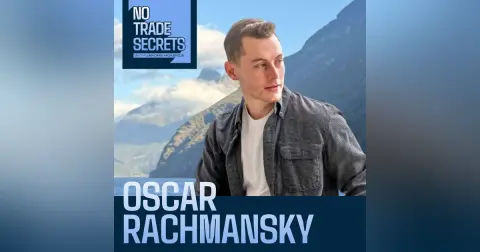

Welcome back to the "No Trade Secrets" playbook for PART TWO with Oscar Rachmansky, founder of a nearly $60 million bootstrapped powerhouse. In PART ONE, we unpacked the mindset needed to survive the early days. In PART TWO, we shift from the foundational "why" to the relentless "how." How do you force a breakthrough by becoming tunnel-visioned on a single metric? What's the strategic difference between raising money for survival versus raising it for domination? And how do you let go of crit...
Welcome back to the "No Trade Secrets" playbook for PART TWO with Oscar Rachmansky, founder of a nearly $60 million bootstrapped powerhouse. In PART ONE, we unpacked the mindset needed to survive the early days. In PART TWO, we shift from the foundational "why" to the relentless "how." How do you force a breakthrough by becoming tunnel-visioned on a single metric? What's the strategic difference between raising money for survival versus raising it for domination? And how do you let go of critical responsibilities without sacrificing the standards that got you here? Let’s get into it.
💡 Unlocking the Playbook
Revenue is the Root System: Oscar reveals that the company's trajectory fundamentally changed when he stopped multitasking across operations, finance, and marketing and became obsessively focused on revenue. He argues that everything else—a healthy P&L, a strong operations team, and even marketing content—is simply a byproduct of revenue growth. He personally got "boots on the ground" to master the sales playbook for 6-8 months before hiring a single salesperson, ensuring he could lead from authentic, firsthand experience.
Raise Money from Strength, Not Survival: While bootstrapping to nearly $60 million, Oscar intentionally operated the business to be "fundable" at all times, even without the intention of raising. This discipline creates the ultimate leverage. The best time to take outside capital is when you have options and don't need it, allowing you to sit at the table as an equal, cherry-pick the right partners, and maintain control over the terms—rather than negotiating from a position of desperation.
Delegate Ownership, Not Just Tasks: As a founder, you can hide behind any part of the business because everything is your responsibility. Oscar's hardest function to let go of was "trust, safety, and compliance," the bedrock of his company's reputation. The key to effective delegation is accepting that a different approach doesn't mean a worse one. When a team member creates a new procedure, they take true ownership, write the SOP, and become the new source of knowledge, which is far more scalable than a founder's direct oversight.
🤫 PART TWO's Playbook Secret (The official No Trade Secret drops in PART THREE, but here is the hidden secret of PART TWO!)
Don't just trust, verify. When a team member proposes a new methodology for a critical process like risk assessment or customer vetting, back-test it. Run the new procedure against historical data—including past failures and high-risk scenarios—to see how it would have performed. This data-driven approach removes ego and proves the efficacy of a new system before you fully commit to it.
🗣️ Words to Build On
"You can hide behind everything because everything is your responsibility." – Oscar Rachmansky
"When you have leverage and you have options, that's the best time to go out and raise money, right? Because you can write your own rules." – Oscar Rachmansky
"If our revenue is growing, our P&L is going to look better. And if our revenue is growing, we can hire a COO or operations team to handle the operations. And if our revenue is growing, we'll have things to market." – Oscar Rachmansky
👤 About Oscar
Oscar Rachmansky is the founder and CEO of OS Group, a bootstrapped B2B commerce platform transforming how fashion, footwear, and streetwear inventory moves between brands, distributors, and independent retailers. After dropping out of McGill University at 19, he launched the company from his bedroom with $30,000 earned from buying and selling sneakers on Instagram. Today, he has grown OS Group into a nearly $60M business with a 25-person team and two warehouse facilities. Oscar is creating the infrastructure layer for modern wholesale commerce, helping businesses source, distribute, and manage inventory across an increasingly fragmented retail landscape. His long-term vision is to build the operating system for B2B trade, making him one of the few founders at this scale to achieve significant commercial success without raising outside venture capital.
🔗 Links & Resources
- Visit the OS Group Website
- Connect with Oscar on LinkedIn
- Check out Oscar's Business Insider Profile
- Check out OS Group's WWD Profile
🎧 Missed the beginning? Go back and listen to PART ONE!
🎧 Make sure to tune in to PART THREE to hear Oscar Rachmansky’s ultimate "No Trade Secret" and keep this momentum going
Yeah. I mean, yeah, rejection or or I guess failure. I mean, like you said, you know, playing uh playing baseball growing up, right? Like if you're, you know, if you're if you if you if you get on base, or at least if you get a get a hit three out of 10 times, you're uh you're in the hall of fame. Um and I think that that was a key perspective for me, just like understanding that failure is a part of the process and and you can fail pretty consistently and actually still be successful when you zoom out. Um I think another thing for me was just uh because we're in B2B sales, right? You can kind of you can kind of merge that um that perspective of kind of relentless, you know, cold outreach uh mentality with at the same time knowing you're selling to, you know, you're appealing to appetite, meaning you're selling, you're you're reaching out to a qualified prospect, you're reaching out to somebody who you know could benefit from your service, right? Because if you truly believe, hey, Mr. Storefront, or hey, Mr. Wholesaler who has inventory, if you truly believe and you truly know that they're gonna benefit by working with you, that that that that that lights kind of a motivation under you where if you either acquire the customer or you acquire the vendor, or it's their loss. Like, you know, so so to me it's it's kind of um it's kind of a you kind of want to put both together in the sense that and maybe it's a little bit different for the kind of consumer world, which um I've never really been in, but but on the B2B side, I think that you can have that relentless, kind of crazy sales energy, but it can also be rational because everybody you're reaching out to should be somebody that is fairly qualified or is at least worth uh the conversation, if that makes sense.
SPEAKER_00Yeah, no, it does. And um and when it becomes to uh that uh you know being relentless and uh obsessing over that kind of stuff. Um I know for you um you had said uh offline that things really began like began really working for you when you started you know really obsessively focusing on revenue and took over ownership of sales. So what were you doing differently when you made that shift?
SPEAKER_01Well, I think that I think that you know, in beginning kind of stages of of the business, um I was focusing a lot on let's call it um just the various kind of avenues like marketing or operations, um finance, checking the PL, all those kinds of things, right? And ultimately, I think really right around when again, right around when COVID happened, and we started to really um find that niche on the B2B side and realized that there was some some some some some fire there, right? Like we found something that worked finally. We found uh path of you know um minimal resistance, so to speak. Customer acquisition was was possible. We're helping people, we're fixing, really fixing, or at least um helping address a need um in the industry. I think at that point what I realized was well, hey, none of this other stuff really matters, and it's all kind of an output or a byproduct of of revenue growth. Like if our revenue's growing, our PL is gonna look better. And if our revenue is growing, we can hire uh, you know, COO or operations team to handle the operations. And if our revenue is growing, we'll have things to market. We can market the revenue, right? Like we can market what we're doing every single day. Um, and so I realized like, hey, okay, let me like get in the weeds here. Let me, let me, let me drive this process and let me set an example for like how we want to run our um business development kind of sales side uh for years to come, right? And I think rolling up my sleeves and spending that time, maybe six months to eight months before we really hired, like and started building out our sales team and division um was integral because I got the boots on the ground, firsthand experience with customers. I knew how they operated, knew how they thought, knew what their pain points were. And also I just knew kind of um the playbook. I knew the script. And and yeah, from there it was it was much easier to know who to hire, how to train those folks, um, and and take it from there. So yeah, I was very tunneled and been for for some time, just literally focused on yeah, selling.
SPEAKER_00Yeah, no, and I think that's you know, that's something I uh um I like to think about a lot as well is is like what things are just byproducts of other like of doing a different thing. Uh because like the uh especially you know with uh with my company being um focused on serving clients with uh accounting and finance. Um every client wants to look and focus on the numbers that show on the PL. But then it's like, okay, well my uh my outlook on this is like the what numbers are on your your P ⁇ L are just uh outcomes of things the way that you've done certain things. And you the way to change the your future numbers that show on your PL are not gonna be from focusing on uh entirely what it shows right now, right? It's um it's gonna be figuring out okay which okay, what what part of those numbers uh are not where you want them to be, and then okay, figuring out what's the driver that made that number show up. And then once you can figure out what that thing is, it makes it a whole lot easier uh to know where to focus. And so with you making that discovery, what do you what do you think founders uh what what do you think founders sometimes hide behind uh instead of going out and just generating revenue and focusing on sales and business development?
SPEAKER_01Yeah, I mean look, I I think that that's the uh that's the risk of being a founder. You can hide behind everything because everything is your responsibility, right? So you can hide behind uh operations, you can hide behind finance, you can hide behind um, you know, uh technology, you can hide but you can you can hide behind all of it. Um and I'm 100% guilty of of doing that as well, right? And I think that that's where uh where the delegation piece comes into play. And also, again, making sure that that that that perfect isn't the enemy of good enough, right? Like um you could hide behind uh tighten up your operations to pro to to have minimal loss or slippage or leakage and things like that, right? Um but I think that ultimately you you kind of have to uh become comfortable with a little bit of variability and a little bit of um imperfection across the board. And like you said, just drive what, you know, at the end of the day, like for us as a business, like revenue and margin are are are uh and for most businesses, right? It's like you're never gonna build a great business, at least from what my perspective, um, you know, focusing on perfecting what what your OpEx looks like, or those are all things, those are all things that you do 10, 20, 15 years down the line, right? Like as you become mature and and really need to tighten the screws and or optimizing for every last dollar. But like, you know, for us right now, like just the shift from focusing on only various things to hiring people who we trust in all those areas and primarily being focused on revenue and margin um have been the the drivers for us. So I guess to answer your question, I mean listen, there's there's a plethora, there's an infinite amount of things you can hide, you know, HR, God knows, right? But yeah, I think you have to, you know, my my key is like and I've I've gone to the point where and and this is also something that that that I've that I've that I've kind of done is like the delegation needs to start extremely early on in any of those avenues because you'd be surprised where you if you start doing some of the work yourself and then and then passing it out, like there's always all this like tacit knowledge or just like stuff from years ago that that comes across my desk and I'm like, oh man, wait, I'm the only person who knows how to do this or how to access this data, right? And so we've spent the last year really like cleaning a lot of that information up and stuff. So um yeah, there's there's there's so much you can hide uh through and and spend your time on. But listen, I think I think it's also a question of like where what's your specialty, right? Like I'm not a technical founder. I wouldn't say that my specialty is building product or building technology, like I understand it, but we have a CTO who does it better than me. Uh, you know, I'm not like a operations heavy founder, you know, I'm like it's really revenue and business development, you know, that's the focus. So just always getting back to that is is important for me.
SPEAKER_00Yeah. And especially when your goal is to scale, uh, it's like then it's like, okay, well, if you break it down to what are the most important things uh to allow you to just continuously scale, continuously grow. It's generate more revenue and operate at healthy margins. That allows you to fund fund your own growth, which I imagine is a big reason why you've been able to be bootstrapped uh the entire way of your journey to building a you know nearly $60 million company without which is is uh is very uncommon um to not have to bring in outside venture capital or outside funding. Um and and it just it gives you it gives you the freedom and leverage to grow and take on these opportunities as they present themselves if you are consistently growing your revenue at a high margin. It it's like that makes things so much easier. And then I feel like that is just um it's often or can often be in some of these uh companies where you know the founder feels like stuck and they're kind of plateaued, is there's a lack of focus on those two areas, and it's like that's how you can be your own bank. Uh, and because once you start taking on um, you know, whether it's debt or outside you know venture capital funding, uh, and you're diluting your cap table, um you're also losing control and you're uh having to answer to more bureaucracy. And uh I talked to a um a young founder uh uh who's uh who's in college at Cornell uh last year. And uh this is a CPG beverage brand, and um he was talking about um bringing on uh different investors uh to help them scale. And I really was so I kind of dug into him with him the reasoning behind that and like also the importance of if you're going to choosing the right partners, uh, because not every dollar is created equal. And you like once you get into bed with someone, like you then you now have stakeholders who might have a different agenda to where you would otherwise take your company if you were in complete control of the direction and the mission and what you wanted to do and how you wanted to do it. And when those things when you get to that crossroad where the you know your shareholders, stakeholders uh on that side are wanting you to uh to make this decision because that benefits their interests in the business, versus how you you know w what you set out uh to build and how you set out, you know, and had your uh you know your your mission and how the direction of the company you're growing, and those two things collide, it it leaves you with uh someone not being happy with the decision that's made at the end of the day. Um and um which is like it's uh an unfortunate and uncomfortable place to be uh as a founder, and it's um and so I'm always uh uh a fan of um the bootstrapping uh you know whenever you can. And I think you can, you know, as you probably have also know, like you can do it. It's it's a decision you have to make. And was this an intentional decision you made early on, or was this something that you decided as the company evolved?
SPEAKER_01Uh yeah, it's a good question. I think that it's always been it it's always been kind of an ongoing uh analysis for us as a company, right? Um initially we didn't believe that we needed to kind of raise money from from the outset. Um and there have been times where you know we've hit certain milestones or we've hit certain growth rates, and we've certainly felt that we could benefit from outside capital. Um but then we've kind of lived with um lived with that feeling for a few months and and and and you know things have changed, and maybe we've we we we we kind of um were able to were able to self uh you know fund whatever those ambitions were. So I think from our perspective, like it's always something that we're open to considering. And as we're beginning to kind of reach a more mature phase of our company, um, I think that we have a really good understanding of the market, kind of where we're headed over the next couple of years, and strategically, like the value that that we can drive. Um so interestingly enough, it becomes actually maybe a little bit more interesting for us now, um, because I do think that we're in a position where we can really, you know, put some fuel on the on the fire, so to speak. But but but going back to kind of previous history um and and the last few years, we've always tried to operate in a manner where we could be fundable if we wanted to, right? So meaning having good financials and clean operations and and and and operating at the at the at the excellence and at the level of a company that you know would um would would would be an attractive candidate for VC or at this point, maybe P or players like that. Um but we've kind of strategically always decided, look, like for now, better not to have as many chefs in the kitchen. We're doing what we gotta do, keeping our heads down. Yeah, I mean, could we grow at a faster rate? Yes, but there's all these unknown unknowns and risks, like you said, that that that come with taking on capital. Um with that said, we are kind of in a position today where I think that we've grown and matured and are able to have a seat at a table where um, you know, I think like when you're when you have when you have leverage and you have options, that's the best time to go out and raise money, right? Because you can write your own rules and you're sitting across the table from an investor as more of uh more of an equal and less so as a as a small fish in a room of big sharks. And so that's kind of where we feel like we're at now. And and and yeah, I mean considering kind of what our options are for the next couple of years for sure.
SPEAKER_00Yeah, no, and I'm uh I completely agree with um with that and the especially in the way um in the way of if you you know being when you take on that outside capital because you need to to survive, because you've not been doing, you know, you've not operated and grown to a point uh so you can be self-sustaining to that point, then you really like like you're saying, when you sit across the table and you're talking to people, um they are in the driver's seat, they have the the leverage and power here because they know that you need them. When you can do it the way you've done it, uh uh you know, you you said about sitting across the table and uh and being equals. I would go a step further and say, you get to cherry pick if you want to do this exactly who comes on because you don't need them and they want to be a part of what you've done. Um and so you you can pick who and you can you get to have more troll over the terms, uh, and then you can also walk away because you uh because having the power in any negotiation and uh and business, if you are the one that has the power to to just get up and walk away uh because you don't need it, is like that is super super powerful and um is is going to end up with you getting uh terms for these kinds of things a lot more favorable for you. Um and um because you don't have to do it if uh if they're not favorable and how you want it. Um and so for you and for your your guys' next step as you guys mature. Um let's uh further down the line, like uh what uh what is your current uh evolution of like the end game for this? Like what is this for you uh something that you know as of right now, knowing that you know things change all the time, uh direction changes? Um where do you see this going? Uh is it uh is it being acquired by a big uh you know, big corporation and being folded to them and having that you know billions dollar exit, uh, or uh is this something you you want to take a different direction?
SPEAKER_01Yeah, I mean look, I I think that I think that over the next couple of years, um our goal is to continue to cement ourselves as the infrastructure layer for kind of you know what we call the new wholesale economy, right? Or fragmented um wholesale commerce and it's a multiple hundreds of billions of dollars uh uh market um across categories. And our our vision really is to build a full kind of full stack like operating uh network for this cat for this for this for this niche. Um what that means is we kind of see ourselves transitioning into something of like a Shopify plus Amazon for wholesale trade. Um Amazon because you know we want to be the default kind of uh routing network for wholesale trade, so a real transaction engine. Um, and Shopify because we've built so much software for ourselves and for our business that we use every single day. And we have a network of thousands of primarily small businesses that are pretty under-infrastructured, under-technologized, under-optimized, um, that we're beginning to externalize that software and and and sell it to those businesses, basically um creating a platform for them where they can come to buy, sell, um, buy and sell inventory, but also manage and run their entire business, right? So um we want to become more embedded and more of a full stack kind of solution for businesses in this market, whether they are, you know, across operator profiles, whether they're a live seller, whether they're a marketplace merchant, a small retailer, physical, you know, brick and mortar, um, a reseller, a distributor, a small brand that needs help. Because we've built tooling and solutions for everybody. So long term, as we become more entrenched over the next couple of years, especially in fashion and footwear, which is kind of the largest and I would say most fragmented market amongst all of them, you know, we think that, yeah, I mean, we think that we'll become a very valuable company to any any kind of B2C player that that benefits from fragmented trades. So whether they're um major retailers or off-price chains like uh TJ Maxx or Costco, players like that who buy um you know in secondary markets, not necessarily only from brands and have fairly complicated supply chains, um, whether they're emerging platforms like Whatnot or TikTok, um, where their sellers are basically all you know buying, unless they're a brand themselves as a seller, you know, where all their merchants are basically playing in this space. Um, you know, we think that there's there's more and more companies that kind of indirectly benefit from this whole world. And we think that we can, you know, by kind of consolidating and streamlining the the B2B side of the space, uh, yeah, it becomes a very attractive asset for for any of these companies that want to own that order flow, own those buyers and sellers, um, and have a strategic edge against everybody else that they're competing with. So to answer the question, yeah. I mean, look, I like the yeah, the the we we think that we think that over the next few years, as we grow, the the the it it the synergies will become obvious to to many kind of much larger players, and we think that that's what would probably take us to that you know next level, that multi-billion dollar level, right? Having um a big brand and a big partner kind of behind us potentially.
SPEAKER_00No, that's yeah, no, that's amazing. And so for you, uh, you know, obviously setting the vision um and uh stri you know the strategic direction of the company, what's what does your day-to-day look like now? Like what is your primary role as like today?
SPEAKER_01Uh yeah, yeah, look, I think day-to-day now, um, my focus is one on strategy and direction. So working with all of the teams, revenue, um, operations, finance, marketing, so on and so forth. Obviously, our tech, our tech team and tech roadmap, um strategically just making sure everybody's aligned and working towards the same goals, um, and green lighting or potentially, you know, uh red lighting, I guess would be the third um uh initiatives, goals, and plans, and and and kind of keeping a cohesive like team structure across the board. Um, and then on top of that, I'm always focused on really just like high-level business development, strategic relationships, things like that. Um, you know, I like to uh put you know, we we have a good team of kind of sales side and supply side um account managers and and biz dev people who are focused on expanding that network of of folks that are aware of OS group. Um and my job, I see it as uh doing the same thing, but really like on the corporate level. So making sure that um all the major companies in the space are aware of us, thinking of ways we can strategically collaborate and kind of things like that. Um yeah, and also just day to day, just just just helping every team with uh anything that comes up. You know, as a business grows, there's just there's just things that come up every single day. And I think a lot of people don't even take into account just like what percent of a of a of a founder or CEO's day is like, yeah, just being the guy that answers questions and helps people, right? Because that's that's that's part of the job.
SPEAKER_00So yeah, no, absolutely, especially uh for you know in a startup environment. Um you it's you know it's defining the founder role is impossible. Uh it's right. Uh, and then also supporting the people in those roles to do their roles. Uh it's precisely and wait a bit. It's very and so as you, you know. So you like went through and like you've obviously been willing to and have owned, you know, and done on the ground level every function and role in the business. Uh and then also removing yourself uh and you talked about how delegating early is important.
SPEAKER_01Yeah.
SPEAKER_00What has been what's been the hardest responsibility for you to hand off to someone else? Because I know every founder has uh has at least their one thing that they're like they want to hold on to because some founders struggle with letting go of everything because they're like, well, no one will care about it as much as I do or do it as well as I do, and it's like, well, yeah, you're correct, no one will care as much as you do, but that's you have to be able to let go, and it goes back to not letting perfection get in the way.
SPEAKER_01Uh but what's been the hardest interestingly enough, I would I would say um like trust, safety, and compliance has was actually something for a while that I struggled with. Um because of the fact that we deal in you know very fragmented markets with many different types of operators on the buy and sell side. Um one of the major value propositions that we provide, like I said earlier, is you know, for buyers, they know that they're getting authentic, high quality um well, you know, they're getting the goods that they paid for, right? And um on our vendor side, similarly, um, they know that they're dealing with a counterparty that's gonna ensure they're gonna get paid out um quickly, effectively. Uh, there's not gonna be any kind of uh rigmarol or nonsense on on their end with the with transactions as well, right? And so we've we've kind of built our business on um a reputation of trust, safety, authenticity, um, quality control, and and all those major tenants. Um and so over the years, you know, we've we've spelt we've spent a lot of time developing really, really uh deep kind of KYC procedure, uh vetting, um finance controls, uh even physical authentication uh layered into our whole process. And that's something that I've always felt I uh had a very kind of unique understanding of and grip on, just just just kind of um given my experience in the industry for so many years. And I've seen so many major companies in the space um fall short of the expectations that that that I would you know want our company to to maintain. Um and so that's been something that I really uh took a while to kind of give up and had to transition in a really effective, like procedurized manner. Um thankfully we have a great team and and um you know our kind of operations team now heads up all of that across the company, like everybody understands um the responsibilities on that front. But I think that that's something that maybe is a unique feature of our business that um other founders might not uh have answered with.
SPEAKER_00So and so and then when it comes to that, then the how how do you distinguish between maintaining that high standard and then simply just trying to control everything? Uh you know, like if you if you're handing something off, uh you you know you delegate that to someone maybe and then you watch it being done differently for how you would have done it. Uh have you ever had to accept that different does not necessarily mean worse?
SPEAKER_01Totally, yeah, totally. And I think that it can be like jarring to the ego, right? Like when you see someone doing something in a different way, but it's still successful, you're like kind of, I guess subconsciously you're like you almost want it to fail in the beginning, right? Whether you can control that feeling or not, like uh you know, everybody's got their ego and it's just part of how we're created, I guess. But um yeah, look, I I think that ultimately the proof is in the pudding, right? So if the KPIs are good and if if if the performance is holding strong, um yeah, I mean I've accepted it multiple times, I have to say. And I think that the cool thing is is like one thing that we do as a company is you know, we there's we also will run backtesting at times, right? So we'll kind of if somebody has a new methodology for let's say um KYC, right, or just some new parameters or new metrics, um, we can look back at previous kind of KYC failures or uh successes or high risk situations and and see how those metrics would fare against against um those scenarios. So um with the combination of seeing the performance in real time and also being able to kind of look back and do some backtesting. Um I mean, I I I at this point I really like it when someone comes up with a new procedure because it means that they own it, right? And like I don't have to be the one to hand off that knowledge. Like they have to procedurize it, they'll write the SOP, they're the ones that are gonna train everybody else. So I kind of like it now.