Letting Your Vision Unfold: Why "Just Get to Tomorrow" Beats Any 5-Year Plan w/ Bill Hynes (Part 1) - Ep. 42
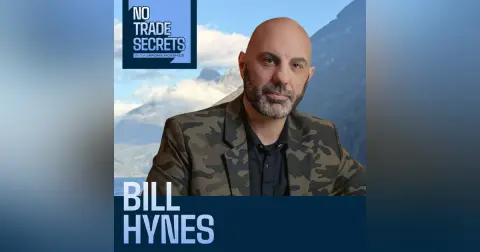
Bill Hynes is a professional race car driver, entrepreneur, investor, and Army veteran who lives life at full throttle. But his journey didn’t start in the fast lane—it began in poverty, fueled by a relentless drive to simply make it to the next day. In this episode, Bill unpacks the raw, foundational mindset that propelled him from military service to building a real estate empire from scratch. Discover why his "just get to tomorrow" philosophy crushes traditional 30-60-90 day plans and how a simple framework from motorsports can save your business from disaster.
💡 Unlocking the Playbook
The "Just Get to Tomorrow" Mindset: Forget overwhelming 5-year plans and 90-day targets. Bill’s core operating principle is to focus entirely on winning the next 24 hours. By breaking down massive goals into a daily execution mindset, you build unstoppable momentum and avoid the paralysis that comes from overthinking the future. Crush today, and repeat.
The CPR Framework: Pulled directly from professional racing, CPR stands for Coast, Pause, and Resume. When you hit a crisis or feel yourself forcing an outcome, don't just push harder. Instead, coast by taking your foot off the gas, pause to let the situation stabilize, and then resume with renewed clarity and control. This prevents you from turning a small problem into a total disaster.
Create Opportunity Through Creative Deals: Bill’s first commercial real estate deal was a masterclass in seeing value where others see obstacles. He shares the story of how he structured a "no money down" deal by increasing the purchase price to cover the down payment, which the seller financed. This is a powerful lesson in understanding the other party's needs to create a win-win that preserves your own capital.
🤫 PART ONE's Playbook Secret (The official No Trade Secret drops in PART THREE, but here is the hidden secret of PART ONE!)
Don’t force a preconceived plan onto a new venture or asset. Bill’s advice is to let the "building tell you what it wants to become." This practice of patience and observation allows the true, highest-value purpose to emerge organically, often leading to a more successful and authentic outcome than you could have ever planned for.
🗣️ Words to Build On
"I don't know what I'm going to do tomorrow, but I'll worry about tomorrow when I get to tomorrow." – Bill Hynes
"When I do wait for things to come to me, they come to me and they come with abundance. When you force the issue, it creates problems." – Bill Hynes
"It's okay to clap for yourself. It's okay to cheer for yourself. It's okay to congratulate yourself... you should be your own number one fan." – Bill Hynes
👤 About Bill
Bill Hynes, a professional race car driver, entrepreneur, investor, media host, and U.S. Army veteran who lives life at full throttle. He is the founder of Think Loud Studios, a creator, media, commerce, and technology platform helping shape the future of content, social selling, and live commerce. Over his career, Bill has built companies across entertainment, real estate, technology, infrastructure, consumer brands, and motorsports. When he is not building businesses, he is behind the wheel of the #57 Stadium SUPER Truck for Team UFD Racing, competing in one of the wildest and most exciting forms of motorsports. He also hosts ThrillCast, where he sits down with racers, founders, creators, and other high-performance personalities.
🔗 Links & Resources
- Connect with Bill on LinkedIn
- Visit Bill's Official Website
- Check out Think Loud Studios
- Check out The Thrill 57
- Listen to the ThrillCast Podcast
🎧 Make sure to listen to PART TWO and keep waiting for that momentum to hear Bill Hynes’s ultimate "No Trade Secret" in PART THREE
Today's guest is Bill Hines, a professional race car driver, entrepreneur, investor, media host, and U.S. Army veteran who lives life at full throttle. He's the founder of Think Loud Studios, a creator, media, commerce, and technology platform helping shape the future of content, social selling, and live commerce. Over his career, Bill has built companies across entertainment, real estate, technology, infrastructure, consumer brands, and motorsport. When he's not building businesses, he's behind the wheel of the number 57 stadium super truck for team UFD racing, competing in one of the wildest and most exciting forms of motorsport.
SPEAKER_01Well, I know we can curse on the podcast now, right?
SPEAKER_00Yeah, yeah. But the amount of things that you do, and it's I mean, uh I have to know how like where where did this all start for you? Where did the this journey all the way back when start and what came first?
SPEAKER_01Uh the chicken of the egg, yeah. Um well I've always had a you know entrepreneurial spirit. I've always had a curiosity on technology, um, always had a curiosity in sports and athletics and just competition to you know compete against others and also compete against myself from within. So with that, it it I think it was just a natural progression. I was in the military and I said, you know, I was looking around and I'd see people drive on the base or just you know, really got enamored with books like Think and Grow Rich and The 360 Leader. Um, different Tony Robbins uh uh back in the day. Um not a fan of his much now. I think you know he went off the deep end a little bit, but um, but back in the day, that's where um I got my curiosity, read up on those things and and uh really immersed myself in wanting to better myself. And I just thought it was a natural progression saying there has to be something more than me being paid $800 a month and putting my life at risk. Like there was something more for me to do out there. So I took my leadership skills from the military, started my own company in real estate development. So in the beginning, I just started buying houses and flipping houses. And that's how it got started. And one house led to two houses, and two led to four, and four led to eight, and then so on, and just started flipping houses, and then from the house flipping, it basically took me to purchasing a commercial real estate property. Um, and from there, um, kind of say the rest kind of rode itself in history.
SPEAKER_00Yeah. What do you think in your in your life kind of gave you these this trait that you had that led you to kind of come to that crossroad? Is this something like what was what did you have a did you have a conventional uh normal uh childhood and upbringing, or did you have were there things that shaped you that may have led to led to that for your life?
SPEAKER_01Oh man. Yeah, we were poor, okay. And you know, you'd see somebody drive by in a Mercedes, and you know, you'd stand online in the Norc, New Jersey welfare office going to get your free cheese and dehydrated milk, and having to ask the neighbor if she can turn on her hose so you can reconstitute the milk and or throw the hose up to the second floor so you could put water in the back of the toilet bowl to flush it. Um so even from then, it was like the reason I joined the military was like, okay, I want to get schooling, you know, I I want it, I want to go to college, so there has to be a better way. I can't afford it. So the military had, you know, the GI Bill and all those programs. So it's like, okay, I know I got to get out of this town, I got to get out of this house. Um, and and that was the vehicle I used. So I used the military as a vehicle to get to my next destination. Okay, and then and basically it was like, you know, I don't know what I'm gonna do tomorrow, but I'll worry about tomorrow when I get to tomorrow. So in the beginning stage of my life, it was literally just about like, let's just get to tomorrow. So without even thinking long term, just hey, let's let's just get to tomorrow. We'll figure it out tomorrow.
SPEAKER_00And when you had that realization that uh in the military that there was you that yearning for something more in your life, uh did you did you realize at that time what that more was?
SPEAKER_01Um it's gonna sound corny, but I always knew I was meant for something higher calling about helping people, about leading people, um, you know, um and uh yeah, so so it was just something that was you know in me. It was it I can't explain it, but it's in it's it's I always say like people say, Oh, can you train me on this or can you train me on that? And some things you just can't, it's intuitive to you. Um so it it's it's kind of like an unexplainable feeling that I just have no words for. Yeah.
SPEAKER_00No, I and I think I know exactly um um kind of the feeling you're referring to. Um at least for me, I I had this uh I've I have you know prior to starting my uh my company, had uh the same kind of feeling, and it's I think with that feeling comes a lot of frustration because you can't put it into words exactly what it is that you're supposed to do. You just know that there's something and it's not what you're it's not your current state of life right now, and the while you go through that uh at least for me, going through that uh that the f the time period of trying to figure that out, it can be super frustrating because it seems like you're you're not getting anywhere, but I feel like for me, and it sounds like for you, uh you know, when you're saying just get to the next day, I feel like that's what helped me a lot was just to kinda to to let go of trying to figure it out so badly when and just let life take me to the next step that was going to take me to the next and the next and the next, which then all of a sudden reveals exactly where you're meant to be, and you know when you're there, but not not you know, you don't necessarily know every step of the way.
SPEAKER_01Um it's it's it's actually funny you say that. That's I even say that with if I buy a piece of real estate, right? And um wit same same thing with the building we're in, it's called Think Lab Studios. It's a Think Lab building, and uh it was part of a contentious lawsuit and different things. And and and when I basically um took over full control of it again, um everyone's like, Well, what are you gonna do with the building? And I said, Well, the building will tell me what it wants to become. And and people are like, What? I was like, Yeah, it'll it'll tell me what it wants to become. And and what it wanted to become is a creator space, and that's where I was like, you know what? We're going to relaunch ThinkCloud Studios because we created ThinkCloud Studios way back from 2012, 2013, and then um because of all those lawsuits, it was kind of put on the shelf, and we just kind of still operated what it was called like studio at 210 because we didn't want to use that name because that there was a fight over the name and all of the other stuff. So um when when I uh you know won all that, I was like, you know what? I'm not letting anyone like that's what I created, that's what I founded. I'm not gonna let anyone take that from me. So we're relaunching it and we're gonna give it its second chance, which interestingly enough, our building, we say think loud think loud, home of second chances.
SPEAKER_00So wow, and it's have you have you always lived your life in that way, of kind of that uh where you are allowing life, you know, going with the flow of kind of where life's taking you, and uh especially for decisions like that, you know, I think a lot of people would you know be asked that question, and then they would immediately have to you know think about okay, like I need to decide that right now, but then a lot of you know, I I think this is kind of a contrast of uh of the difference between speed and moving fast and things, uh, but also um knowing when to slow down or at least to to let things unfold naturally.
SPEAKER_01Well, great question. And I say I'm gonna do it, um I'm I'm gonna basically give you an adage from racing. It's called CPR, not the traditional CPR. And you could when when I when I first learned about this in racing school, I was like, wow, I apply that in my life. And it's when you force things, okay, and and guilty of that, like there's times where you force things, and it's like, okay, let's just push it. Like let's hey, let's take the uh you know square block and shove it in a round hole or something like that, and it just doesn't work. Like if you try to force a situation in a business or a relationship, um, just things doesn't work. So we're in racing, there's a thing called CPR, and it's uh basically uh coast uh or coast, pause, and resume. So coast is like, hey, if you start, oh, oh shit, something's going on, come off the gas. It's okay not to be on the gas, okay? Let's hey and then you pause, wait for things to settle down, and then once everything settles down, you can get resumed, get back on the gas. So typically my whole life, I've I've I've noticed that when I do wait for things to come to me, they come to me, and they come with abundance. When you force the issue, it it creates you know problems that you know uh it has created problems. Now have I forced the issue on certain things and had things work before? Yeah, absolutely. But they've also turned disastrous, and then you're putting out like a fire. And uh I used to say to my former business partners, like, man, we become great at putting out fires. And then I'd say, well, let's try not to put it, let's not try not to start the fires that we have to put out. Um so it just comes from you know uh experience, I guess. But if if you know someone listening to this, a young entrepreneur, you know, it's okay not to have the right answers, it's okay not to know everything and know that you know tomorrow you live to see another day. And again, you just have to get to tomorrow, you know. And you know, in the beginning, you don't need to plan, you know, now they say, oh, you got to plan like 30, 60, 90 days. You you really don't, you know, plan for tomorrow and then crush tomorrow. And then tomorrow, crush the next day.
SPEAKER_00No, I love that. And um this uh especially when it comes to the uh you know, in a lot of entrepreneurs, especially uh ones that haven't uh you know, new entrepreneurs or um they really don't have to be even new entrepreneurs, but you know, subscribe to this belief of you know of setting these different targets at these different amounts of time in the future because that's the way that it's supposed to be done. I guess I you know I don't really even know where the you know the 60, uh 30, 60, 90 or like the one year, the three, five, ten year. And it's especially when you're in a a new startup or a new entrepreneur. Uh when I started, I I looked at those ones, especially the far out ones, uh, and I thought the this is honestly I think not worth any of my time because what I what I think because the common theme for my life is uh you know, it's it's crazy how many, you know, back and at different points in time, what I thought I wanted, or I thought I was gonna do, or I thought the direction was, or who I thought I was, and then when you just let life unfold and it turns out like, well, that's funny. Like, for example, before starting my company, you know, I've always worked in uh finance and accounting consulting. Uh, and then uh about four or so years ago, four or five years ago, I was looking for uh companies to buy. Um, and my own my only criteria was it's I'm I don't want to buy an accounting or finance company. Uh that's fine. And I was I was sit on that. It was like anything else except this. And then go on a couple of years later, uh, I started an accounting and finance firm and and I love it. And it's like it's um and I feel like when you subscribe to these long time horizon goals or d uh you know a long-term direction that you then put in set in stone, it's in concrete in your mind. It limits the limits your ability or willingness to pivot when uh things unfold the way they're supposed to, and the pivot you know, is I'm sure you've gone through uh countless pivots in all of your businesses. Um and how how much of a skill it is to be able to be dynamic and make changes and change the plan, change the core pieces of what you thought yesterday uh might not be the same today because you have new information today. And getting stuck on the same path just because that's the path you chose from the beginning, uh, I think is you know a lot of it comes to those long-term goals. How do you set goals or or do you in your companies and what kind of how do you what's your framework behind it?
SPEAKER_01Um so to your point that you just made, you know, you have to have the ability to shift on the fly, you know, to use another kind of sport analogy of hockey, or even, you know, um, to be able to shift on the fly and and um you know, and and that at that again being able to pivot at a moment's notice. So again, goals, you know, I've I've never really the goal, the goal is get to tomorrow. It's it's really that's the goal. Okay, and you know, I have friends in you know AA and other things where they need to like, you know, or they had substance abuse abuse issues, and and I tell them that. I said just get to tomorrow, you know. Um, but that's that's again in business. So um the goals are kind of internal. For me, it's a feeling of where I feel where I want to be. It's not even like, hey, you log into your bank accounts and you see what the number is. That's not even the goal, you know. It's like, oh, that's nice, you know, or oh, it's a little lower than I expected this month. It's like, you know, you you you that's never the goal, it's never been the goal. Um uh it's so it's never a monetary goal, it's more of like a personal feeling goal. It's like, you know, there's times where you know I've said to myself, well, wow, I'm pretty proud of myself. And you gave yourself a pat on the back. You know, and and and I like to say it's okay to clap for yourself, it's okay to cheer for yourself, it's okay to congratulate yourself. You know, all too often on social media, you know, you'll you'll go on and log in and be like, oh, congrats LeBron or congrats Jalen Brunson or Aaron Judge. How about how about you you should be your own number one fan and congratulate yourself on you know getting to tomorrow, getting to next week, getting to next month, you know, uh doing something great at your job, uh getting a promotion, buying a house, buying a car. You know, these things aren't easy in this day and age. So um, you know, it's it really is. It it's I break it down into the simplistic of terms of just get to tomorrow. And and if you do that enough times and you do it well, uh you'll have a successful life.
SPEAKER_00Yeah. And did you have you had have you had any mentors or people who have shaped your life in meaningful ways?
SPEAKER_01Um couple people. Um growing up, um, baseball coaches, um, football coaches, um, soccer coach, a wrestling coach. Um, so the coaches on the baseball team and the soccer team, and you know, the wrestling. So all of the different coaches I had were pretty good uh growing up. Um, interestingly enough, the one that was the worst to me was my brother. Um just, you know, that that like he wanted to be the baseball coach one year. He was just horrible. And then it's like, yeah, that's not a good idea. You know, you think you like you'd he'd play favorites, or no, you'd like bench me for I'm like, I'm the best player on the team. You're benching me? Like you've done like to prove a lesson. And everyone's like, what do you put Bill back in? What are you doing? We're gonna lose. So it's like, eh. So he wanted it was like reverse. He wanted to be like, oh, I'm gonna show everyone I'm not playing favorites. But uh, two in the later portions of my life when I started really in the military, same thing, military people, uh, sergeants, drill sergeants, so different uh pieces, uh parts of my life, I had different mentors and different, I'd say, pieces of the puzzle that fit together at that time. So even peers, like you know, uh like friends or co-workers. Uh so not that they were mentors, but that they were supportive and you bounced ideas off them. Um but later in life, like when I when I started flipping and I started getting to commercial real estate, I had a an Italian guy, and I went to buy his property. This is the first property ever purchased, okay? And you know, I read all these books about, you know, um, you know, had to buy a property with no money down, and and he was selling it. So I went to him and I said, his name was Joe, Italian guy, broken English, and uh he owned like a lot of pizzeria's and everything. And I said, Hey, I'm interested in buying your property. And I already got pre-approved for the loan. So um the property, he was only looking for like $800,000 for it, okay? And but I knew that it probably appraised for about 1.2. Okay. So again, he's and I knew that because my friend was a brand new real estate agent, and she was like, Hey, listen, you should buy commercial real estate. You're doing all these flips. You know, so I had some capital, didn't really want to deploy the capital. And again, this is way back in like 2004, 2005 ish. Okay. So um I went to the guy. Literally just went to his pizzeria and says, Hey, I'm interested in that property. Uh, I already got a pre-approval for a million dollars. He goes, Well, I'm only asking for 800K. I said, Yeah, well, we're gonna do a deal where um, you know, with 800k, I'd still have to put 20% down. If you make it a million dollars, okay, and you hold paper for 20% down, that's the 200K that I'm putting down, and then you get your 800k. So I I increased the offer price by $200,000. He thought I was crazy, and then he did the deal, and I said, you know, Joe, years later, I said, Why'd you do that deal? And he goes, Well, when I came from Italy, I was sitting in your chair and someone gave me a shot. And if I never got that shot, I wouldn't have had all this. So, you know, when you're put in a position of power, um, you know, there's times where you have to sit across from someone and say, okay, are they worthy of that shot? And, you know, try to help out. And he told me a story when he first came to Pennsylvania. He went into Philadelphia. Him and his brother picked Philadelphia because they figured, like, oh, well, it's called the city of brotherly love. And they went to lease a store, you know, a retail store because they want to start a pizzeria, and they got turned down by everybody because they were an immigrant. And uh he's so that's when they moved into like the middle of Pennsylvania and started it, and someone gave him a shot, but somebody in Philadelphia wouldn't. He goes, and if we got started in Philly, we would have been bigger and better than we were. So um, so that's kind of how my commercial real estate uh portfolio started. And then over the course of the next six years, that guy sold me quite a few buildings that same way. So I was able to I was able to keep my cash um and deploy it elsewhere. Um, so that was a really successful way to start the business. Now, this day and age, banks won't ever go for it, they want cash, you know, like you couldn't use that technique. In a way, you probably could do a form of it, but not to the fullest extent of you know uh inflating the price to have them hold a second. Um, and it really wasn't inflating the price, it was you know, you have a legitimate appraisal and things like that, so nothing illegal was done, but you know, it was in there, it was uh fully on the up and up. But anyway.
SPEAKER_00No, that's you know that's an amazing story.
SPEAKER_01Yeah, banks now have regulations where they're like, oh, we don't want to do that. We want the we want skin in the game. Because again, if let's just say example, they do that and it's at maxed value, and you don't have any money into it, and it becomes a problem, and now they're gonna get a property back that might be upside down in equity or right on the level, and they can't they don't have any flexibility or room to move. And the last thing a bank like a bank is in the business of lending money and receiving money back, they're not in the real estate business, so they don't want your property. So, anyway.
SPEAKER_00Yeah, no, I mean that's an amazing story, and how so that was one mentor, yeah. Well, and how is uh for for him in particular, how is that did that shape your perspective on uh in life being able to kind of reciprocate and keep that cycle kind of going of of giving back to uh because I I feel like there's um there's a lot of uh there's a lot of power and but there's a lot of fulfillment in uh in being able to give back and you know especially if you can sit across the table from someone who you know was in your shoes twenty years ago or however long ago and be able to see yourself in them and and kind of pass that along and pay it forward because you know uh I know there's again on social media there's a lot of lot of junk out there, you know, about how you know self made people are, and it's like there's uh there's no such thing. Like everyone has had help along the way. And you can't do everything.