The Self-Funded Founder, Mastering Distribution, and Building What You Love w/ Kamil Mansuri (Part 3) - Ep. 34

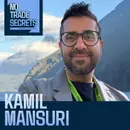
Welcome back to the finale of our deep dive with Kamil Mansuri, the self-funded founder of Bad Command AI! In PART THREE, we pivot from the foundational stories and lessons to the brass tacks of execution. How do you turn a corporate divestment into your first company by acquiring the very IP you worked on? What distribution channels can you tap into when the App Store is saturated? And how do you shift your mindset from just building "cool stuff" to creating a profitable, self-funded business? Let's dive in.
💡 Unlocking the Playbook
Acquire Your Own IP: When the company Kamil worked for was acquired, some products he’d worked on were being divested. Instead of letting them die, he and his partners took out a loan and purchased the IP themselves. This bold move turned a corporate shuffle into his first opportunity as a founder, giving him a head start with technology he was already deeply familiar with.
Find Alternative Distribution Channels: To avoid getting lost in the crowded macOS App Store, Kamil found a powerful partner in Setapp, a "Netflix for Mac apps." This single decision gave his products immediate global reach, tapping into a pre-existing user base and generating powerful word-of-mouth traction in markets he couldn't have penetrated alone.
The Engineer-to-Founder Mindset Shift: Kamil details the crucial pivot from building cool stuff for the sake of it to building products that solve a painful problem. This business-first mindset means obsessing over what customers will pay for and strategically planning for profitability from day one—a discipline that has allowed him to build a successful company without raising any venture capital.
🤫 The No Trade Secret
If you have a passion for something, do it. People are by nature change-averse, and potentially they are just scared. Don't quit your day job necessarily, but go out and build something and try. We have so many different ways to learn something. Go out and learn and just do. It's never too late to do something that you really want to do that you feel passionate about.
🗣️ Words to Build On
"You build up a career in finance and you're kind of more of like a management-level person, and then you kind of start again and you become a junior engineer, but that teaches you a lot." – Kamil Mansuri
"If you don't look at it that way, you're essentially a hobbyist versus somebody that's actually trying to build a business." – Kamil Mansuri
"Why does a Markdown viewer need 30 themes? Wait, 5 of them are animated... Why do I need this? You don't need it. It's just beautiful and I liked it. That's why I built it." – Kamil Mansuri
👤 About Kamil
Kamil Mansuri is the founder of Bad Command AI, a Princeton, New Jersey studio building native AI applications for Apple platforms. Bad Command AI builds practical AI products, including Telescopo (a Markdown workspace for macOS), Telepath (an on-device AI voice agent call center for Mac), and Telefoto (an AI headshot platform). Before founding Bad Command AI, Kamil was VP of Engineering at Vapor IO, leading engineering across edge computing, cloud infrastructure, private 5G, automation, observability, and AI infrastructure. He previously led mobile backend engineering at Take-Two Interactive, helping launch Garden Tails on Apple Arcade, and served as CTO at Momentum Technology, working on telecom infrastructure and automation for products including Robokiller, SpoofCard, and TapeACall.
He also worked as Lead Automation Engineer at Comcast, building foundational software for enterprise change management and alerting systems supporting NBC Sports and Xfinity Business Internet. His background spans finance, software engineering, telecom, cloud infrastructure, gaming platforms, native Apple software, and AI products, including award-recognized products like Robokiller and Garden Tails, and today he focuses on building software that is practical, fast, private, reliable, and thoughtfully designed.
🔗 Links & Resources
- Connect with Kamil on LinkedIn
- Check out Kamil's Blog
- Visit the Bad Command AI Website
- Telescopo Markdown Studio
- Telepath Voice
- Telefoto
🎧 Missed the beginning? Go back and catch up on PART ONE and PART TWO
Oh, it was a wild ride. So in in college, I studied business uh administration and econ. But I was always kind of more technical. You know, just whenever I had time, I was actually building early days, building websites and building kind of games and just building projects, right? But I didn't have like a full-fledged background in education in software engineering, which is something I was interested in also in high school. But I took some programming classes back then and just in different languages and just messing around with Visual Basic, right? Um but um fast forward to much later after I was working for companies such as like Deutsche Bank and JP Morgan and um I realized I I really, really kind of like software engineering um to the degree where I sound like dislike finance, I actually enjoy it, but I think I had more of a passion for software engineering and thought, well, this would be really neat to actually go into that. So, you know, as a career changer, I actually started um taking some classes in programming, realized, well, it's probably best if I understand um how to properly build software, how to you know, understand best practices around um testability and and scale and what makes good software, software, and also just understanding Python, understanding some of these languages that I really hadn't worked with at the time. So I did that um and I really, really enjoyed it and started started building all sorts of little projects. Uh again, this nights and weekends was still working for Jacob Morgan. Um but uh these little projects would be building APIs and reverse engineering, uh some some some things like won't name it, but major sports team where sports leagues had uh some data in their APIs on their website where you can actually scrape player data. And so I would actually build APIs uh that took some of that player data and actually did some analytics around predictive analytics, early days, machine learning and all those other things. But uh eventually I actually ended up working for um uh a startup in New York. Um and so you kind of it's funny because you you build up a career in finance and you're kind of more of like a management level person, and then you kind of start again and you become a junior engineer, but that teaches you a lot, and that discipline that you kind of learn early on um really helps you because you've already kind of been a manager, you already know how to lead people, and you can kind of grow a bit further uh and faster in your career. And so, in um only maybe a few short years, I was able to uh I was managing teams at Comcast um and leading uh some of their change management uh and infrastructure teams. And it was really great. I was able to do a lot of work there, uh working with uh NBC Universal and um uh NBC Sports on some of their change management stuff. And really what that means, change management um in that this context of Comcast is if there is, let's say, an outage predicted or fiber cut, um, I would build tooling and software that could understand, hey, this is about to happen, let's inform stakeholders and let's also try to see if there's a way to self-heal this system. So it uh I'd send some signals out to uh certain certain parties that would say, hey, like there's about to be this change in the network. Could we actually make a modification on the hardware side? So unplug something, replug something in. And so you're actually kind of building processes and automation around manual processes, which eventually became more automated processes as time went on, which um was really cool. So a lot of that stuff's still in place at Comcast, I'm sure, but it's probably significantly more automated at this point. Um and after that, I actually worked for a few other startups, um, some based in New York, some based in New Jersey. And I worked for this one company. I mentioned Robokiller. Um, that was part of the company I worked for. And that company actually got bought out by another company, and they divested some of the products uh that they didn't want to acquire. And they were looking for a buyer for those products. And so the way I became a first-time founder was I took out a loan and with some partners actually purchased and acquired that IP from the company I worked for. So eventually I basically became a founder that way. And so um just kind of kept my job and started this other company with uh a few employees, and then we hired a few or a few extra people and uh became my first, my first gig as a founder. And so we we basically were taking some of the IP and we're building products around that in the privacy focused space for making calls, privacy-focused space for making text messages, and um kind of went from there. So I learned just a lot about myself in that process and learned a lot about not just uh building backend um and automation, but also how to build products, right? Understand go to market, understand how to build a team from zero, like how to build a company, an engineering organization, and a culture from zero. Um really, really powerful stuff. And I kind of paused there. Um that was the first time I was a founder, and kind of that journey was was was pretty pretty crazy. Um, but uh yeah, yeah.
SPEAKER_01Well that's no, that's incredible. And um and it just uh and so these products were the were just assets that they didn't want to hold on to or didn't want to buy, and so then instead of throwing them out, just like uh they were they just so they're just looking for like fire sale, like who wants to pay just a little pay a little for these at least? Um and then it just so happened that you you had like it had had one that you like how did how did you go into that decision, especially through the like you know naturally I would think like uh if I saw if I was in that situation, I would at least be thinking about um if I especially if I wasn't uh you know completely familiar with the products that they were trying to get, you know, they didn't want to acquire. Yeah. Like, well, if they don't want them, then like is there anything here or are they junk? How did you did were you familiar with what the products were already?
SPEAKER_00Yeah, yeah. So I can I can speak on some aspect of this and some some things I can't. So uh not to be not trying to be vague. I'm gonna try to be as specific as I can be. So um with that being said, um, yeah, the products I was working on, uh I'm sorry, I was actually working on some of the products that were being divested. And so I had strong familiarity with some of those products. And so the products would do things such as um let you essentially make a replace like your office PBX line with like your own your own phone. Um and so it could actually route calls um through your office PBX number. Um it it did things by manipulating the caller ID. And so because of that, there was a sensitive nature to the IP, if that makes sense. And so because of that, when the acquisition happened, my thinking was that they didn't want it because of that sensitivity around um, you know, changing the caller ID so that it could work for Office PBX systems. The the truth is the backend systems um that power it, that power um SMS, that power calling, um, very, very interesting systems to work on. Like you're actually relaying like millions and millions of calls and doing it in real time. It's super cool stuff. And so I wanted I wanted access to that IP because I wanted to build more of that. Um and so that's why that's what I was getting out of it. I got to build cool, cool stuff. Um so yeah, it's it's it's uh you know, it's profitable. Like you're you're able to build products that uh people want that businesses could use to actually be able to make and make calls and make and receive calls and texts from your uh personal phone uh instead of your office PBX line. Because again, this is kind of like this is still early. This is before a lot of like you're still in the office, I think, uh for a time after people were a lot more remote and hybrid, I think even now. But uh back then, like people really needed uh to have a second line. And so there was a quite a big demand for it in terms of the enterprise. Um, but I think in terms of the product acquisition, like Robokiller and other stuff, I think was a lot more um lucrative for for those for that company to be acquired.
SPEAKER_01So gotcha. Um and so then in that your that being your first uh your first founder uh you know chapter, um what what are some of the big lessons that you had to learn? What were some of the tough ones that you had to learn that you approached uh in a different way this this time around?
SPEAKER_00Yeah, so in my current role as as a as a founder of Bad Command, um I took away a lot from that first time. I I would say, number one, um understand that I can't, even though I'm responsible for everything, that I need to find the best path for handling everything. And so I have I have contractors and consultants to help me with marketing, uh to help me with product. Um, you know, I'm still kind of ahead of everything and build everything, but I still have help and I have consultants um also to ask questions as much as I can. Uh I think early on you are you inherit this product and you want to make sure you build it up and you want to just be able to get it back to the state it was in before acquisition. So we had a lot of hiccups and road bumps, um, sorry, uh XP bumps like along the way, uh, I think the first like eight months of that particular startup, because we had to get back to like a state where everything kind of just functioned the way you expect, or understand the full code base. Here, because I'm starting from zero, I kind of control that destiny a bit more. I'm like, well, I am much more disciplined, uh, have uh some idea on how to actually build product front to back, like how to actually build mobile applications. Oh, that was the other thing I learned, a big one. Uh I had never built mobile applications before. And so I inherited some of this team, but I also inherited mobile applications as part of it. And so I had to very quickly get an education on how to build uh Android applications natively, how to build Swift applications natively. I had never done so. Again, I was an automation and backend engineer. All of a sudden I'm now building and managing and scaling um, you know, huge teams like on uh that became bigger teams uh on mobile. And so how do you do that, right? Uh so I had to quickly understand and learn all of that. But now years later, I understand all of it. Um things have actually gotten easier over time. It was much harder back then. You have a lot of uh just uh better tooling, better automation now put into place with Xcode, better processes, more predictable. Um, really easy to actually work with Xcode. But um yeah, you kind of learn how to do those things. I think the other thing uh for me was uh understanding that I'm not just an engineer, that I also now drive the sales cycle and drive the product from a sales perspective. So I'm not just building cool stuff for the sake of building cool stuff. I'm building products that solve a painful problem. And what will will people be able to be willing to pay for those solutions? Um you have to kind of look at it as a business. Um and I think that's very, very vital. And uh if you don't look at it that way, you're essentially a hobbyist versus somebody that's actually trying to build a business. Um and so it's an important mindset um that I took away from that, you know, for Foray as being a founder. And I think starting off in this boat, like how can I be as profitable like as I can be, but also build high quality solutions and products that people love. Right. Um and you want to be as profitable as you can be because you you wanna you wanna make sure, like for my case, I didn't want to go after necessarily after raising venture capital. I didn't want to go and raise money, didn't really feel like doing that. So I've self-funded this venture and like happy to say we're profitable now already. Congratulations. Thank you, thank you. And so um that profit passive profitability required a lot of planning and logistics to do it, but I I I'm very thankful that I had the foresight and I had really good mentors and peers that taught me a lot of this along the way. So and it's because of them I was able to think of that.
SPEAKER_01What about on you know you talked about uh obviously there's the product side of things and but then there's and then there's the profitability financial component, but what about distribution? I feel like distribution uh you could have the best product that will make sense and model out extremely profitable, and then if you don't have any users. You have you have an application that uh that nobody knows about or uh I feel like distribution is s uh sometimes one of the things that maybe not enough thought to go into. Um you know, like I I have a friend who has a um and he's you know he's been an engineer for 20 plus years. He was an engineer um at uh at IBM, uh brilliant, super smart guy, and created he built something for uh he he built a pro uh a product for really for himself and him and his his wife uh to and the application is called Annie. Uh and it's a stock uh it gives you signals on stocks uh and it does it uh through um the method of uh swing trading. Um so it'll give you signals, buy, sell, sit so buy, sell, or hold signals for different stocks. And these are stocks that are like I've never heard of most of them. Um and you just uh you know it it could give you a sell signal the next day, or uh I've had cases where I've held uh certain positions for two months and then it gives you the the uh the signal. And um and I know in then last few months there have been a lot of those kind of products that you know stock AI stock packers that are out there. Um but I mean he has a track record of years because he used this to trade his own uh his own brokerage account uh and all of his investments. And and he achieved you know, he was achieving these ridiculous returns. And then it's um and then he he has his the whole track record on on their website of uh you know, if you had invested in uh you know the SP 500 at the it or uh versus followed Annie's uh daily signals from that same time period, and it's like hundreds of percentages uh percent higher return with uh what has its products was able to to uh return over consistently over multiple years. And so um so I met this guy and and and myself and another really good friend of mine have been using a product uh I have since the first week of January. I was like, okay, I'm gonna do it, and I'm gonna follow uh exactly what uh follow the signals exactly, even if it you know it doesn't, you know, it might not look like it makes sense like uh to do it. Um and I'm just gonna do it and see what happens. And like we're year to date uh year to date. I'm up 180% on what I put in. And it's just and it's but then it's the and I'm like, well, everyone needs to know about this. And so but coming back to like the distribution piece of this, uh like how how did you tackle distribution? Like, how do you get people to know about your product?
SPEAKER_00Yeah, so in your example, which is really cool, and for Annie, um he used proof, he used social proof, and then that social proof was hey, just try it out yourself. And that's leads to word of mouth, right? And then you have traction that way. Um for for Telescope or for Markdown Studio, um, the big thing we have for distribution right now, we're very lucky to work with a partner called SetApp. Now, SetUp is a marketplace for Mac OS apps. Think Netflix. Uh essentially Netflix for Mac apps, and they have hundreds of apps, and so you pay one fixed fee and you have access to all the apps as part of your package included. And so I had launched uh Telescopo, an early version of it, um, very early in SetApp. And so was able to get, you know, start getting some traction on setup, and now it's got you know just a lot of users, a ton of users all over the world um using the product now. Um and it's it's great. Like we're able to get a lot more users that maybe not necessarily either have access to the Mac OS App Store, or they already have access to SetApp and or they just feel a lot more comfortable just clicking button and just downloading it, checking it out. I'm like, oh, this is actually useful for my workflow. And then, or they leave it installed and maybe it didn't work for them early, but now with all the other features I've shipped, maybe it works for them now. But over time you're seeing kind of a natural progression and growth. And it's really cool because setup, I think, has a geographic reach that I don't think I could have penetrated um solely on the Mac OS App Store, uh, in that there are a lot of users in Asia and a lot more users in Europe that now understand what what Telescope can do. Uh and so they're using it on setup, but what if they want to buy it? They'll just go and they'll buy the app, um, or they'll get a subscription for the app, maybe just the app. So this is kind of leading to better word of mouth and better. Actually, I just um I have some I have some internet signals on on when certain keywords of my products kind of show up in places. And uh I just noticed there was a podcast, uh, somebody name-dropped my app on a podcast uh a few days ago. Like, oh, that's that's really neat. So it's it's it's trying to gain traction. Um, there's a lot of chatter on it uh about it on on Reddit and other community forums. Um I think that word of mouth is really, really important. And if you go, you kind of go on the macOS App Store and you kind of search for Markdown viewers or markdown editors. I mean, there are dozens and dozens of them. In fact, like in the category that we're in, and in the macOS App Store, I think there are probably three or four that are ahead of us in terms of just that number. Um, but they are kind of they're they're kind of bare bones. Uh they don't have a lot of features and um it it doesn't quite quite do everything that you might need for a markdown app. But um, you know, I think I think once people kind of use the free version of it and get a sense of the user experience, like wow, everything kind of just feels fast and fluid. Like, wait, there's 30 themes on this. Why does a markdown viewer need 30 themes? Wait, five of them are animated. The hell is Aurora Borealis? What does this theme even do? Wait, this is so cool. Aurora Borealis is just coming into like the background of my markdown. Why do I need this? You don't need it. It's just beautiful, and I I I liked it. That's why I built it. So like you see kind of you see that my personality kind of shine through in this app, and you kind of see the user experience and how beautiful the app is to use. I think people just want to use it because it it just functions well and it just they they have kind of the funky stuff in there if they feel like using it too. Um but but yeah, that's the you hit it, you hit a really good point. And so one of my consultants actually came up to me like in a in a one of our meetings um last week and said, Hey, I think you have a lot of really beautiful things in this app that aren't visually conveyed on the website. And so he suggested that I start a TikTok account and I start actually creating uh more marketing material on TikTok and uh short form video to showcase some of the features, like the role Barriellis thing, like got you to smile and laugh about it. Like, but it's actually really powerful like when you're when you're seeing it visually. And I think that's the point they were trying to make. And so for me, a learning that I'm still learning, um, you know, every every week I feel like I learned something new, um, is that I think I need to go out there and probably showcase why this app is beautiful visually, rather than just talk about it, rather than just kind of show, oh my website's nice, but you can't visually see, you see a video on the homepage but for that product, but you don't really see you don't see it conveyed in a way that might make more sense in a short form video such as YouTube Shorts or whatever. So yeah, distribution's interesting. Set apps have been a really great partner. Um, direct distribution through well it's not direct distribution, sorry, uh macOS apps for distribution. And then eventually we might do direct distribution. Um there's plans for that later. But um that's just telescope. I think uh last year uh we launched Telephoto, which I really talked about in this podcast, but telephoto purchase studio or last year it was called telephoto AI. It's essentially an AI headshots app that we that I created last year that does something very novel. It actually uh it actually trains your likeness perfectly in 90 seconds. And essentially it does a whole digital scan of your fit of your your likeness across 10 images that you feed into it. And it's actually training an AI model with very, very powerful uh computers. And so I think at the time I was using like a Grace Black Belt 200, a very very expensive GPU, using eight of them to train your likeness for 90 seconds. Because typically for these other applications that do it, it takes, you have to come back. You're like, okay, it's loading your model and you come back in 24 hours. Because it costs a lot of money to train the model. And so they're using really cheap hardware to do it. It just takes forever. So I I wasn't I was using expensive hardware to do it. And so um the thing is that the results are beautiful and like you're using it like wow this is awesome. And uh it went viral. Like it it actually did really well. The problem was it was too expensive and uh the margins weren't great. So I'm now rebooting that app and making the economics work a bit better and it'll be much faster and won't be so expensive. So the idea now is also to kind of leverage a bit more modern like social media and TikTok and just really understand how how to showcase things that are more visual to an audience that reciprocates well to visual, right? Again, I'm an engineer and so what I know is what I know I don't you know I don't I don't typically use like TikTok right but like I understand the importance of it. I understand the way to actually communicate to your the audience that might utilize that service um they may they may actually be audience for the product that you're trying to sell. So it's just from a marketing perspective it's stuff that I'm learning.
SPEAKER_01So I mean no I I understand that too um you know when you're seeing these TikTok videos or short form videos of someone actually using the product not just like in a demo kind of format uh you know like the traditional obviously a demo is someone showing you the the product but uh where you can actually put yourself in that video and see w what it's like to be the user. Um I feel like that speaks to a lot of people uh in a different way that uh is is is I don't know less less company giving me a demo and trying to sell me something and more uh just through the lens where even if you know you you are putting the video out there as you know the founder of the company it still is gonna have the feel like oh so this is a user showing showcasing this cool app that they're using uh and that you can put your you know see it through their eyes uh and I think that has a different I think both are important but uh it's uh it's it gives it a different a different lens to look at it through um and then you know you go viral then yeah uh that's how powerful of a of a way of getting your product out there and uh no one then it was on that.
SPEAKER_00It was it was wild. We were um I just remember maybe a few months after launch last year it it was showing up on local news like like like like middle of nowhere uh US like just local news like oh and there's this new app on the market called telephoto and I'm like I was watching clips of this on YouTube and and people were sending me just videos of it and I'm like this is this is surreal. Super cool but just surreal like um but yeah like uh hope try to recreate that lightning in a bottle moment would be amazing.
SPEAKER_01Um yeah well that's awesome well um I definitely know that I want to uh we're gonna you're gonna have to um show me how I need where I need to go to set up uh some and test out some and play with some of your tools because uh I love uh they all like you I know you have you have quite a few and they all sound incredible and so I'm gonna try those out but where can people go uh if they want to see what you're doing to try out your uh all the tools that you're making um and I'm gonna put links in the show notes to uh all of the uh all the website URLs to uh bad commandai and uh you know telepath voice and and the all the other products but um where where where is the best place for people to reach you to get in touch with you or to see what you're up to actually just just um www.badcommand.ai that's the best place to see everything it's just uh um we have a product launching um but we have telephoto relaunching next week telepath is launching in two weeks and we have a fourth product that I'll announce here um doesn't have a name yet there's a few names but it's uh it's actually very neat it's on device AI powered uh manga and comic book reader and it's um very very immersive the idea is a cinematic comic book reader where you feed in if you ever read a graphic novel or comics they all come in different panes of different sizes um so we built a machine learning model that understands 95% of the graphic novels in manga out there and it can cinematically pan to every pane so that with a single button you don't there's no there's no clicks there's no swipes none of that you just you just touch your screen and it'll advance it cinematically so you can actually visually read uh any sort of graphic novel you can think of beautifully that comes out in three weeks.
SPEAKER_00Wow that's no that's awesome um no that's okay that's gonna be cool as well I can't wait to show you I can't wait yeah I can't wait to showcase that that's I was hoping uh it would be fun one ready for sure guys but I think you know once once this uh episode comes out it'll be just a few you know a little while but um that's that's gonna be really fun and that's actually almost ready to go so that's the fourth product.
SPEAKER_01Yeah you got a busy you got a busy month or so coming up for you then.
SPEAKER_00Yeah yeah exciting um me and the team are very busy on this that's awesome and so I don't know we just we carved out carved out time to work on this fourth product but um I think I think the fourth product I'm personally excited about and I cannot I've already used it on on on the plane um and I read through a couple of uh graphic novels with it on my iPhone which which is awesome because usually I'm reading these things on like an iPad or a tablet and the fact I can read it in a in a portrait mode screen without even having to rotate and it just looks awesome is super immersive.
SPEAKER_01So that's amazing people like it. Oh yeah I'm excited to see that one too and we end every episode uh I do with uh a same question that I asked every guest and so I'm gonna ask this to you as well what is your one trade secret in business or in life that uh you know shouldn't be uh a secret anymore or your biggest secret um that you've discovered uh in business and life if you have a passion for something do it um I know it's it's maybe it's not really a secret but I think I think people need to hear that um because I think often you're not you're not really you're in your own headspace and people I think by nature are change averse and potentially they are they're just scared.
SPEAKER_00So if there's something that you really want to build, I mean we live in the times now where you can go and build anything. I mean show some constraint and some restraint learn how to build the thing you're trying to build and don't just ship something with a lot of security vulnerabilities but uh go and build it right don't be afraid and just try. Don't quit your day job necessarily but like go out and build something and try. If there's something you want to learn go and learn it. You know I was very lucky where I had you know edgex and uh Coursera we had all these different we have you still do we have so many different uh ways to learn something go out and learn go out learn and and just do. I mean it's not never too late to just kind of do something you really want to do that you feel passionate about. I think it's really important to to be that way.
SPEAKER_01Amazing thank you so much for that and uh Camel thank you so much for being uh being on the show and having a conversation with me uh I learned a lot I enjoyed our conversation and uh everyone uh needs to put the alerts on for everything that you're shipping over the next few weeks uh because uh a lot of exciting things coming up for you.
SPEAKER_00Thanks so much it was great chatting with you drum