The Two Jobs of a Leader and Generating True Buy-In w/ Erik Berglund (Part 3) - Ep. 26
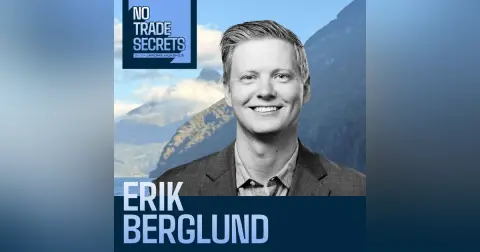

Welcome back to the finale of our deep dive with communication and leadership expert, Erik Berglund! In PART THREE, we pivot from the foundational principles of influence to the tactical execution that separates good leaders from great ones. What are the only two jobs a leader is truly responsible for? What is the three-step "enrollment" formula that generates authentic buy-in without manipulation? And what is the most common trap that turns high-performing experts into burnt-out, ineffective managers? Get ready to take notes.
⏮️ Catch Up on Previous Parts
💡 Unlocking the Playbook
The Subject Matter Expert Trap: Promoting your best individual contributor into a leadership role is a tale as old as time—and a massive trap. Erik explains that when a leader has all the answers because they used to do the job, they get sucked into solving their team's problems for them. The best leaders don’t need to know how to do the work; their job is to lead their people to solve their own damn problems and develop their talent in the process.
The Leader's Two Core Responsibilities: According to Erik, the job of a leader boils down to only two things. First, hold people accountable to the mission of the organization, ensuring the team gets things done. Second, and just as crucial, is to develop the talent of the people you've been entrusted to lead. If you excel at these two functions, you are an awesome leader, regardless of your subject matter expertise.
The Recipe for Authentic Buy-In: To get true buy-in, you must frame your ask around what's in it for the other person. Erik shares a simple but powerful three-step enrollment formula: 1) Start with what you genuinely want for them. 2) Clearly state your intention or what you'd like to do. 3) Ask for their permission to proceed. This approach disarms resistance and ensures their "yes" is genuine because you gave them a real opportunity to say "no."
🤫 The No Trade Secret
I talk to myself like a crazy person. In the shower, on a drive somewhere. I have gotten over the awkward sensation of literally talking to myself and saying the thing I want to say in that next meeting again and again and again, such that it's just normal... it is very helpful to have said the words you're about to say to a person under stress or under duress a couple times to yourself in a zero-risk environment.
🗣️ Words to Build On
"Doing what you like to do is pretty expensive. Doing the thing that's effective is far more profitable, whatever profit means in your world." – Erik Berglund
"A really good leader doesn't need to know a single thing about what you do in order to help you be more effective at getting it done." – Erik Berglund
"Giving somebody the opportunity to say no is the only thing that actually makes their yes mean anything." – Erik Berglund
👤 About Erik
Erik is the founder of the Language of Leadership and Loominary, and the host of the 'I have some questions' podcast. His work focuses on changing what people say and how they say it in order to be influential. His companies create skill simulation systems that allow people to practice the most difficult conversations before they occur in real life. He lives in Bend, Oregon with his daughters (10 and 7) and his wife of 13 years.
🔗 Links & Resources
🎧 Missed the beginning? Go back and catch up on PART ONE and PART TWO
Yeah. That is such a good example where a very simple act of intentional respect could elicit the exact opposite reaction from somebody strictly because of cultural norms. And if you're not aware of that, and good kudos to this person for being aware that they should inquire and uh try to understand rather than immediately believing that their perception was 100% the case, that's really hard to do in real time. You know, it's very difficult to on purpose be humble and patient and calm enough to think through the signal somebody is sending you and assess that it could be for a reason that's quite good. When in reality your gut reaction had to be, the hell's wrong with this guy? Why won't he look at me? You know? My interpretation when somebody doesn't make eye contact is a lack of confidence. Don't know why. It's just what I assume is the case. That's such a silly assumption. That's obviously not the case most of the time, but it's just my gut reaction is that that must be what that means. And I have to think through that if that's what I encounter. So as we're describing this, it could become a, you know, uh an active listener could be like, man, there's a lot to think through. And that's, well, because there is. Like human beings communicating is pretty complicated. And you add in culture, geography, body language. I mean, we haven't even gotten to, you just made the eye contact argument. We haven't even gotten to true body language, right? What does it mean when somebody is sitting across from you and they fold their arms and they lean back? Well, often that's going to mean they're not buying what you're selling. Whether you're selling something or not doesn't even mean the point. But it depends. You've been at a barbecue hanging out with your grandpa or your uncle, or he's sitting back chilling, drinking a beer, relaxing with you like this. Does it mean the same thing in that context? Probably not. This is all really nuanced. It could be scary to somebody to hear all of this and think, oh my God, I have to go learn all these things. No, you don't. Nobody's perfect at these things. Chase Hughes is phenomenal at describing the underlying recipes for them, being able to do them on purpose under stress is really hard. You don't have to go get a PhD in influence to understand that if you're just a little bit more intentional about it, if you're just aware of it to a higher degree than you were yesterday, you'll probably do significantly better. You're probably a decent communicator as it is today, decently influential in whatever capacity you need to be. And if you just put a little bit more emphasis on a couple of these pieces, you'll probably level up quite a bit pretty fast. The bar is pretty low. And again, just the act of trying to understand better, just the act of asking what does it mean when you're right when you look down, just the act of mirroring is what we talk about with body language. If somebody's giving you a certain posture, at least in the States, the uh the dynamic to increase influence is often mirroring their body language. These type of tactics aren't universally true, but if you just put a little bit more effort into it, you'll probably be substantially more influential. Because you're doing something most people don't try to do, which is to speak the other person's language rather than trying to get them to speak yours. And that intention, that willingness to try to meet them on their grounds is highly influential. My preferred mode of communication is the one that works.
unknownRight?
SPEAKER_01The best pitchers, their favorite pitch is the one that gets the K. The quarterback's favorite play is the one that scores a touchdown. Like, yeah, they have their preference, they have their default style, the things that's fun, but doing what you like to do is pretty expensive. Doing the thing that's effective is far more profitable. Whatever profit means in your world, it doesn't have to mean money. It's just becoming aware that your true end goal is influence, not to run the play you're most comfortable playing, that's a huge level up in the thinking and the mentality that's probably going to lead to more effective communication in most people's lives.
SPEAKER_00Yeah, no, and such a good point. Um, you know, with uh what is the efficacy of the way you're doing something, and um you make me think of golf uh you know as I go through uh you know my new recently new side, my my recently new hobby away from business that uh is uh has been a lot of fun and is humbling and rewarding and so difficult and frustrating. And it's as a uh as learning like you know, like for the last month I've put my driver away in my bag because the outcome of that recently uh until I uh you're only using my seven iron because I was so agitated with my driver that I was like, forget it.
SPEAKER_01This is the club I'm hitting. It's 130 yards straight. That's it.
SPEAKER_00That's my driver is is is super fun. I love swinging hard, I love hitting drives that go a long way, but recently, and it's uh it was I would I was consistently uh solely uh hitting it out of bounds. So it's like the outcome of that, like, cool, like let's put that away and work on that at the range outside of the round and let's just tee off with a six iron because the outcome of that is uh is yeah, and also like it then become yeah, hitting a hitting a a bomb of the drive is fun when you hit a fairway, but if you're not hitting fairways, it's it's way more fun if you just hit it, you know, hit an iron on the fairway more consistently, and then I'm like, actually, you know, th that's effective, and what's effective then becomes fun because it works. Um which you may you know the the I I know the core of uh a lot of your focus is uh is with leaders and you know and companies organizations. Um and I think you've probably is it is it correct to assume that from what you you've seen in your experience that just because someone is in a high level executive position um doesn't that doesn't translate to being a good leader um all the time. And I would go to say, just from my observations, I think it's I would say a lot of people in those higher level executive positions are really d poor leaders uh for the for the most part. Is that is that what you have seen?
SPEAKER_01Um yeah, yeah, it's the the the tale as old as time is you're our best salesperson, let's promote you to be a sales leader, you're our best accountant, let's you promote you to be the head of the accounting team, you're our best lawyer, let's let's put you at the charge of the law office, and now you get to lead other lawyers, and there's absolutely nothing. Uh that's not the right way to say it. That's too absolute. There's extremely little in most people's individual contributor role that shares the same shape as the skills required to be a great leader. You know, in sales, for example, in order to be a good salesperson, well, in order to be a good salesperson, you have to produce good sales results. That doesn't mean you're following the best sales processes. But let's just say you were following really good sales processes and you were actually really good at discovery and understanding what your clients were trying to do and aligning your solution with your client, which is what the very best salespeople are experts at doing. They ask a tremendous number of questions to figure out where you're going. And if they can help you get there faster, because they've asked you all those questions, you've built a lot of trust. Now they can position their product as a way that's going to get you there faster, and they tend to sell really well. The very best salespeople who follow that process, curiosity and asking a lot of questions actually does share a lot with what good leaders do. So sometimes there's an overlap of the Venn diagram of skills required to go from individual contributor to leading those individual contributors, but it's uncommon. Most of the people in my programs aren't new leaders. Sure, it's great for new leaders, but most of them have been leaders for 10, 15, 20 years, and they just never learned these skills because they were never taught them. Because companies aren't very good at training leaders on leadership skills. And the best leaders in the world, if you want to know who's a really good leader, and the best way to know is to be led by them candidly, but you can't be led by everybody. But if you needed to look from afar and wonder who's the best leader, if you saw somebody who could successfully lead people where they have no idea what that person does, those are great leaders. Because the reason we promote our more successful people is we have the best indicator that they're capable of being good at something. And then we put them in charge of people who do the thing that they used to be really good at, which means the leader has an enormous amount of subject matter expertise around the thing that their people who report to them do. And that's actually a trap. That gets that leader sucked into solving a lot of their people's problems because they know the answers to all of those people's problems. The very best leaders don't know the answers to the problems their people need to solve. They have to lead those people to solve their own damn problems. Those are the skills we help people get really good at. A really good leader doesn't need to know a single thing about what you do in order to help you be more effective at getting it done, at being accountable for it, at setting better expectations with you. They need zero subject matter expertise. They might need some context, they might have to ask a couple questions, but not to go deep on the know-how because they don't want to know-how. Their job's not to know-how, their job's to get you to get things done. The job of a leader is two things. These are the only two responsibilities a leader possesses at a high abstract level. Sure, your job description might say otherwise, and you might be held accountable or you might get bonused on different things. But these are your two jobs as a leader. Hold people accountable to the mission of the organization. Whatever the mission is. If your mission is revenue, hold them accountable to the revenue targets. If your mission is recruiting, hold them accountable to the headcount targets. It's your number one job. Get shit done through those people. Thing number two, develop the talent of the people you've been entrusted to lead. Those are your jobs as a leader. If you do those two things effectively, you are an awesome leader. If you try to get bogged down on all the minutiae and bullshit of knowing how to solve everybody's problems and you know the system so deeply, and you know the algorithm, and you know the clients, and you know all that stuff, you're not leading very effectively. You're getting the mission accomplished. That's not your job. Your job is to get other people to get the mission accomplished and to develop their talent while you do so. Those skills required to perform that job function are not taught in any individual contributor capacity. So when we hire the person who used to be great at the job, it's not a terrible idea. But you're probably putting that in a person into a position where they know all the answers, they're gonna get sucked into solving all those people's problems, they're gonna be burned out in three to five years as a leader. We need to teach them the skills to get other people to accomplish things they don't know how to do, which is very difficult if they do know how to do all the things.
SPEAKER_00Well, interesting. I um I 100% s uh understand if everything you just said, but that uh I've never I've never quite looked at it that way. Um and so you and then you had me you had me uh that led me to another question then about this, uh, when you talked about the mission and the vision, right? Uh which is something that I have thought about a lot, is you know the the um my company's name, Arrowhead Strategy Group, is uh literally it it's um the name Arrowhead uh comes from one of our New Zealand, our New Zealand rugby team, the All Blacks, one of their uh lessons of leadership uh is called Follow the Spearhead, but uh um which is based on this analogy that in uh for their team culture um they compare it to um someone throwing a spear. And it's for the spear to hit its target, to hit its mark, all three points of the spear need to be traveling in the same direction. And the same is true for a winning uh great culture. Everyone needs to be going in the same direction. So you know, in a r in a sports setting that's um you not having you know one person focused on individual stats, one person uh focused on something else, and then being so scattered because then you'll never hit your mark. You need to have all of the all of the force, all of the inertia going in the same direction, and that direction has to be a you know an aligned direction. And so it had me uh wondering, uh, you know, and thinking it's had me thinking a lot about um, you know, as I uh uh you know from the moment I started growing my team, uh, and something that's of hu you know huge importance to me is uh that in the last company that I worked for before starting this, uh, which was uh during this period of being acquired, and uh we were acquired, and then we had there was new leadership. Uh, and something that I uh felt was just fundamentally missing, and the you know, the reason why uh the 40 or so employees that worked for the company that I worked for that was was you know the acquired company have all but you know, they're I think they're 12 months later they're into single digits of those remaining people. Um and my view on why was that no one, you know, and I speaking for myself uh in this assumption that I it before I knew what it our direction and mission and vision was for the future as a company, where we were going. Um and then all of a sudden, I felt like I don't know I don't know where that is now. I don't know where we're going. So it feels like we're kind of just going somewhere without a GPS. And uh so that's why that became something that was extremely important to me in building uh our culture at our head is is uh you know a word I use a lot is uh you know is buy-in. And like how how do we how do I how do I communicate and get people not only to communicate what uh what our vis like what the vision is and uh the direction we're going, but then how do I get people to buy in, which is you know the influence part of this equation. And um and I feel like that I feel like that is something that a lot of people in leadership positions don't really think about just because I've seen that firsthand. Um and something that I personally think is like the most important thing, uh, or one of the most important things uh as a leader is to get people to buy into buy into the uh the big picture and where you're going. Um I guess one is like what where do you see that falling in importance and then how have you have you ever can you it can you think of a time or an a uh an example uh working with different uh different people on leadership where that has been the thing that you've been helping them with and trying to help them overcome is how to how to get people to buy in, especially if they've been in these leadership positions for 10 years, you know, and they have a team of people that are used to them being this way, and then now they're trying to learn and correct their behavior and get people to buy in, you know, as they're you know, they're you know trying to level up their leadership, but then people are used to like them being a certain way, and probably more resistant to that than if there was a brand new person coming in. I don't know.
SPEAKER_01Great, great way to break it down. So let's do it, let's let's attack this from a couple different ways. One, you know, your your visual of the arrowhead and that the spear needs to follow the arrowhead is a good analogy in the sense that you do need people marching in the same direction, and that leads us often to think that a leader needs to be an expert at articulating vision. And that is helpful. You know, similarly, a good leader needs to be organized. That is helpful. A good leader probably needs to do certain actions that convey um, you know, that they'll lead from the front, that they're not afraid of uh challenge or adversity or whatever. They won't ask people to do things that they wouldn't do themselves. That's it, that's helpful, but it's not the core job. They're very, very beneficial things, but they're not the job itself. The job is accomplish the mission by getting other people to do it and help them get better at their job along the way. And um, it can be easy to lose sight of what leadership really is, and so that's why I think it's an important thing to ground ground yourself in the perspective on. Now, you ask that question, how important is buy-in, and how often is that the thing that I work on people with? 100% of the time, every single client I've ever worked with, the number it all starts. Now, we use a process called enrollment. This is a tactical how. I'll give you the very quick recipe for generating buy-in. And it goes back to something we said earlier, WII.fm. What's in it for me? Or in this case, what's in it for them? How good are you at articulating why something is genuinely good for the other person? Not saying why what I need from you is this. That's not a bad thing to say, by the way. That's a fair expectation to set, but it's not very influential. That's information transfer. I want to influence you. I want you to buy in, not just hear why you should buy in. So the recipe goes something along these lines. There's three steps to an enrollment statement. It goes, what I want for you is X. What I'd like to do is Y, can we Z? Now those are generic, but it could sound something like this, hey Jerome, what I really want for you is to run the best podcast possible. I want listeners to come back again and again to your show. And I've observed something that I think would make that more likely to be the case. Can I share that with you sometime? Now I don't actually have that observation, Jerome. I don't know what you can do better or worse for your podcast. It was just relevant to the example that I could use here. But if I said that to you, there's a pretty low likelihood you would say no. Because I structured it in a way that was good for you. Conversely, I could say, Jerome, you're screwing up your podcast, dude. There's a bunch of stuff I gotta tell you you're doing wrong. I don't necessarily want to hear that. Screw you, dude. Like I'm trying really hard over here, right? My receptivity to your observations, the observation hasn't changed. The shit you need to do differently, better, whatever, hasn't changed at all. My approach to you, starting by what's in it for you and helping, genuinely being good for you. Not I need you to show up better at team meetings, but Jerome, what I really want is for your peers to view you as a leader in that boardroom every single time. And it's come to my attention that there's a few things happening that are making that not the case. It's getting pretty difficult for your team to view you in that light, but I think you could fix it. And I'd love to share those with you. Could I buy you a coffee next week and share those ideas with you? I think it would be a good thing. It disarms me.
SPEAKER_00It's very disarming in that way.
SPEAKER_01Look, look, this could easily be manipulative. This is where it goes back to who, you know, am I actually trying to help you get somewhere you want to go? So this is a dangerous skill if you use it incorrectly. If you use it inauthentically, it will crash into the ground. So don't worry, you won't be able to be unauthentic for long. But if I know you enough to know what you care about, and I know why you care about that, if I've done my job of discovery and connecting with you as a human being, being curious about how you prefer to be communicated with and what gets you up in the morning and what skills you're trying to get better at and what you're trying to do with your wife and kids in your life, if I care a knife about those things, I know enough about you. You know, I used to lead salespeople, for example, and and salespeople are fun because we're pretty coin operated. You know, if you you could say to most salespeople, I want you to hit your bonus this quarter, and they'd go, all right, that's a pretty cool idea. But you know what's funny? Even with salespeople, the most coin operated people in the world, we don't actually care about money that much. What we care about is what money gets us. Most people don't care that much about the abstraction of another, comma in their bank account or a zero in their bank account. They care about what that's gonna do for their life. So if I said to a guy, hey, I want you to hit your bonus next week, that might mean something to him. But if instead I said, hey, I want you to be able to take that vacation to the Bahamas you've been talking about with your wife, and I know in order to get that, your bonus is going to be pretty helpful. I have a couple things that I think would help you really enjoy being on the shore while your wife runs around in a bikini. Could I share those with you next week?
unknownRight?
SPEAKER_01I might be being overly familiar with one of my sales guys. I don't know. But my point is, I'm deeply connecting to what this human being cares about. If you start there, influence is pretty easy. I just align with what you want. What I want for you is this. I don't actually train people to say what I want for you, but I train you to think that way. What do I want for this person that's genuinely good for them? And then what am I going to do about that? What are my intentions? Think about it this way. If your boss, if you if you were in your office, and I know we're running out of time, forgive me for running long, but if uh if you were in your office and your boss goes, Hey Jerome, could you come into my office with me real quick? What's the number one thought a person has if they're called into their boss's office like that unexpectedly? Bad news. Uh-oh, I'm getting fired or I screwed up. All they can hear is I'm getting fired. The boss didn't say they're getting fired. We just have a cultural norm that if that's what happens, that's you're in trouble. If instead your boss starts with, hey Jerome, I listened to your show last week and I loved it. And I observed something that I really think would help, just it would make your audience love your show so much. Would you come to my office real quick so I could share it with you? I'm not scared of your office anymore at all. What he was gonna say might not be different. How you approach people matters. So, what's in it for you? What are your intent? What's in it for them? What are your intentions? And then you get them to give you permission. Consent matters. People giving giving somebody the opportunity to say no is the only thing that actually makes their yes mean anything. We've all been in a position where somebody has said, has asked us a yes or no question where it was very obvious that no was not an acceptable answer. We've all been in that dynamic. If you put somebody in that position, they're going to approach you with resistance, doubts, uncertainty, hostility, depending on the power dynamic. But if you give somebody the opportunity to say no to something, that means when they say yes, they mean it. And now when I have to tell you a hard truth that is at the core of the message I need you to hear, when I need to tell you that the direction we're going is not the one you've been lobbying in, but the spear tip is going that way. But I've made it clear what's in it for you to follow that. And I've given you an opportunity, I've revealed my intentions by de-risking that allows me to de-risk it. And I've given you the opportunity to deny the time that I want to spend with you to share that with you. And you haven't said that, you've said yes. Now my kid gloves can come off. It doesn't mean I need to throw haymakers, it just means I can talk to you like a straightforward adult instead of beating around the bush because you gave me permission to do so. This simple structure is the recipe for buy-in. It's incredibly effective if you're authentic and if you care enough to think about it ahead of time, which is the central message of what we've been talking about today. Influence is complex, communication is complex. But just trying a little bit, caring enough about the person across from you, putting some thought into your words beforehand, maybe practicing them, which is what my whole second company does, before you get the opportunity to deliver them, is probably going to make you significantly more effective than listening to another Chase Hughes podcast. I'm not knocking him. Please go do that too. But your intentional effort to think ahead of time, to try to connect with the human being across from you and do a little bit better job bridging that communication gap is probably the missing piece for you right now.
SPEAKER_00Man, Eric, that's uh no, that's incredible. And I think you kind of just answered uh the last question that I ask on every episode, which is you know, for you, what is your you know, one trade secret in business or life that uh that people should, you know, more people should know about and be aware, and that shouldn't be a secret anymore. Uh uh I'll ask you, but I'm I think what you just said uh was just giving the answer before the I asked the question, and it's all centered around being intentional uh with your efforts and how far that gets you.
SPEAKER_01Intentionality is a huge piece of the puzzle. Knowing what you're trying to get done clearly really helps. You know, if you don't know where you're going, any path will get you there. So spending the time thinking about that is is a is a is a superpower. But honestly, I talk to myself like a crazy person. In the shower, on a drive somewhere. I have gotten over the awkward sensation of literally talking to myself and saying the thing I want to say in that next meeting again and again and again, such that it's just normal. Now that's literally why I went and spun up a second business, and that's what we do at Luminary, so you don't have to talk to yourself. But I have done that for 20 years, and it is very helpful to have said the words you're about to say to a person under stress or under duress a couple times to yourself in a zero-risk environment. And if you can just get over the awkwardness of, you know, now that we all have hands-free headsets in our car, it's pretty normal to see somebody talking in your car. But go back before that, it was kind of weird. If you saw somebody in the car next to you talking to themselves, I've been comfortable being weird in that way for a long time, and that's definitely helped me get better at communication.
SPEAKER_00Yeah, no, that's amazing. And um, so for you know, particularly for Luminary, because I know we're uh we're out of time, but um that was and we didn't get time to really uh touch on on that. But uh I know that's something that people need to see, and uh, you know, it's gonna be something that a lot of people definitely would benefit from, uh, myself included, uh, with the role-playing and practicing in a simulation, you know, low stakes or no-stakes settings. So, how can people find you and find Luminary and see what you're up to and get in touch with you and work with you? I'll put all the links in the show notes, but uh what's the best place uh for people to go?
SPEAKER_01Yeah, LinkedIn is an easy way to do so. Uh, you can you'll you'll put my uh my LinkedIn on on the show notes and then luminary.io. Luminary is spelled with two O's, L-O-O-M-I-N-A-R-Y. And the reason we spelled it that way is one, it was already trademarked the other way, but two, um, a luminary is often described as somebody who brings light. That's not what we're talking about. The second definition to luminary is somebody who's a particularly gifted orator in their subject. So you could be a luminary about stitching or uh knitting or something along those lines. You're a gifted orator about your subject matter expertise. And a loom is something that weaves together dispat threads to make something more complete. And so that's what we do at Luminary. We help communicators become gifted orators by weaving together the parts of the communication that they're struggle with. And we do that by building skill simulation systems that let you practice them, as Jerome said, with zero stakes, zero consequence, fail as much as you want and get accurate feedback that helps you get better at it faster than you would ever in real life. And that's what uh we do at Luminary. So check out the website, find me on LinkedIn. I would love to connect with anybody if any of this has resonated, either on the leadership side or on the luminary side, or just another cool conversation like this.
SPEAKER_00Amazing. Thank you, Eric. And we almost went the entire episode without a dog bark, but uh almost made it.
SPEAKER_01Well, yeah. I'm glad we stick around until we got one. It's not a real episode unless uh somebody hears some background noise. You know, it's what happens when we podcast at home. So thanks for having me on. I appreciate it, and thanks everybody.
SPEAKER_00Thank you, Eric.