From Radio Side Hustle to 24/5 Factory: The Craft Cannery Story w/ Paul Guglielmo - Ep. 60
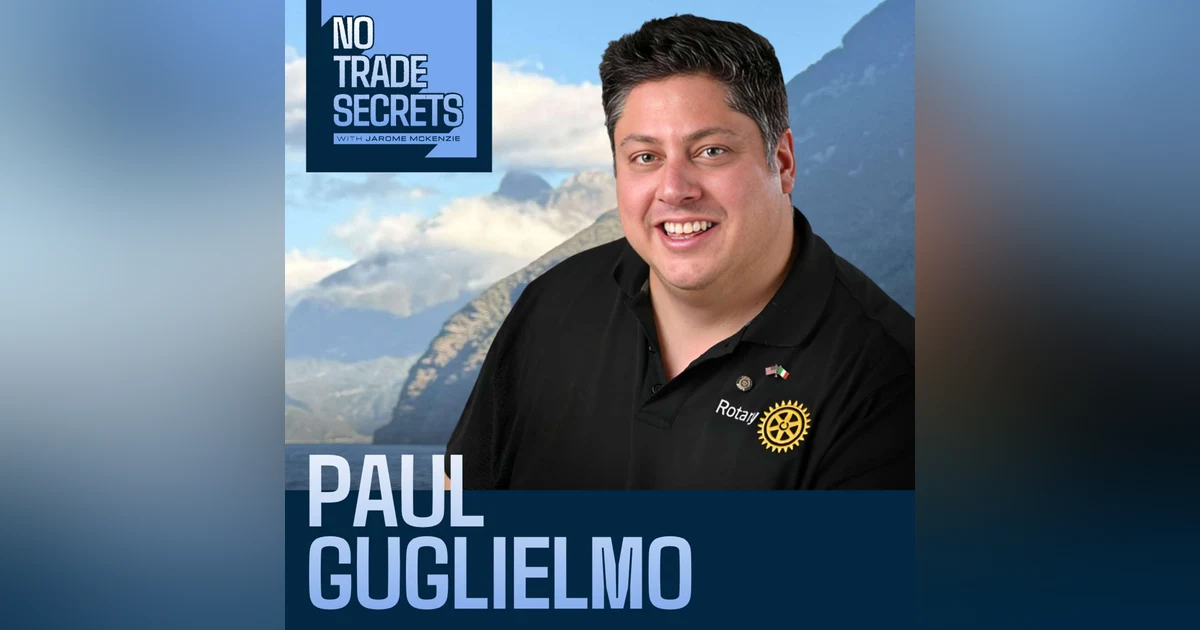

What happens when you realize the real business isn't the product you sell, but the problem you solve for others trying to sell their product? Paul Guglielmo went from a radio host with a pasta sauce side hustle to the owner of Craft Cannery, a food manufacturing powerhouse. In this episode, Paul breaks down his journey, revealing how a simple shift in focus—from making another sauce to providing low-minimum manufacturing for others—unlocked massive growth. He shares his framework on the real...
What happens when you realize the real business isn't the product you sell, but the problem you solve for others trying to sell their product? Paul Guglielmo went from a radio host with a pasta sauce side hustle to the owner of Craft Cannery, a food manufacturing powerhouse. In this episode, Paul breaks down his journey, revealing how a simple shift in focus—from making another sauce to providing low-minimum manufacturing for others—unlocked massive growth. He shares his framework on the real skills entrepreneurs need (risk tolerance, resilience, and resourcefulness) and gets brutally honest about the fears that never go away.
💡 Unlocking the Playbook
Innovation is Problem-Solving: Don't get stuck thinking you need to invent something new. Paul won a $500,000 innovation award not for his sauce, but for his business model of having no minimum order quantity—a solution that opened the market for hundreds of small food brands.
Lower the Barrier to Entry: The biggest players in any industry often ignore the small guys. Craft Cannery thrived by creating a low-cost entry point for mom-and-pop restaurants to bottle their signature sauces, turning a $750,000 investment into a manageable $2,000-$3,000 startup cost.
Master the Entrepreneurial Skillset: Success isn't about being the A+ student; it’s about having the right traits. Paul identifies the top three as risk tolerance (the ability to put it all on the line), resilience (bouncing back from constant challenges), and resourcefulness (knowing who to call for any problem).
Lead for Interdependence: Unlike environments where everyone builds their personal brand, a factory floor requires true teamwork. Paul cultivates a "flow" culture where each person understands their role is critical to the next, fostering accountability and a shared sense of purpose.
Let Opportunity Steer the Ship: While it's good to have a vision, be ready to pivot based on what the market tells you. Paul's future plans are shaped by client requests and lucrative opportunities that sit just outside his current capabilities, allowing demand to guide his company's evolution.
🤫 The No Trade Secret
Resourcefulness. It's building a network, relationships. And there is almost no problem that you could throw at me right now that I don't have the right person to call. I don't have the answer a lot of times... but I will always know who to call to be able to get to the answer to anything. It's building the web, having the relationships to be able to get the answer.
🗣️ Words to Build On
"If you're just solving a problem for a big enough group of people, you're innovative." – Paul Guglielmo
"The number one skill to be an entrepreneur is risk tolerance. I always say it's risk tolerance, resilience, and resourcefulness. It's not intelligence." – Paul Guglielmo
"The exhilaration that comes with putting it all on the line is special." – Paul Guglielmo
"This whole thing is just one; it's a flow from the minute an ingredient comes through the dock door to the minute a finished product leaves. Everyone touches the ball at some point and has to nail it." – Paul Guglielmo
👤 About Paul
Paul Guglielmo is the owner and CEO of Craft Cannery, a food manufacturer specializing in custom sauces, dressings, and private-label products. A passionate entrepreneur and community leader, he supports workforce development and youth initiatives. He also hosts The Pauly Guglielmo Show, sharing stories from business leaders and changemakers.
🔗 Links & Resources
Today we're joined by Paul Gugliamo. Paul is the owner and CEO of Kraft Cannery, a food maker in Bergen, New York. Kraft Cannery makes custom sauces, dressing, and private label food products for stores, restaurants, and food brands. The big breakthrough came when they passed a voluntary food safety audit that opened the door to bigger brands and a bigger market. Paul, thank you for being on. Welcome, man.
SPEAKER_00Thank you. Thank you for having me. I'm sorry I was watching you. I was like, I got caught up in the show that when you cut to me just now, I'm gone. Like I was my jaw open. It was like uh remember in COVID when we had to wear the masks? I felt like I defaulted to doing that. Anytime I was in public because you couldn't see my face, that I was just kind of like my natural.
SPEAKER_01Yeah, I think yeah, uh the masks started to turn us into mouth breathers a lot.
SPEAKER_00Yeah, yeah.
unknownSorry.
SPEAKER_01But uh no, great to have you on, man.
SPEAKER_00Professional from here on out. Let's do it.
SPEAKER_01But um no, um I mean, how how does one get into this industry? Uh is this uh I I've talked to a lot of different people in the restaurant industry and uh the and their journeys into restaurant food and like you know, I guess what I'd bucket is you know something, you know, something that really does take uh like is craftsmanship and art artistry. The entry points have all been extremely different, and um, but a lot of them do come from some sort of passion and ho uh or this is like a hobby. Uh but how did you come into this? Because I'm a big sauce guy. Like I have sauce on everything, and most of my friends have told me think the amount of sauce that I use is disgusting, which it it truly is. But uh so like this is very uh I'm very intrigued because I feel like this is something that like I would enjoy being like a sauce taste tester. Like in like this is just I love sauce.
SPEAKER_00Uh well I'll tell you what, yeah, yeah, I love you for loving sauce because that is how I pay my mortgage. So please, the more sauce you can dump on that stuff, the better. Um I uh so I grew up American-Italian and just go into grandpa's house on Sundays, so there's the affinity for the sauce, this idea of Sunday sauce is kind of an Italian thing, but all cultures, all backgrounds have that, have something where you come up together around a meal. So that was the original origin, like the seed. And then I learned how to can tomatoes with my grandfather, but then I had a whole different career. I actually spent 15 years doing this. I was in radio in Rochester. I was a morning radio guy for about 10 of those years, and the first five of those years, I was uh an afternoon radio guy. And all that time, I would just make sauce on Sundays and uh friends, family, whoever wanted to come over. What ended up happening was that as I I started kind of a side hustle, bottling sauce, just farmers markets, things like that. You know, you go to the farmer's market, you see the hot sauce guy, the honey person, the maple syrup person, and then there was me, the pasta sauce guy. So I built that up for years just as a side hustle. It slowly became a small business. There was this thing that was happening, so this would have been like 2014 to 2019. There was this thing that was happening where I was becoming friends and running in these foodie circles, and the foodies were um always complaining that they didn't have access to small-scale manufacturing. That was a very common problem that everybody had. And even though I came out with this pasta sauce and life was good with the pasta sauce, it was very much of a side hustle, a glorified small business, but mostly just a side hustle. Because we weren't really solving a problem, which is sort of entrepreneurship 101, what problem are you solving? We built ourselves a nice little following and we were making a tiny, tiny bit of money making the sauce. But what problem were we solving? Nothing. There's a zillion pasta sauces on the market. But who's making all that sauce? Turns out if you deep dig deep into it, only only a handful of factories across the country are actually making most of what you see at the uh in the sauce aisles. So I thought, hey, what if we do a sauce factory with a low barrier of entry, low minimum order quantity? And that's what we did. And then that was the difference between side hustle small business and here we have an actual business now. Today we employ 25 people full-time. We run right now, we're actually running 24 or 5 shifts. Uh that's not typical for us, but we're very busy, um, which is a great thing to a great problem to have. And it was the the big hump to get over was solving a problem. So putting a new sauce into the world wasn't really the problem to solve, it was more providing manufacturing access to everyone else who's trying to put a sauce in the world. That was the thing.
SPEAKER_01That's super interesting. Because I would imagine uh before this, before you guys were solving this problem, that if you were a small restaurant and you like you needed sauce, um I'm imagining these big manufacturers have like huge minimum order quantity um requirements, and so where it's just impossible, basically. Is that is that kind of and what's your guys' uh exactly?
SPEAKER_00Yeah, our whole shtick was low to no minimum order quantity. In fact, a couple of years ago, 2022, so now four years ago, we won a competition here in New York State called Grow New York, and it is a uh it was a $500,000 investment um made into our business by the state and by Cornell University. And the whole reason that we won was we went to this pitch competition. And in the pitch competition, there was uh a bunch of categories you were gonna be scored on, and one of those was innovation. And I thought we are in trouble because we're not innovative, we're just making pasta sauces like I told you already, there's a zillion pasta sauces. I mean, there's nothing innovative about this business, and I thought this is gonna be why we won't win. We are not an innovative business, we're just bottling sauce. It's it's this is one of the oldest things in the world. We have invented nothing. I go to the competition, we end up winning second place, which was a half a million dollars, not too shabby. And when it comes time to receive feedback from the judges, I asked the judges, Where uh where where how did we trick you on innovation? Like what did I do to trick you? Because I thought we were in trouble on innovation. And they said, Oh, innovation, 10 out of 10. Yeah, you and I go, how? How how were we how did where did you come up with 10 out of 10? And they said, You have no minimum order quantity. For a factory to have no minimum order quantity, it was the most innovative thing we heard all day. And that was kind of like my own mental breakthrough at that point, because up until that point, I was always down on the innovation. I was like, we're not doing anything special here, it's just making sauce. But then they kind of made me see, like, actually, if you're just solving a problem for a big enough group of people, you're innovative.
SPEAKER_01Yeah, I mean, it's funny you say that um because when um it's that's something early on uh when I started uh my first company, um, I thought about a lot. And it's like uh and that so that company is uh and still I still run today's fractional accounting and CFO services, and so I'm like but I'm not inventing anything new here. Like, how can I like how can I create a company that's different that has a differentiator and it's and it's and because I always thought that it needed to be you needed to be inventing something brand new, a new thing, a new idea, something completely, completely new. And then as time has gone on, and I've seen I've kind of seen what you learnt uh uh during that process too, it's the solving of the problem is creating something new. It's creating the solution to a problem that wasn't there before. And and by definition, like you know, when you say when you break it down and say it like that, like and think about it that way, then it's like it it almost seems like, oh, like, well duh, obviously that's innovation, uh, but it's not always so clear. And I think that's a I think it's really important that you brought this up because I think that's something that a lot of founders maybe mm you know misconstrue or don't understand about you know what innovation means when they're looking at businesses and thinking that they have to reinvent the wheel. You know, something both of us didn't know until we learnt it uh in our own different ways. But something you know super important, I think, for entrepreneurs because I'm sure that that led to a lot of different breakthroughs after that, when yeah, like that mentality changed of what innovation means.
SPEAKER_00Yeah, it it kind of it first of all was just personal confidence. It was like validation and personal confidence, but then beyond that, it it kind of encouraged me to continue to find that niche. Who are we solving the problem for? You mentioned restaurant owners before. You can't walk into a single restaurant in this country and not have this happen, ready? If you walk into any restaurant, walk up to the owner or the chef and say, Do you guys by any chance have a sauce that everyone tells you is the best you should bottle? Every restaurant will go, Yeah, yeah, we do. Yeah, you know, right? So that was like some of the original idea for this place was hey, the um just walk into restaurants and bottle their signature sauce for them. Every restaurant has a signature sauce, and that turned out to really be true. And that was it's an easy place to drum a business. It's like low-hanging fruit. Yeah, I'm thinking to myself, I'm going, we could go to any city, we could go to Kansas City, for example. Go to Kansas City and just walk into the barbecue joints and go, are you now? I'm sure the big famous ones are already bottling their sauce, but walk into any of any of the places, you're gonna find people that aren't bottling their sauce. They're busy, they're running a restaurant, they don't have time to think about being a retailer or a manufacturer. So solving that problem again, right back to solving the problem.
SPEAKER_01Yeah, and I I think this, and I think that's gonna be something that's e gonna be even more of a thing as time goes on, because I'm noticing a lot more of these, you know, boutique businesses and all and across all a lot of industries, but like especially among food industries, restaurants, and so it seems like there's a lot more of these little micro markets for these different restaurant industry uh businesses that are all gonna, like you said, everyone has uh their own secret sauce, like uh and you use the barbecue restaurants as a as an example. I know the big ones, they have, you know, they have that um their sauces bottled, but I mean there's there's some barbecue restaurants in Kansas City that are, you know, a kind of hole in the wall, family run, that are so good and are like better in a lot of ways than a lot of the more well-known ones. Um that they don't have the you know the ability to do this uh without a company like uh like yours being able to remove that barrier for them because it's they just get priced out and by these big you know the big corporations that only want to deal with the big ticket orders and the big ticket companies.
SPEAKER_00Yeah. Yeah, it's more you know, and to tell you the truth, it's more of a it's more of a cash flow thing, it's more of a cash on hand thing because um because the truth is that we we are more expensive than a big factory. So we we make less and we're more expensive, which you might think, how does that work? Well, the small little restaurants, you know, the big chain barbecue restaurants, they go to the big industrial copackers, and the big industrial copackers make them a minimum of 10 truckloads or whatever the minimum is, and yeah, they get a really low price per unit. I mean, you see, you know, sweet baby, we're just talking about barbecue sauce. Am I allowed to in Kansas City use roots of sweet baby rays? Or is that like in Kansas City, do you guys like swear off any commercial barbecue sauce? And it's like we will only eat quality.
SPEAKER_01It depends. It depends on depends on on who you ask. Like uh like I like it in certain in some some cases, but uh like I'm probably probably not gonna put it on my uh you know my my jack stack uh barbecue sandwich or something, yeah.
SPEAKER_00Well, sweet baby raise, so for example, is gonna sell a truckload of sauce probably a day, right? Like in this country, maybe even more. I might even be shooting low there. Uh the big barbecue joints will they will go to the big industrial co-packers, they will get really advantageous pricing because they are going to move truckloads upon truckloads upon truckloads. But the mom and pops, what you're describing, cannot come up with $750,000 overnight to launch a little sauce venture. So they end up coming to a place like ours, and yeah, we are a little bit more expensive, but we save them that $750,000 initial investment. An initial investment in a company like mine is like two or three thousand dollars, and you have a product that you can now legally sell in stores. I don't want to say two or three thousand dollars isn't a lot of money, it's a lot of money. Um, it's all relative, of course, but it is not life-changing money typically to launch a product for two or three thousand dollars.
SPEAKER_01And uh I mean it's it's the difference between a company being able to start the venture or not, because a lot, you know, a lot of them are gonna look at the 700,000 and be like, okay, well, it's a nice thought, but not possible. But like this. And you know, I think it just goes back to that innovation piece, like you're allowing all of these small uh smaller businesses that want to go into this space, you're allowing them to do so. And like, which they that was not an option before, uh, which I just I think that's that's I think that's so awesome.
SPEAKER_00Yeah, there's probably something like what I'm doing. There's probably something like this in your area. I mean, we pop up. It's it's that you know, it's a good business and solving a problem no one else is solving. I can't say nobody else. We're not the first people ever to do small copacking, but um, but they're not they're few and far between. They're not as easy to pop up. It's very expensive to start a place like this. It's a lot of machinery, it's a lot of upfront cost. So you really have to get to a point where you can make that investment to get started. Um, it's even more expensive than like starting a restaurant, for example, and doing a build-out. I mean, those can be a few hundred thousand dollars, but facilities like this cost a couple million dollars to build. So it's still tough to get into doing this, but the good news is if you do it, like we've done it, not a ton of competition in this world.
SPEAKER_01Yeah, no, that and that's I mean, on the topic of you know, competition, like I I think competition is a good thing because across industries, you know, like I know there's a lot of uh you know, I I hate I hate when I come across entrepreneurs that see competition as a bad thing, and it's like uh I think it's uh it's it's collectively good for everyone to have competition, uh just both you know from just business and economic standpoint, but just I mean it it forces you to continue being innovative uh as you know as well. But during the start of this uh transition from kind of side hustle small business to taking this, like was there a moment where you like what what was the moment where you decided to go in full full on with this uh all in and you know leave your other job and just yeah go go with this?
SPEAKER_00I would say that it was simmering. Like I did this simmering. It's kind of like I had so I had this radio career and I had this sauce thing, right? And they're both kind of simmering, neither one is really boiling over, neither one's going great. Radio had some stuff going against it. Radio was not doing well, podcasts were crushing. Um, and you know, Spotify, uh, I mean, you can pick any topic or any song and have it on demand in your car on your drive home today, right? And so that just quit killed radio. It was just killing radio. So I was watching this industry that I had loved and been in take this nosedive, basically. And at the same time, the sauce thing was kind of bubbling up a little bit. And so it was it was a come to Jesus moment. It was kind of uh take the leap of faith. And so um I knew I wasn't gonna make a lot of money for the first couple years, and I didn't was barely able to pay myself the first couple years of fully making the leap. But you know, the rock at home, my wife, and I got together and basically said, can we survive the next two years off of this amount of money? It was not a lot of money, and we figured we probably could, and we went for it and we thought this is gonna be scary, and it was. And I don't want to hide that it it wasn't, and it still is, you know, now it's six years later, and that's still not a lot of time. It's enough time that I feel more comfortable that this is gonna work, you know. But I don't spend a single day taking it for granted or thinking that it's just a no-brainer. I do think I do still worry every day about the long-term, the long-term viability. Every sign says it's good, but you never stop worrying. But the exhilarate the exhilaration that comes with putting it all on the line is special. And I always think the number one skill to be an entrepreneur is risk tolerance. I always say it's risk tolerance, resilience, and resourcefulness. It's not intelligence, it's not really intelligence, it's not the A plus students. A plus students, those are the doctors and the lawyers and the accountants and the accounts, but the the risk takers who are very resilient and very resourceful, who have a lot of social intelligence, maybe not book smarts, but social intelligence, are the ones who really make it. So that exhilaration that I felt by taking that risk, a lot of people would never take that risk, and I understand that, and I respect that. But it's risk tolerance.
SPEAKER_01Yeah, no, I mean, I think you're 100%. It's um the leap that it takes to risk everything to to go out and start a company or to pursue this life is uh not for the faint of heart. And I think a l a lot of uh most people get stuck at the front door and never come in and never take the jump. And it's my personal belief is it you know, this life is not for everyone, and that's fine. Like the resilience piece too, like it's and is definitely a big like I I remember, you know, you said it's still scary for you. I remember the first six months after starting uh my company, I'd wake up every morning and want to be sick, just and not because things were going bad, it we were growing every month, every day, but just this uh unknown territory that I was not used to, of it's everything is completely up to me, which I wanted, but that there is you know this this weird feeling of there is there's nothing, you know, there's nothing, no guarantees, no, no guarantees. So I'm I'm curious, you know, when you're saying that it's still scary and you still worry, where does the worry come from today?
SPEAKER_00Well, I would say that my now that I have employees, there's a couple things. One is personal safety. I mean, this is a factory. People are driving around on forklifts, there's hot stainless steel, there's opportunities for people to get injured, you know, and that scares me. That scares me. Food safety scares me. We're putting out thousands and thousands of bottles every day now. They go into thousands and thousands of different directions. So that scares me a little bit. Um, also having employees with families. Like my first couple of employees were young people, young people in their early 20s who who lived at home. And it was a little bit easier because I always figured, like, they'll be fine. If I fail this, they'll be fine. But now I've got people that work here that have families, they have kids, they've got mortgages to pay, you know. There's things that that that kind of stuff is the stuff that I find to be very scary. I kind of don't worry about myself. I do realize if we went under, that would probably mean personal bankruptcy for me and pretty much ruin my life. Um, so risk tolerance still has to be strong. But I've always felt that there is respect in every job. Every job. And I always just thought I would get a job. I said, if this fails, like I'll go still be a server somewhere. I don't know. I mean, you know, like I would I I would I could think I could really get into just about any job. I could have a good time doing it. And so that has really helped me. That has really helped me. That mentality of it'll be fine, but it never really goes away. And I talk to people, I have mentors who've been in business for 20, 30 years, who are doing tens of millions, hundreds of millions of dollars in business. And I asked them, do you ever get to a point where you don't worry? And I have never had anybody say, Yeah, you get to a point where you don't worry. Never. Not a single one of them.
unknownYeah.
SPEAKER_00That's bad news for you and me.
SPEAKER_01Yeah, no, and that's I think that's it must have been in the last year that I kind of accepted that it's there's no matter what you know, what it is, it's you know, because uh at different points I was like, okay, if we can just get to, you know, to this kind of rip m you know, monthly revenue floor, then like then I'm gonna be able to like take a deep breath and just be like sweet and like uh and then it's just every step it's like well but this would be a a a lot more comfortable and like the the goalpost just is constantly changing and it's I'm just like I think that this is just that's this is the roller coaster of this ride and unless you get off the ride that's you're gonna encounter that always you know no matter how big you are like there's always I remember Alex Ramosy saying there's you're you're always gonna have a problem in in your business. Uh it's and he I paraphrasing but it was you know it's you're either going to have a problem that you have more supply than you have the demand for or vice versa. And he's like so just choose which problem you want to have and I was like interesting uh and and so it's like being able to then look at that as not a problem but just a truth of owning a business uh and being an entrepreneur is that you you there you it's never gonna be perfect and everything's never gonna be in perfect harmony and uh where it's all just perfect running absolutely flawlessly uh there's always gonna be a problem because it's just the nature of the this life and the ex coming to the to terms with that and being able to accept that that's I feel like where I started to get uh more peace peace of mind uh just from the accepting that reality than trying to remove that as being a factor yeah the fires can be a little frustrating but if you start looking at it as every day I get to go in and put a puzzle together that can be a little bit more fun a way of putting way of thinking about it.
SPEAKER_00Yeah no absolutely and so I'm imagining in radio like it's there's a lot I mean I could be wrong there's a lot less less working together with other people like constantly like you are now like as obviously leading a a company with a team of 25 people what was that transition like for you to then being the person who's leading a company with those people you know that are working you know with you uh to build this it feels like a real team this does radio had an element to it that was everyone in in radio is kind of an entrepreneur I mean at least in programming right I was in programming and everyone is kind of out for themselves because you have to be you're growing a personal brand when you're in radio it's it's more of an effort to get everyone on the same team. A lot of people are looking out for themselves. I worked with a lot of wonderful people I really did but still there is ego and there is building your own personal brand and everyone's number one priority is themselves. I think getting into this environment you have an easier time pitching the team on teamwork and that we're doing this as a team everyone is pitching in. It's the kind of thing where here you literally cannot do this by yourself. There is nobody here who's like get out of my way I'll just do it all by myself like that can't happen. It's it's it's literally physically impossible. We are doing too much there are too many machines so once you accept that which is just something that is easy to accept as soon as you walk in you see that uh you start to realize I am really dependent on the person before me and the person after me on this assembly line. You know and and that's um it really keeps everybody sort of accountable to the team bought into the team and gives them a positive attitude towards the team as well. If you set me up for success now I'm gonna set the person up for success right behind me. This this whole thing is just one it's a it's a a we call flow.
SPEAKER_01It's a flow from the minute uh an ingredient comes through the dock door to the minute a finished product leaves everyone touches the ball at some point and has to nail it yeah no that's I mean that's awesome and it's I think a lot of teams or not many teams really get to that point where they are like truly that cohesive of a unit. I think there's nothing better than having a team of people who you're all working together you care about each other and everyone has each other's backs. Like that's the kind you know those are the best teams that I've ever been on whether it's in companies or sports teams uh you know it's there's nothing better than having a great team uh to be on uh and be a part of and so that's awesome and where from here what is the what's the vision for where you want to take this in the future so we have been growing we have been scaling and I don't know if that's sustainable forever.
SPEAKER_00Somewhere some it's kind of what you were talking about before about if I can just get to this revenue floor I've spent a few years thinking that same thing. Well if I just get to this number then I can really kind of just squat at that number and figure out everything below the line and get to a point where I just kind of have a very predictable but there's enough demand out there that the scaling we probably aren't at scale yet here. There's probably a little bit more scaling to do. So what happens if we do hit that I don't know if I have it in me to ever just stop and say hey we're gonna be X we're gonna this can be our revenue this can be X. We're gonna do that every year and that's what we're happy with. There's a couple things that occur to me. None of these plans are in motion by the way but if it does occur to me that there is demand for this all over the country we get a lot of leads all over the country and it occurs to me hey could different locations around the country work part of our business model is we serve the startups and the regional brands around here but we also serve some supermarkets around here large chain supermarkets. We can't serve a large chain supermarket in the northwest for example unless they were to have a warehouse in this area which is unlikely right so I think to myself I go you know if we we we have like a model we have a model we know what we're doing now if people could teach this to somebody else should we pop one of these up in the northwest I don't think you need a ton of these not like a fast food restaurant you don't need one in every town you need like five and you could blanket the whole country if you did five of these and it occurs to me sometimes it occurs to me that that could be an option but again I've not even begun to pursue that as a it just occurs to me. There's also more capability we're doing thermal processing old school canning hot sauce filling um there's something called retort which would allow you to do more low acid foods it's kind of an in-the-weeds thing um you can google it if you want to know what it means exactly but cheese sauces you know things like Alfredos or quesos aren't things we can do but would be if we were a retort facility. So that occurs to me too but again no immediate plans that would be years and years and years down the road. Or just continue to scale where we're at right now. You know blow blow out one of these walls, build another production room put some bigger kettles in bigger bottling line that occurs to me as well because that's the path we're on. So I hate to say I don't know but I don't know.
SPEAKER_01Well but that's I think that's my favorite answer because I think it's the person with all the answers is not like doesn't really have all the answers. I I think that's the thing is like because the amount of times that I've thought of where I'm gonna take you know where I'm gonna take the company and do this and that and my plans for you know a year plus out and then what you know turns out to be reality is is it's almost a game of opposites. Because you learn uh you get new information and my favorite thing uh about and I think is uh a skill in itself to be able to do as an entrepreneur is to be able to change your mind. I I thought what I thought then but my opinions changed and my decisions changed and like being like I think that's powerful in itself just being able to not have to stick with something because that's what you decided a year ago.
SPEAKER_00Yeah you know yeah it's in my world where that would come to happen and has happened for us is somebody says can you do this and we go no and then somebody says can you do this and we go no you do this and we go no. Eventually we go maybe we should figure out how to do that.
unknownYou know?
SPEAKER_00Or you go to a client who says can you do this and you say no and then they say well our opening PO would be for you know a million dollars and then you go you know what maybe maybe we'll figure that out and so that's kind of how you end up pivoting the business a little bit is when you're you're you you see something an opportunity like that and it's just outside of your core competency. Like if your core competency is here it's just here and so you kind of go back and you challenge your team and you go is there any chance we could just expand our competency a little bit because they've got a lot of volume on this item if we can just figure out how to make it. And then now you've pivoted your business a little bit but I think that that is sometimes also how it happens or at least for me it is.
SPEAKER_01Yeah no I 100% I think that's I was talking about this with uh my business partner in another company yesterday uh was this um how do you shape this you know strategic direction of a company and it's like we're just doing it through sales like the the amount of pivots and directional changes just from going through the course of delivering and say uh selling it creates new uh so many new things and it's like that's that's how you do it uh a lot of times um and uh it's super effective that way but we always end each episode with the same question so what is your trade secret whether it be in business or in life that any uh entrepreneurs out there aspiring entrepreneurs people who are wanting to make the job people are stuck that you would think is the best your you know your top secret for for business or life resourcefulness it's building a network relationships and there is almost no problem that you could throw at me right now that I don't have the right person to call I don't have the answer.
SPEAKER_00I don't have the answer a lot of times I don't know how to fix something I don't know how to fix anything but I might be able to or I will always know who to call to be able to get to the to be able to get to the answer to anything. So I think it's building the web I think it's building the web having the relationships to be able to get the answer to the answer on just about anything. Awesome I love that time I love that so much. Could could I expand on one little thing real quick yeah of course please because I I just don't want someone to hear what I'm saying and think that I'm saying networking because networking is a little tough like the four o'clock chamber of commerce happy hour that you go to where it's a bunch of finance bros handing out business cards is not necessarily what I'm talking about. It's like finding the people in your industry and building real relationships with them not here's my card call me when you'd like to buy something it's actually caring about them their lives what they're up learning about them and what they know that's a genuine relationship. So building genuine relationships not shifts not just going to networking buts and handing out your card that doesn't that's no good. I just wanted to put that in there I'm sorry.
SPEAKER_01Yeah I think uh a good good to clarify that because uh I went to one of those when I first started my company and never went back because I'm I'm this business card roulette stuff is not it uh for me like it's this is I don't like this but Paul this is great thank you so much um I love what you're doing uh I love the problem that you're solving I hope I hope to see you guys doing this for a abundance of awesome small mom and pop restaurants in the Kansas City area if someone wants to get in touch with you uh and see you know if they're interested in trying to see if this is a fit for them if you if they're in your area or uh you you guys can help them with uh what you know their needs are because of now knowing that there is a way to to do this um what's the best way for them to get in touch with you or to find out more information easy contact information is at our website craftcannery.com craftcannery.com there is a uh also social media is all at craft cannery craft with a C apparently craft with a K was already taken who knew um awesome well we'll put all of the we'll put those links in the show notes uh but no Paul this is great um can't wait to see where you take this next uh and so it's uh amazing story I love uh love the journey that you've taken your approach to it and um and the way that you build relationships and teams is is is amazing.
SPEAKER_00Thank you so much. I really appreciate you and your time and your show and I think it's great to have these conversations put these out there for all of us to learn from it. It's just it was a real honor. Thank you.
SPEAKER_01I appreciate that. Thank you man