The "Break One Rule" Framework, Building a Rockstar Team, and Launching a CPG Brand w/ Katharine Leitch - Ep. 61
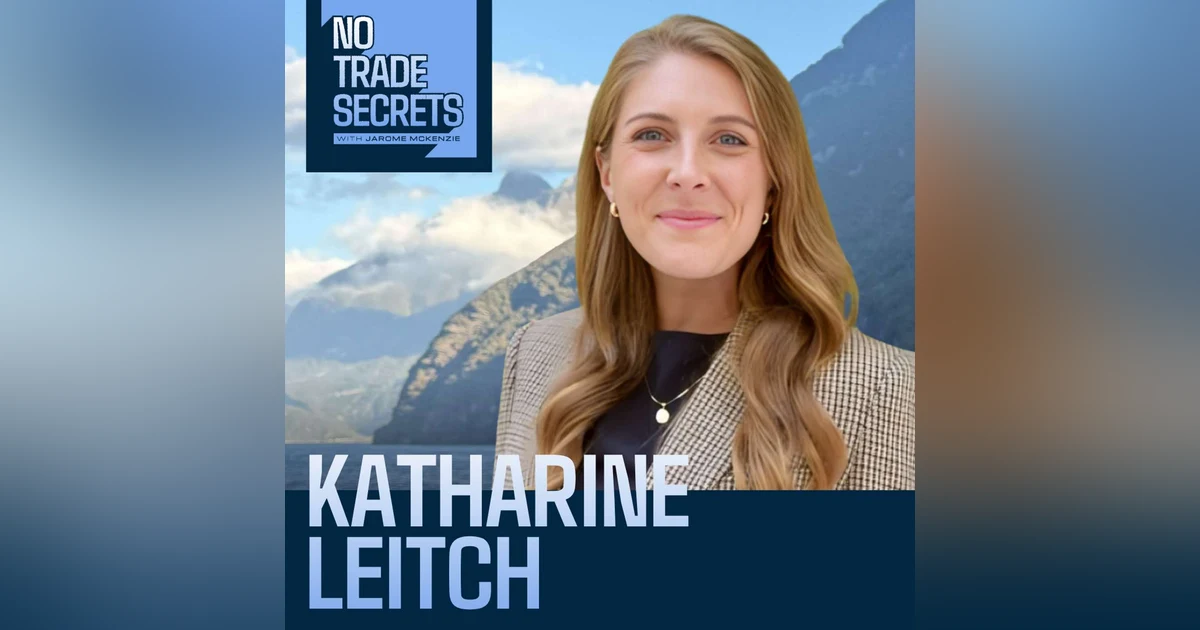

How do you leave a 10-year corporate job you love to build a CPG brand from zero? Esspo co-founder and COO Katharine Leitch did just that, taking a sparkling cold brew idea and launching it into over 500 Whole Foods stores. In this episode, Kat breaks down the entire journey—from the egoless, year-long process of getting national distribution to using AI to analyze customer feedback in minutes. She shares the powerful "break one rule" framework for finding your brand's core identity and explains why hiring for "how" someone works is just as important as "what" they do.
💡 Unlocking the Playbook
The Egoless Retail Pitch: Getting into Whole Foods wasn't an overnight success; it was a year-long conversation that required taking hard feedback and executing a complete rebrand. Treat retail buyers as partners who want you to succeed, put your ego aside, and be willing to iterate on your product and packaging to meet their needs.
Turn Data into Your Superpower: Use modern tools like AI to analyze qualitative and quantitative data at scale, even as a small team. Kat feeds raw data from in-store demos into AI models to extract regional insights on positioning and customer feedback, turning a task that once required a full-time analyst into a 15-minute report.
Find the "One Rule" Your Brand Can Break: To avoid an identity crisis, get laser-focused on the single rule your brand is breaking in its category. For Esspo, they stopped trying to be everything and centered their identity on breaking the format of coffee, creating a refreshing third lane beyond milky lattes and bitter cold brews.
Hire for "How," Not Just "What": Build a high-performance culture by evaluating team members on two fronts: their output (what they do) and their character (how they do it). Make kindness, proactivity, and being a good person to work with a non-negotiable part of your hiring and performance review process.
🤫 The No Trade Secret
Surround yourself with incredible people and never let that bar drop. That is both what they do and how they do it. "What they do" speaks for itself—they perform at the highest bar. But then the other side is "how they do it." Are they considerate? Are they punctual? Are they kind? Are they responsible? Are they just genuinely a good person to work with?
🗣️ Words to Build On
"You kind of get to break like one rule. Like you can break one rule in a CPG brand." – Katharine Leitch
"I have Claude running reports for me 3 or 4 times a day that would've been an entire data analyst 5 years ago." – Katharine Leitch
"Putting your ego aside and just knowing that your retail buyers, you are successful if they're successful and vice versa. They really only have your best interests in mind." – Katharine Leitch
👤 About Katharine
Katharine “Kat” Leitch is the Co-Founder and COO of Esspo, a coffee brand reinventing caffeine with sparkling cold brew. After a decade at Red Ventures building expertise in strategy and operations, she now leads Esspo’s operations, finance, retail expansion, and growth strategy, helping scale the brand toward national retail distribution.
🔗 Links & Resources
- Website: drinkesspo.com/
- Instagram: instagram.com/drinkesspo
Today we're joined by Kat Leach. Kat is the co-founder and the COO of Espo, a sparkling cold brew coffee. Before Espo, Kat spent ten years at Red Ventures learning how to grow consumer businesses. Now, she runs operations, retail, finance, and growth and helped take the brand from a brand new drink and a just an idea to stores all across the country. Kat, thanks for being on. Welcome.
SPEAKER_00Thanks so much for having me. Excited to be here.
SPEAKER_01So a lot of things I want to talk about, but first thing I want to s and I want to start at is where did this idea come from and what was the moment that it went from idea into alright, let's do this and start a business and t you know, take the jump. Yeah. Could you talk about that?
SPEAKER_00Yeah, totally. I think perhaps for a little bit different than most founders, Espo, the original idea for Espo was actually not my brainchild, it was my co-founders. I just deeply fell in love with the vision and the product that he was looking to bring to market at the time. So for context, I'm one of two co-founders, my co my other co-founder, Philip. Um he previously founded a company called Refinery29. It was a pretty defining media brand of the 2000s, and he sold it in 2019. Um, and then after that, he came on to be entrepreneur in residence at the company that I was previously working at, Red Ventures. So we worked together there for two years. He left the company and then after started what ultimately became Espo. And it started from a problem in his life where when he was running refinery, he lived off of coffee. Like three and four Americans wake up every single morning just hankering for their cup of coffee, myself included. But then throughout the day, as you really need energy beyond just the kind of 6 a.m. to 11 a.m. occasion, the coffee had lost its magic. You want something, you by that point, you want something different, you want something more refreshing. And why were the uh coffee options only just bitter cold brews or milky lattes? And that's where the idea for Espo was really, was really born. Why had the coffee was the original energy drink, but it's never evolved beyond the morning. Uh, and he simultaneously started seeing this pop up all over brick and mortar coffee shops. There were millions of people making their own versions of this at home on TikTok just in like the past two or three years. And that's where the idea for Espo really came about. And when he reached out to me, that problem that he was describing of sort of that 2 p.m. moment when you reach for a LaCroix or you still have your coffee on your desk for the morning because you're trying to avoid face planning on your keyboard, like that was so resonant to me because I'm just not an energy drink person. I've never once bought any version of an energy drink except for very desperate times at the bar late in the evening. So it was a very resonant occasion to me where I would see myself sitting at my desk with my morning coffee just to stay awake awake alongside a LaCroix and also feeling that slump later in the day when I'm trying to go out with friends. So I saw the white space that he was he was going after. I saw the kind of demand already percolating in socials and in brick and mortar coffee shops, and really just fell in love with the product in my own life as a daily occasion that I felt, and then um left my corporate job uh that I genuinely loved. I I actually like saw myself at my old company forever, um, but just felt like I really fell in love with the product and felt the daily problem problem in my own life and felt like it needed to exist in the world. So I left my my corporate job about two years ago um and came on as operating partner uh of Espo.
SPEAKER_01Wow, that's awesome. And I mean, I think you know, spending 10 years uh at the company you were you were at, uh Rid Ventures, you know, I I think I find the longer that you uh anyone you know is in a career at the same company, and uh the more that the kind of the getting comfortable and getting used to that environment uh becomes uh you know like an inhibiting factor in those who want to go out and you know pursue their their idea or to start their business. Um and so you know, like they call it, you know, obviously everyone's heard the the term uh golden handcuffs, and so like it's you know, and I think that's a very real thing. Um I luckily for when I founded my company I had not been at any of the places that I've worked at for uh more than a few years, so I didn't get you know the chance to really fall victim to that. And especially leaving a job that you love too. Uh can you tell me about why'd I do it? Yeah, like what what was what what pushed you over the edge? What was the what was the thing that you saw or um in the future uh that was really driving you?
SPEAKER_00Yeah, I think it ultimately came down to I guess two things. Um so maybe I'll even back up to something you said because I think it's so true. Like it's a you can get very comfortable in a um in a corporate job, especially one that treats you so wonderfully. I think the the great thing about the company I worked at and anyone that's new in their career or looking for you know places that you can kind of go learn to become an operator, I would highly recommend checking out Red Ventures. They're wonderful. But the thing about them is they're a portfolio company. So in my 10 years there, I worked on five different businesses within different departments. All the businesses were of different uh they were in different industries, they had different business models, they were of different sizes. Um, so I started as an analyst and got to see pretty much every function of the business throughout my 10 years there and work on five different businesses in five different industries. So I think it what what I didn't really realize at the time is it was an incredible place to learn how to grow, scale, and operate businesses and figure out all of which that were facing different problems. And um, but the thing about each of those businesses, which was also, I would say a part of the reason I went, I was really excited about the opportunity with Espo, but certainly not the lion chair, but I'd never done zero to one before. Uh every company I worked on was largely, you know, at product market fit, just trying to figure out how to get that incremental five, 10, even 1% to make a meaningful dent on growth that year. Uh and I'd never seen kind of the nasancy stages of building, building a brand. And that that really excited me. And then I uh so anything that was, you know, for all intents and purposes, you know, pre-market pre-product market fit, going from zero to one, zero to one, um, and what uh everything it takes to scale a business there. And then I think the other thing is that I just so genuinely fell in love with the product. Like it was like a it was a um like a daily occasion that I felt um and that I see all my friends feel, and that like and that it felt like it was missing in my own life. Um, and then lastly, it was it was with a the my co-founder um was someone I deeply respected, deeply admired, uh felt like we had extremely complimentary skill sets because we'd worked together pre for uh for two years prior. So it just felt like all of the right pieces in terms of something I was deeply passionate about, a partner that I felt like I I really respected and trusted and was very like had very complimentary skill sets to. And then a type of business that both from a stage perspective and an industry perspective, that, you know, I had no experience in, which um, you know, I think a lot of people would advocate, like, hey, that's incredibly risky, which it was. Um, but I think at the same time, going into it eyes wide open about, for lack of a better word, my incompetencies also allowed um us to be really thoughtful around how do we put people around us to fill in those gaps. So from the onset, we had incredible advisors that were part of our team daily to help us make sure, you know, we set up our supply chain in it in a thoughtful and smart way to make sure that our our product was uh up to standards and we were thoughtful around like how to how to bring it to market and do all the testing that we needed to do along the way. Um, so I think uh look, I mean, it wasn't an easy decision for for a lot of like personal reasons. You know, you you sacrifice a lot when you start a company, both um financially, personally, but I've I've grown an incredible amount in the last six months. Um, and really the the three reasons I decided to leave have have stayed true.
SPEAKER_01That's up that's amazing. And you know, you said you said about not having experience, and you know, some people would say that's risky. But I mean I'd I there's so many examples of where I think that uh that can be uh an extreme superpower, especially when you have a co-founder who uh does have experience in the parts of you know that you don't, uh with you know how complimentary you guys are with your skill sets. Uh you coming in and especially from that operator lens, you know, from where you've seen multiple different businesses, different industries, and uh a wide range of different problems and uh different ways to solve them, I think uh that coming in uh without the kind of pre-programmed you know tendencies or thought processes, you know, for that industry that you can kind of zoom back and kind of like break it down and just like look at it just not as a you know a challenge for you know your industry specific, but just for what it is. And I imagine that has led to some different ways of solving problems or doing things that uh you know might not be in the you know food and beverage uh CPG brand startup playbook, you know.
SPEAKER_00Um a hundred percent. And I I fully agree because I actually think in a lot of ways uh the our skill sets have been a little bit of a competitive advantage. Um don't get me wrong, there's like there's things within just running a CPG brand that are absolute table stakes. Like your supply chain, you need to have down pat, not only from a fulfillment perspective, but also from an efficiency perspective and making sure you're it's setting up in a way that's super smart from a supply chain perspective, from just building the product. Like there's so much industry-specific knowledge that absolutely has to be there. But at the same time, I feel like a lot of times the CPG founders come in with just that, and then they don't come in with the things that actually are going to be extremely critical in actually allowing you to scale and be successful. And I feel like those are the pieces that we bring and have a little bit of a different lens on, perhaps given our background. So I think a great one is my my co-founder, he's a brand guy, he's a media guy. So he he gets what how to build brands that are going to resonate with consumers, that are going to get not just, you know, um have shelf appeal, but have like something that people are really excited about and subscribe to. And in any consumer brand, expect and I think it's even perhaps a little bit more nuanced within beverage, that's like so critical, right? Where like in a lot of ways, people see the beverage that they hold as an extension of yourself. Like if you're walking around the streets with it, you're going to a concert with it, you have it at the office. Like if you have a monster on your desk, that says something very different than if you have a poppy on your desk, but that which does something very different than if you have a liquid death on your desk, right? Like they all say different things. So the brand you build surrounding a beverage company is so, so important. And obviously, that was my co-founder's superpower. I think something that I bring to the table that maybe is a little bit different than a lot of CPG founders is I think just like deep operator expertise and data-driven thinking. Um, I started my career actually as primarily a I was a business analyst, but a lot large piece of that was data analytics and run and on a weekly basis uh analyzing hundreds of thousands of rows of data and extracting insights on then, okay, based on this, what do we then do? So we run our company very similar in an extremely data-driven way where we are constantly every single week running, running um AI models on every single demo that we run, all of the feedback that are that's coming through those and the words that are pulled out, and how should that inform the change in liquid or the change in the packaging or the change in the SKUs that we have? Obviously, velocity data, regional data. I mean, there's there's so, so much data that goes in, that is available to you in CPG. And this might be um uh off base, but I feel like not a lot of small brands do a lot with that, and and we really do. Um, so you'll see like we launched in April, um, pretty much from a cold start, we launched nationally in in Whole Foods, um, all 500 stores, and um, we did took a very data-driven approach to what we brought to market, but are you're gonna see a a um largely completely different version of Espo even six months from now because we're just constantly working on improving based on on what we um the data that's available to us and the performance that we've seen. So I I guess I agree with you in a lot of ways. I'm not at all discounting that um if you are thinking about going into an industry or starting a business that you have no experience in, you definitely need to surround yourself with people and advisors that can fill in those gaps. But then also to your point, think about the the competitive advantages that you might bring bring to the table because of your your different background and skill set.
SPEAKER_01Yeah, no, 100% I agree. And the data-driven approach that you guys are taking, like I will say from I've worked with a lot uh over the years, uh a lot of different uh you know, e-commerce, CPG, consumer brands, and you're right about there is so much there's so much data available to all those companies, but I never see the type of utilization uh and analysis of that data that you're talking about, and and I think I mean I think that alone obviously is that's something that really no one especially you know, unless you know I'm sure the you know the big Fortune 500 beverage companies are uh have teens of people doing that. Um but then I mean if when you're talking about startups or or the these uh these smaller businesses that are launching doing in this space, um I I haven't seen anyone else uh approaching the data like that um that you guys are.
SPEAKER_00I will say, I will say one thing that has been really exciting to me is I'm very thankful to be starting this business amidst AI making the advances that it has, because I don't think I mean we're a super small team. Like I do, we're we're we're a team of four, um, myself, my co-founder, our senior our senior director of operations who runs all supply chain procurement, et cetera, and then um our head of marketing. So the there's not like a data analytics department. And so just having the advances that we've made in AI where I can give Claude, you know, a bunch of data and have it building. Of course, I think there's a helpful advantage where, you know, I know what to ask of Claude, I know how to structure the data so that it can create the reports that I need it to. But I mean, I have Claude running reports for me at three or four times a day that would have been an entire data analyst five years ago. So I do also like, I think we're at a turning point where you don't just need to have this skill set anymore. I mean, it helps, but what I'm advocating for any CPG operands others, you can do so much with Claude. You can do so much if you just feed it your data and um work out some reports to help you figure out figure out how you get iterate and where and why, which wasn't the case um five years ago. So I'm very thankful for that.
SPEAKER_01What are some of the some of the data points that have been have surprised you the most of how useful it is in in identifying different different trends or uh directions?
SPEAKER_00So one one example which I mentioned, so we when we first launched, especially in the summer, we were doing a ton of in-store demos, um, where you know I was running them myself, my co-founder would run them, but then we also worked with third-party agencies to run uh in-store demos and get customer feedback. And one of the agencies that we worked with actually recorded every single demo. Not that, not the the um the customer, but the person would speak into and be like, this was the result, blah, blah, blah, blah. Like they liked this, didn't like this, well, this was one thing that was confusing, then move on. They would almost do like a retro on every single person that they interacted with. And then I would get all of the recordings and all of that data. There were also similar levels of fidelity of reports from every single agency that we worked with, but for all intents and purposes, I had that level of data on call it 300 different in-store demos, and each of those people talking to 50 plus people, right? A wealth of information. So then what do you do with that? Like it used to be like if your brain is just having to analyze that, that's like extremely cumbersome to figure out the insights and extrapolate the words of what's working and what's not. But now just running that through Claude, I say, hey, Claude, here's here's the different um, the this is the the data that I have on in-store demos, here were the regions that they were run in. Um, here's like the what was sampled, etc. Pull out insights on different takeaways and what I should do with this information. Um, and it was able to identify, like, hey, your positioning in California really isn't working. People don't like like the word soda, they immediately think sugary, they're immediately turned off. It create the the price point is creating friction for them because soda should be 279, not 349. You have a positioning problem in California, especially. It's a little bit different in Texas, where um they love soda, the cherry ones flying off the shelves, but they're confused in X, Y, and Z ways. So I think it was it was able to give like very high-level could just feedback and perspectives, then also break it down into a regional way, just based on like peep could consumer perceptions in those regions that I think is is really was really powerful and probably would have taken a person three to four days to analyze, but Claude did that in 15 minutes.
SPEAKER_01Well, and does that allow you to then have an entirely different consumer experience in Texas that you would have in California?
SPEAKER_00No, I mean that's the challenge with like a brand, obviously, um where you you can't really build a product for Texas and a different product for California. That's just not a scalable, scalable solution, but it does allow you to think about the nuance a bit. And like maybe if we're doing targeted ads, how would we think about that differently? Or what's the positioning that is going to be most broadly appealing? And then maybe that's something didn't surface um in one region but did in another, but it's just be because they're more sensitive to that, and it actually would have been applicable to a different region as well. So um I think you have to you can't make your just you can change your marketing somewhat regionally, but you can't make your product decisions regionally. You just have to be thoughtful around like what's gonna be the most um broadly applicable and take the insights from there.
SPEAKER_01Gotcha. On the national, you know, going from zero to in every single Whole Foods in the country uh in that short amount of time. Uh I know anyone listening that is you know in CPG, I think, and then myself included, I'm very curious, like how did what was like how did you accomplish that? Because I know uh I've worked with brands that have spent years trying to get into uh just a handful of uh Whole Foods or Targets or different stores, and then but for you to do it so quickly, like uh I need to. I'd love to know more about how how how the heck you guys did that.
SPEAKER_00Yeah, so um it's a great question. Uh so we originally it actually took us about a full year of conversations with the whole with Whole Foods and that buyer um to ultimately get the green light. And I will say we it was it was a lot of evolution. When we first went to so we were we worked with a broker, and when we first went to the Whole Foods buyer, I think the way we were approaching it was really the story of how this is on unmet demand in CPG. The demand is we see it on, it's all across social media. It's not a fad, it's a trend, it's here to stay because of XY and like the scale that it has. It's in brick and mortar coffee shops from an evergreen menu perspective. It's only a matter of time before it comes to CPG. Um, and also, I mean, the the story of every um every CPG buyer, their ultimate goal is how do I grow my category? How do I create more diverse options for my for my shoppers? How do I create new experiences for my shoppers? So it really was a story too of we were we don't want to create a new category. That's very hard to do. And I would highly recommend people try and don't don't do that. Um you definitely, it's I mean, you could, it's just much harder. It's much easier to ride the coattails of demand that already exists. And the what we felt like we were bringing to market was really a third way, a third lane of coffee, right? Where you have today, your it's kind of very binary of you have lattes or you have cold brews. And they're very like distinct drinking experiences. Your latte is going to be milky, heavy, usually 200 plus calories uh type of experience. And the other one, your your trade off is sort of just a plain bitter cold brew. And don't get me wrong, I love I love both of those, but we were really coming to market with a much more like a third drinking experience option, much more crisp, light, refreshing, effervescent experience, you know, carbonate, water, cold brew, natural flavors. So I think the thing that really Resonated was the just the incrementality to the category and how there's really nothing like it on the market, although the the demand for it was certainly there in just in other places, just not in CPG. I will say though, so we came, we came to the buyer originally with the concept, with the liquid, and actually with an entirely different brand. Like it was it with the so Espo actually had a predecessor of called Mad Duchess. Um it was a completely different, I mean, obviously completely different brand, completely different design. And he essentially said, I get the concept, I see, I see what you guys are seeing. Um I see it in coffee shops, what have you. I love your liquid, your packaging's horrible. Like that was like I think that it was actually, he didn't say horrible. He did not say horrible. He's much nicer than that, but he was like, the the packaging needs some work. I think like it's way crafty right now. Um, like let's let's take some more looks at that. Anywho, six months later, we um had like worked out all of the, we'd done a bunch of consumer um testing and chatting about like just the brand and the appeal and decided to completely rebrand the entire product. We went from Mad Duchess to Espo. Um one thing we learned is we wanted obviously, like one word is just like much easier, shorter, punchy, but then also if you can break create uh connectivity between the product and the uh the product the name, the name and the product that you're launching, that's really helpful as well. So think like poppy prebiotic soda, right? Spanx Shapeware, like they're the name kind of helps educate the consumer already. So we completely rebranded the um the entire obviously product, um, kind of came to him with two different options and directions that we were we were going with. And thankfully he really loved both of them, and then ultimately got the got the green to move forward with with all the Whole Foods. So I guess it it wasn't, um I think I guess the takeaway it wasn't green immediately. It wasn't like, yes, like you guys, that this is it. I've been waiting for something like this. Like there were there were aspects of um it that I think were really right, and then aspects that were really not right. Um, but we were we you know try to try to be really thoughtful, it like egoist about the feedback that that we receive and really action on it quickly. Um and I think that's that's ultimately what what really resonated and got us the green.
unknownYeah.
SPEAKER_00They've been incredible partners.
SPEAKER_01Yeah, I and I for any any clients that I've ever had that have uh worked with Whole Foods have said the same thing, as this has been the barrier to get in in the door, uh has been the hardest part. And I think the important point is that like it wasn't this wasn't just an overnight you're in Whole Foods uh kind of you know journey. Um there was a lot of iterations and you know, because I th and I think that's really important because you know there could be founders or aspiring founders who want to launch their uh CPG brands one day and you know are gonna come with the same uh you know the same challenge and they want to get into a Whole Foods and you know seeing how quickly you guys got in, you know, it it can it could be disheartening to different founders if they don't find instant success in that realm. Uh like you know, but just the fact that you first went with a completely different brand and name and and made had to make all those changes and pivot that hard uh and that much is I think like the biggest I think lesson to take away from that is um uh that it like that was not an overnight thing and there was a lot of a lot of pivoting that had to happen and you know when you talk about taking the feedback on board with no egos, I think that is one of you know one of the most important uh things for founders to be able to do is to be able to remove the you know, remove ego and and that that mentality that you know all the answers and just because you know you might you know you might have fallen in love with you know your your vision of what it would look like, but ultimately it's not up to you how your your brand or your company ends up taking form. You know, it's gonna be through testing the market, testing consumers, testing what works and what doesn't, and being able to pivot, you know, and I think that's a probably one of the biggest differentiators between uh you know the founders that I see that built you know do go through that and they build amazing brands and companies and those who maybe struggle and or don't is the ability to to take that as the information that you know, the valuable information that it is and to pivot and to remove the ego and and to go where you know the market naturally takes you, which will be the right direction and not fight it. Which so that's hundred percent. Yeah.
SPEAKER_00Yeah. I think my biggest yeah advice would be yeah, just be so open to feedback. I mean, don't let it completely like you have to be thought discerning between what feedback is, I guess, for lack of a word, helpful and what what is noise. But I I think uh some of the most fruitful conversations were from when we got like the really hard feedback of like, hey, this brand is just not it. This is not gonna resonate, this is not gonna make sense. Um, and then we ended up in a much better, stronger place. And even some examples with other retailers that we're in conversations with, there were uh a lot of them we um talked to very early, and um they were like, hey, this is super interesting, we're not interested right now, but keep us posted. And are in tons of talks right now, going back with just everything that we've learned and how we've grown. Like, hey, you said this and it was so helpful, and here's how we actioned on it. So I think that um just yeah, putting your ego aside and just knowing that like your retail buyers, like you are successful if they're successful, and vice versa. So they really only have your best interest in mind um has been has been so fruitful for us.
SPEAKER_01Yeah, no, that's amazing. What has been the biggest challenge so far that you you guys have faced or are facing currently?
SPEAKER_00Good question. Yeah, I think uh I mean it's no secret. The the it's just it's just about how how quickly can we action on everything that we've learned. Um I think it's that it's it no surprise that like when you launch zero to 560, you're not gonna have everything right immediately. Um so we're really just trying to, we've learned an incredible amount in the past six months just around like packaging changes that we want to make, call-outs that we want to, value propositions that we want to put in the comfort in front of the consumer and lean into, like SKUs, which SKUs do we want to launch? Which SKUs are really gonna be um the most resonant to our consumer, how we position it, what do we what occasions do we lean into? Um and I think a piece that has been hard to, which makes a ton of sense, but challenging to um accept being in this industry relative to the one that I come from, is the product cycles are just so long, right? Like you learn something in June and you're it's not gonna hit the market until the fall. Um, so I think that the biggest challenge is just like we know, I think we have a really good crisp view on um the direction we want to take this brand and uh the changes we want to make. It's just about how quickly we can get it out there.
SPEAKER_01And what is that direction? What is the big picture vision that you and your co-founder have?
SPEAKER_00Yeah, so I think for a while we were, it was just getting very crisp on like what what do we want, what space do we want to occupy in the world and where like where do we want, what, what do we want our positioning to be? Like what is the value, the core value proposition that we want to lean into and make sure that every single thing ladders up to that that core positioning. Because I think what we've we've learned is that um you you kind of get to break like one rule. Like you can break one rule in a CPG brand. Like you can for poppy, that was the ingredients in the soda, right? Where a soda doesn't need to be like loaded with sugar, it doesn't need to be like all this artificial flavors, like we're gonna break the rule of ingredients, but at the end of the day, we're just gonna be a soda. Groons, that was the format. They broke the form, they they broke the format of daily greens. Like no one liked the experience of mixing greens together and what they made a much more enjoyable format, but at the end of the day, it was still just greens. It was the same value proposition that you get from your daily greens. That was the it was just the format was the rule that they broke. And I think for a while we were having a little bit of an identity crisis of like which rule do we want to break and like which value proposition do we want to really want to lean into? Because Esper's got a lot going on. Like we, we, we were, we positioned ourselves as an espresso soda. So we're kind of like straddling two categories initially. We launched with a vanilla, a cherry, and a lemon. So we had some flip flavor profiles that were um very close to like coffee adjacent, others that were a bit more adventurous. Um, and then we also had like a functionality component to it where we're we are positioning ourselves as like the perfect afternoon beverage. So we paired that with L-theanine, so you get like the no-jitters component. So there's a ton of different value propositions that we could tell the consumer, right? Like we can lean into being this crisp, chuggable, chuggable, um, more light effervescent coffee. We could lean into the functionality that it provides you in terms of that like kind of natural, um, non-jittery lift. We could lean into the adventurous flavor profiles. So it was, I think it was just about a little bit about finding our identity and like what uh what we really wanted to be when we grew up. And ultimately we've learned we really, we, we are, we are refreshing coffee. Like we are taking, like when you, when your options are a milky latte or a bitter cold brew, and you want something just refreshing and light that's still going to give you that lift that tastes like coffee, that's where we are. That's where the space we fill. That's the the um the occasion that we're going to be in your life. And of course, that doesn't pigeonhole us into just like being RTD coffee. I think what's really exciting to us about that is in terms of what we'll replace in people's lives, the addressable market is still huge. Like people will replace their afternoon diet coke or they'll replace an energy drink. But ultimately, we really want to be just that third new lane of coffee. So I think it was just a little bit about when you have so much value that you could tell to the consumer, and there's the line of like differentiation and also like value, like you know, value spewing, just being like so clear and so straightforward and simple to your consumer around what who are you and what what is the the value proposition that you're gonna provide to them and leaning fully 360 into that.
SPEAKER_01That's yeah, no, that's so cool. And I mean, I feel like uh obviously, you know, not I'm not alone in this, but I feel like Espo was made for people like me because I especially because I like I love coffee and but I also love soda. Going out to a restaurant, you know, like I'll choose to have a Dr. Pepper over having uh you know, an alcoholic drink of any sort, or beer or anything like that. And so I need to find where the uh my closest Whole Foods is so I can uh so I can try it because I think uh you know that's you when you talk about the identity part of it, it's it really is beverages are really are someone a part of someone's lifestyle in different ways. You know, it's you know, you're a coffee person and being clear on who you are and what you know what you solve in the marketplace is I mean, just that alone is something that companies get to scale and still don't know that what the answer to that is. And so the fact that you guys have been able to figure that out and then are also uh egoless and open to pivot when the market tells you something new or the data gives you a new insight is uh you know, is I think is the perfect combination. Um yeah, so that's that's awesome. Um we close every every show uh with the same question, and so uh for anyone listening out there, what is your one trend secret, whether it be in business or in life, that uh any current you know, founders, entrepreneurs, or aspiring entrepreneurs, or anyone listening, if you could just tell them one if you just had one secret that you is you know set you up in business or in life uh the best uh that you live by, what what is that one?
SPEAKER_00I love this question. And uh I feel it so deeply. It would be surround yourself with incredible people and never let that drop, that bar drop. And that is both like to to me, an incredible person to work with is two sides. It's um both what they do and how they do it. So what they do that that speaks for itself. They perform at the highest bar, they are subject matter expert, they are proactive, they get things done, they are efficient, they are organized, like you know, all of the kind of table stakes things that go into just you know just being successful in your job function. But then the other side is that how they do it. Are they are they um considerate? Are they punctual? Are they kind? Are they are they just are they responsible? Are they just genuinely a good person to work with? And those are the two things that I'm always thinking about when hiring. And I think it's just I really focus on um hiring a great team. And it doesn't need to be a big team. We have two right now, but they're absolute rock stars. And because we've only hired rock stars, we are creating a culture, a high performance culture, and a culture where I probably do only need one gal in supply chain for the next three or four years because she's that good at her job. Um, and also it makes coming to work every day that much better because I enjoy, I am excited to get on Zoom with her. Like we know each other's um uh lives outside of work, uh, have a deep and profound respect for one another. So I think building the right team early and not hiring too fast, but being really thoughtful that you're putting the right people in the right seats and that you're only hiring rock stars uh is is really just gonna set you up for success in the long term. And then the last thing I think just that goes hand in hand with that is just being so intentional about the culture you want to build. What is the the um kind of ethos of your company? What do you what are you ultimately doing it for? Um, making sure that the people that you hire um see that same vision and have the that share those same values.
SPEAKER_01That's a great one. Uh I know I love I love every piece about that. Uh, and I agree with everything you just said. Though, you know, especially, you know, you when you were th when you're talking about the way you know how they do it, not just what they do, and I was thinking uh you know, I was thinking about that. Uh first thing that came to my mind is just like just be kind. In life, you know, you be kind to people, and it'll just it'll take you so far because you you never know what someone's circumstances are, what someone else has going on, and so just the act of being a kind person is your default is uh I mean it makes life more enjoyable. And totally it it you're gonna you're just gonna I th you know you're gonna get further in life and have a lot more fulfillment and have you know and you're gonna be able to surround yourself with more great people just by being kind.
SPEAKER_00And just I mean, just how much we mean it, that's what people's annual reviews are tied to. You get I mean, we're four people, but we already have like a very lightweight annual review process, and you get rated on a scale of one to five of what you do, and another scale of one what uh one to five on how you do it. Because and that comes back to the culture piece of like what type of culture do you want to build? I want to build a culture where 50% of your performance is are you a good person to work with? Are you kind? Are you thoughtful? Are you proactive? Are you uh, you know, just a general good person to work with because that's gonna collectively make better at their jobs.
SPEAKER_01Yeah, no, that's awesome. Well, Kat, thank you so much. This is uh this is incredible um what you guys are doing, what you guys are building. I can't wait to see you in more places across the country. Uh, and I can't wait to get into a Whole Foods to to try it out for myself. Uh so um thank you so much for joining me on this, and um, I can't wait to watch where uh where you guys take ISPO from here.
SPEAKER_00Awesome. Well, thank you so much for having me. It was an absolute pleasure, and uh yeah, looking forward to to chatting more.